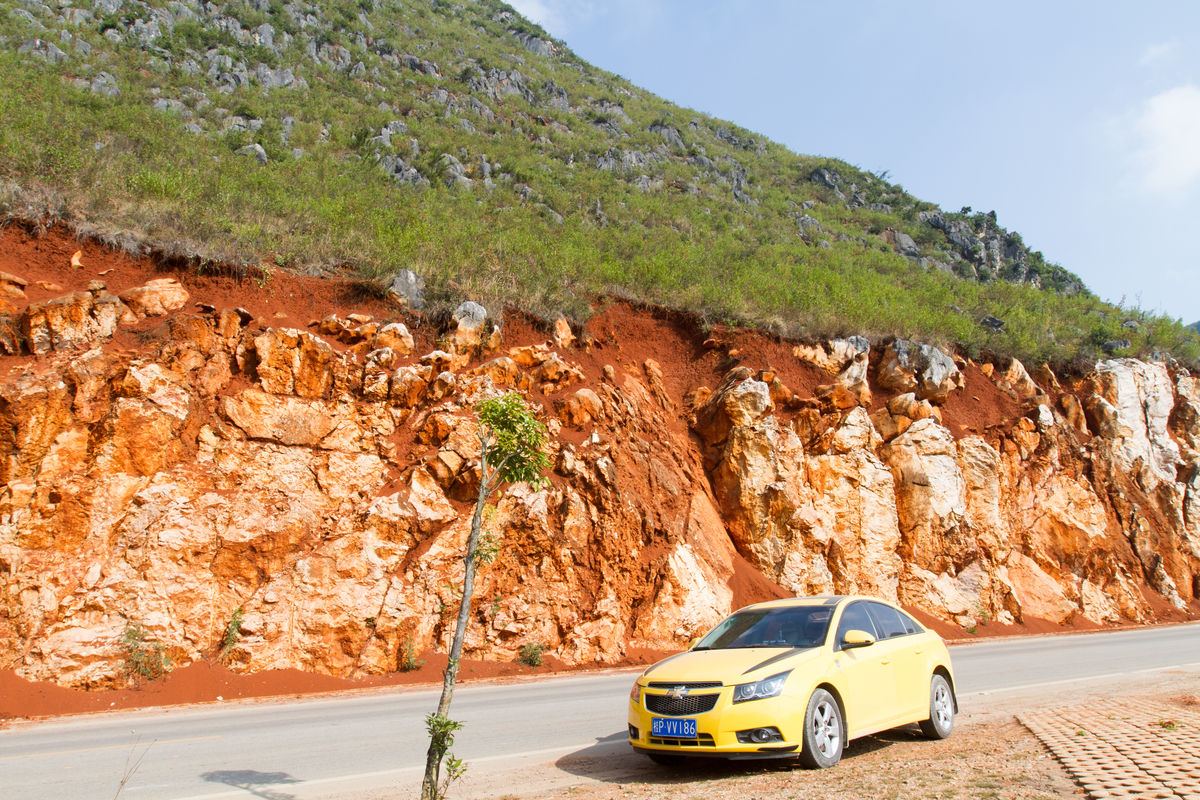
When friends tell me they are a little nervous about the driving in Yunnan, it is almost always the mountain roads they are picturing: the endless sequence of bends climbing a valley, the switchbacks cut into a cliff, and the long downhill that seems to go on forever. I am glad they ask, because this is a real feature of the terrain rather than something to dismiss. The good news is that the roads themselves are well engineered and surfaced, and once you understand a few principles, the bends become enjoyable rather than frightening. Here is how I drive them, and how I advise visitors in a Yunnan rental car to do the same.
What to expect on Yunnan mountain roads
The province is mountainous, so even major routes climb and descend in curves rather than running straight. You will meet tight hairpins, tunnels through ridges, bridges across gullies, and sections where the road hugs a steep slope with a barrier on the outside. Sight distances are short, which is why the lanes are marked and why you will see warning signs and mirrors before blind corners. None of this means the roads are dangerous; it means they demand patience and a smooth, predictable style rather than the flat-road habit of holding a constant speed and overtaking freely.
Reading the bends and your line
The golden rule is to slow before a bend, not in the middle of it. Ease off the accelerator and brake gently while you are still on the straight, choose a sensible speed for the tightest part, and then let the car carry through smoothly, accelerating only once you can see the exit. Keep to your own lane throughout; on a left-hand bend do not drift wide, and on right-handers resist the urge to cut across the centre, because a vehicle may be coming the other way. Look where you want to go rather than at the edge, because the car tends to follow your eyes, and a steady hands-and-eyes routine settles the passengers too.
Long descents: use the gears, not the brakes
This is the single most important habit on a long downhill. If you stay in a high gear and keep pressing the brake to hold speed, the brakes heat up and their effect can fade just when you need them. Instead, drop into a lower gear before the descent begins and let the engine do the work of holding the car back, touching the brakes only to adjust. Our fleet is automatic, so this means selecting the lower gear position or the manual/sport mode rather than leaving it in drive; the gearbox selection guide explains how that works in an automatic. On the way down, if you have been braking a lot, use a safe lay-by to pause and let everything cool rather than pressing on with a spongy pedal.
Overtaking, horns and blind corners
Mountain roads are genuinely two-way, and local drivers who know the route may come through bends quickly, so never overtake near a corner, a crest, or anywhere you cannot see clear road ahead. Where the road is narrow and the view is blocked, a brief tap of the horn before a blind bend is a normal courtesy here and warns anyone coming the other way. If a lorry or bus is crawling uphill, wait for a straight, marked overtaking section rather than squeezing past on a curve. When a faster local car sits behind you, let it pass at a wide spot; holding people up on a winding road helps nobody, and driving at your own calm pace is perfectly fine.
Keeping the car healthy on the climbs
Long uphill sections put a different load on the engine, so do not labour it in too high a gear; an automatic will usually shift down itself, but you can select a lower gear to keep it responsive. Watch the temperature gauge on very long climbs, and if it starts to rise, ease off and stop in a safe place. The cars are serviced between rentals, and the maintenance notes explain how upkeep is handled, but a driver who reads the gauges and does not thrash the car uphill is doing their part. If a warning light comes on or something sounds wrong, pull over safely and call us rather than continuing to a remote summit.
Speed, timing and sharing the road
Set a speed that leaves you comfortable stopping within the distance you can see, and ignore any temptation to match drivers who know every bend. I build mountain days with generous time so there is no pressure to rush, and I avoid setting off late, because tiredness and dusk make the bends harder. You will share the road with cyclists, slow farm vehicles and occasional animals, so expect the unexpected near villages. A navigation app helps with the shape of the route and any closures, as the navigation guide notes, but the signs and your own observation remain the deciding factors.
If you feel out of your depth
There is no shame in finding a steep section daunting, especially if you mostly drive flat roads at home. The practical answers are to slow down, use the lower gears, stop at the frequent viewpoints to rest and enjoy the scenery, and let faster traffic pass. If the weather worsens or a road is affected, the same calm, parked-and-waiting approach applies, and if anything goes wrong the accident process guide sets out the steps. All of this sits within the ordinary traffic rules for visiting drivers; treat the mountain road with respect rather than fear, keep smooth and slow, and many people tell me the winding sections end up being the highlight of their Yunnan trip.
If you are putting a trip together, this driving from kunming airport to dongchuan red land walks through the practical steps.
Zara
Yunnan Province International Travel Agency (Group) Co., Ltd.
WeChat/WhatsApp: +86 13759155671
WeChat handle: qxzj7557
Email: [email protected]