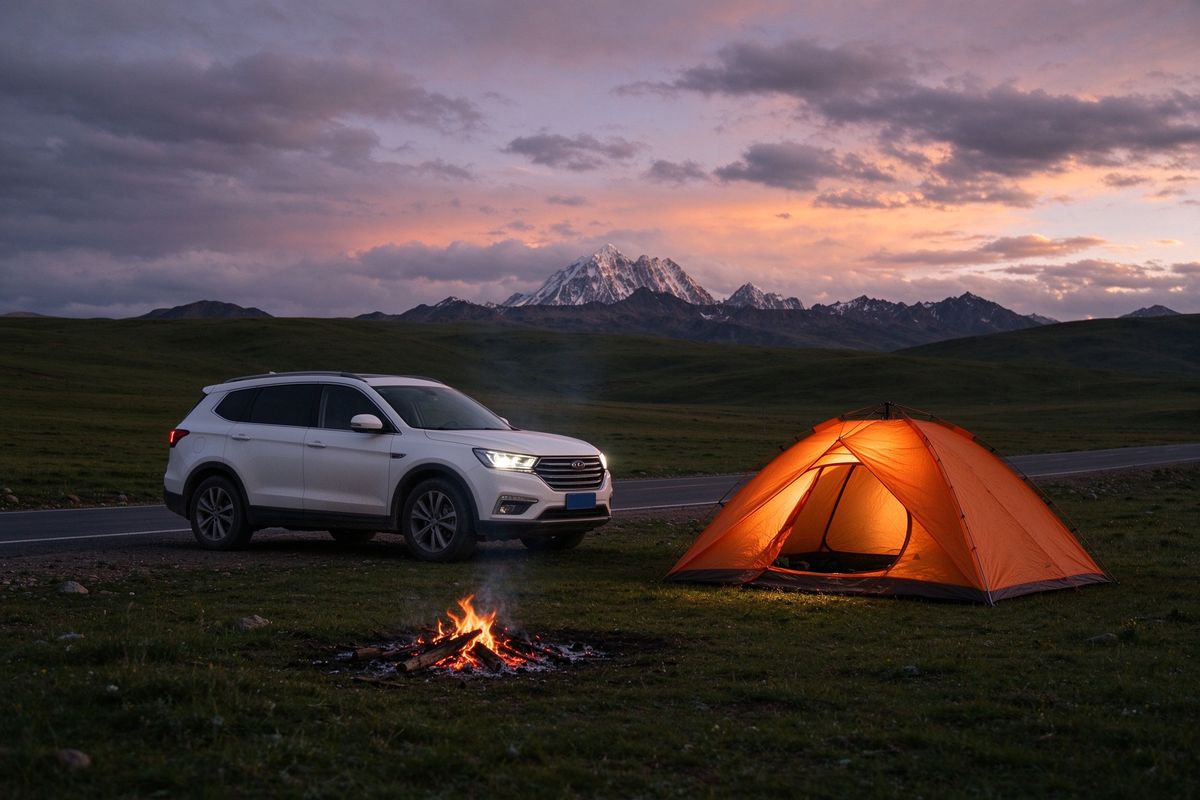
Camping in China by car: a practical guide for foreign travelers (2026).
I have been driving foreign friends across Yunnan, Sichuan and Xinjiang for nearly a decade. This guide covers what I have learned the hard way.
Why camping in China is booming
China's natural scenery density is world-class — snow mountains, grasslands, deserts, gorges, karst peaks — often just a few hundred kilometers apart. Driving the G318, Duku Highway or Yunnan-Tibet route is itself the core experience, and camping turns "passing through scenery" into "living inside it."
Camping saves money during peak season (National Day, July-August), gives you flexibility, and lets you wake up under the stars next to a glacier. But it is not the wild free-camping culture of the US or New Zealand — the rules and infrastructure are different.
Types of campsites in China
- Official scenic-area campsites: In 5A parks and along popular routes (Nalati in Xinjiang, Daocheng Yading in Sichuan, Xiaozhongdian in Yunnan). They have toilets, water, sometimes showers. Cost: 80-200 RMB per night.
- Glamping sites: Around major cities (Beijing, Shanghai, Chengdu, Kunming). Tents are set up with beds and furniture. 300-800 RMB/night. Good for a trial night, not for long road trips.
- RV parks: Concentrated on the coast and Hainan. Mostly useful for their parking and restrooms if you drive a regular car.
- Wild camping: Not recommended for foreign tourists. Nature reserves are closed, border zones are restricted, and sudden summer storms can cause flash floods. Instead, ask a herder or farmer to pitch in their yard for 50-100 RMB — safe and friendly.
Best camping spots by route
- Yunnan-Tibet (G214): Xiaozhongdian meadow (Shangri-La), Feilaisi (view of Meili Snow Mountain), Ranwu Lake. Requires Tibet permit for foreign visitors.
- Duku Highway (Xinjiang): Nalati grassland, Bayanbulak sunset, near Small/Large Dragon Lakes. Open June-October only; nights can drop below zero even in July.
- Western Sichuan loop: near Shangri-La town (Daocheng Yading), Litang Maoya grassland, Xinduqiao.
- Hulunbuir (Inner Mongolia): Enhe Russian ethnic township, Heishantou grassland sunset.
- Hainan: Winter only (November-March); too hot in summer.
Gear: buy in China, don't bring
Decathlon stores in every major city sell a 3-person tent for 200-400 RMB, sleeping bags for 100-200 RMB, sleeping pads for 50-100 RMB. Buy in Kunming, Chengdu or Urumqi at the start of your trip.
- Tent: 3-season is fine for Yunnan; 4-season for high altitude or northern Xinjiang.
- Sleeping bag: comfort rating at least 0°C. Shangri-La in July can drop to 10°C at night; Duku passes can hit zero.
- Headlamp, folding chair, canister stove, 20000mAh power bank.
Safety
- Altitude: Do not shower or drink alcohol on day one above 3000m. If you get a headache or vomit in the tent, descend immediately. Never camp above 4000m.
- Weather: Mountain weather changes fast. Do not camp in dry riverbeds — flash floods can come from upstream storms.
- Wildlife: No large predators on popular routes. Keep food sealed away from rodents and stray dogs.
- Toilets and showers: No Western-style toilets at remote campsites. Ask at a herder's house for 10-20 RMB. Showers cost 30-50 RMB at bathhouses in county towns.
Cost estimate (7-day Yunnan loop, camping)
- Gear (new at Decathlon): 800-1200 RMB (keep or resell)
- Campsites: ~80 RMB/night x 6 = 480 RMB
- Food: 50-100 RMB/day/person
- Fuel: ~900 RMB for 1200 km
Total: 200-300 RMB per person per day — about half the cost of hotels in peak season.
What we provide
We rent Volkswagen Lavida (260 RMB/day, unlimited km) or Tank 300 SUV (400 RMB/day, 300 km/day) at Kunming or Lijiang airport. We also arrange your Chinese temporary driving permit (1500 RMB, you don't need to appear in person, 1-3 working days). We recommend reliable campsites along your route and can arrange Tibet permits if you go that way.
Contact WeChat qxzj7557 (WhatsApp: +86 13759155671) with your dates and group size for a custom plan.