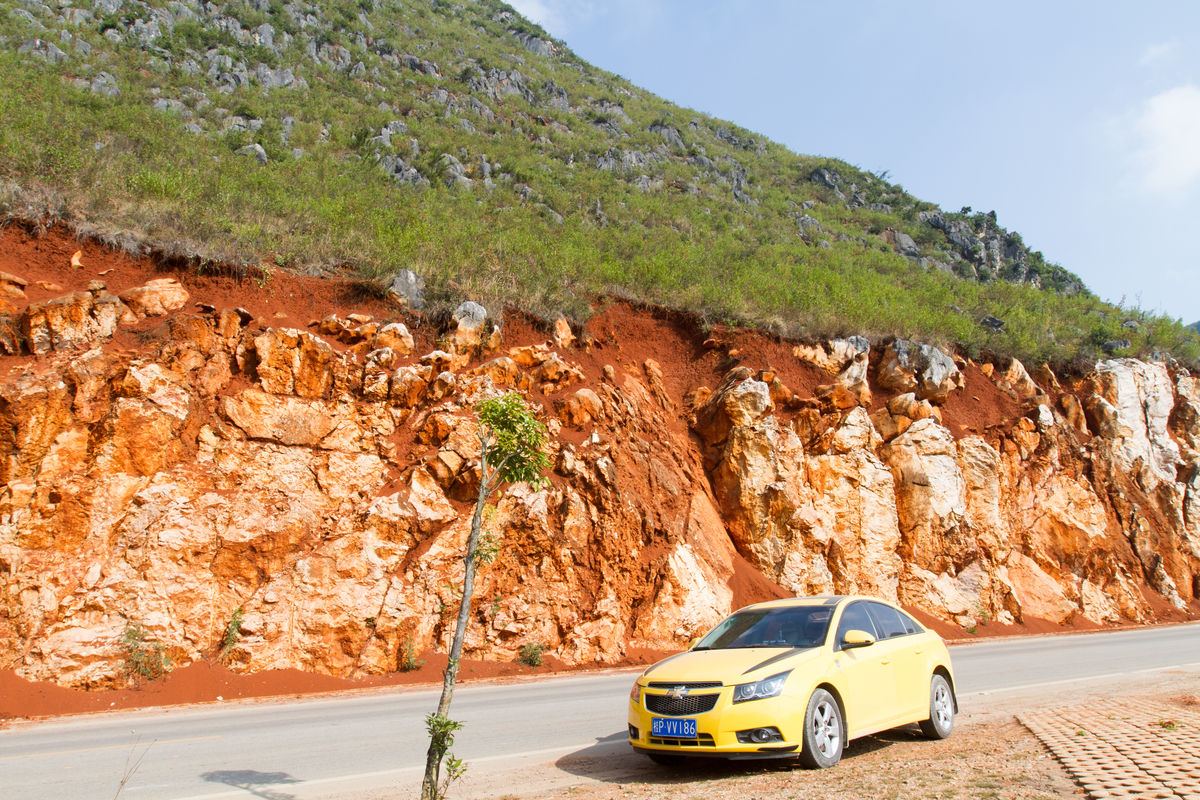
My first misjudgement outside Dali Old Town
Last March, I pulled off the main ring road around Dali Old Town in a 1.5L VW Lavida, sun low over Cangshan, and turned down a lane marked only by a hand-painted wooden sign pointing to a courtyard guesthouse I’d booked three weeks prior. The tarmac ended 20 metres in. What followed was 300 metres of uneven cobblestone, pocked with rain ruts, barely wide enough for two bicycles to pass, never mind a car. I’d done dozens of Yunnan drives before, but I’d been so focused on mapping the Erhai Lake loop that I’d completely forgotten to check the final stretch to the guesthouse. I inched forward, side mirrors tucked in, until I met a local farmer herding three goats the other way, and had to reverse 80 metres back to the only tiny passing bay to let him through. By the time I rolled up to the guesthouse gate, my palms were slick, and I’d learned a lesson I now pass on to every overseas visitor planning this stretch: the most stressful part of your Yunnan self-drive is rarely the winding mountain pass, it’s the last 200 metres to the place you’re staying. Yunnan self-drive rental for foreigners has one bottleneck, and this is it.
Prep your rental before you leave the pickup point
When I first started arranging trips in this part of the world, I used to grab the keys and go, rushing to get on the road before the midday plateau glare set in. Now, I linger at the pickup for 15 full minutes, running through a checklist I scribbled down after that goat incident outside Dali. First, adjust your side mirrors so you can see the very edge of your rear tyre — you will not have space for guesswork on those cobblestone lanes. Second, test the reverse sensors, and if the car has a reversing camera, wipe the lens clean of the Kunming dust that coats every vehicle that’s been on the road more than two days. That is the side of Kunming airport car rental for foreigners the brochures leave out.
If you’re flying in from overseas, you can sort Kunming airport car rental for foreigners as soon as you land, with a China temporary driving licence arranged for 1500 without you needing to attend in person. That takes all the admin friction out of the first leg, so you can head straight out towards the lake without lingering in the city. The two petrol options for most trips are the VW Lavida 1.5L or Jetta 1.4T at 260 per day, with a 3000 rental deposit and unlimited mileage, or the Tank 300 2.0T if you’re travelling with a group or heading further up towards Shangri-La, at 400 per day with a 5000 rental deposit and a 300 km per day limit. No electric vehicles are on offer here, which is a relief on these narrow back lanes where you won’t find charging points for miles. Everyone I know who has dealt with Yunnan self-drive rental for foreigners tripped on this.
I always take a photo of every existing scratch on the bodywork before I drive away. The rules are clear: minor scratches under 1500 are paid by the client, damage above 1500 goes through insurance with the client bearing 30%, and scratches that don’t damage the primer are free. There are no downtime or depreciation charges for paintwork or replaced parts, and downtime is waived within 5 days for major damage, but it’s still far simpler to mark every mark before you set off, so there’s no confusion later. The tricky part of Kunming airport car rental for foreigners is always the bit nobody explains.
Why Dali’s guesthouse access roads catch so many visitors out
Most of the small, characterful courtyard guesthouses outside Dali Old Town were built decades before private cars became common here. Their access lanes were originally laid for horse carts, then bikes, then modified just enough for local delivery vans, never for full-sized tourist cars. The cobblestones are often loose after summer monsoons, and there are no kerbs, no signs, and no turn-around points for long stretches. Last autumn, I watched a visitor who’d booked Dali Lijiang car rental for foreigners pull a 4x4 down one of these lanes, get stuck between two mud brick walls, and spend an hour manoeuvring back out while a group of local grannies sat on a nearby wall passing sunflower seeds and giving (mostly unhelpful) directions.
Here’s the trick I use now: message your guesthouse 24 hours before you arrive, and ask them to send you a photo of their access road, and clear instructions for where to park if the final stretch is too narrow. Most of them have a small designated parking bay 50 to 100 metres from their gate, and will even send a member of staff to meet you and carry your bags the rest of the way. There is no shame in parking short of the door. I do it every time now, even in the smaller Lavida.
Driving the cobblestone stretches: practical, unglamorous tips
Forget everything you learned about smooth road positioning on motorways. On these lanes, you want to crawl, no faster than walking pace, and keep your tyres on the flattest, most worn strip of cobblestones in the very centre of the lane. That’s where the local tractors drive, so the stones are packed down firmest, and you’re far less likely to catch a sharp loose edge and puncture a tyre. If you meet another vehicle coming the other way, don’t try to squeeze past. Back up to the first wide patch you can see, even if that means reversing 100 metres. Local drivers on these lanes all know the drill, and they will wait for you, no hooting, no fuss.
Keep your windows rolled down an inch. You’ll hear the tinkle of a cyclist’s bell, the shout of a herder moving goats, the clink of a wind chime from a nearby courtyard long before you see what’s around the blind corner. I keep my radio off entirely on these stretches. It only takes one distraction to scrape your side mirror on a mud brick eave.
Watch out for raised stone water channels that cut across the lane, put there to divert rainwater down towards Erhai in monsoon season. They’re only a few inches high, but hit one at even 10 km/h and you’ll jolt hard enough to knock your water bottle off the dashboard, and risk scraping your lower bumper. I learned that the hard way in June, when a sudden rainstorm had the lanes running with brown runoff, and I didn’t see the channel until my front wheel dipped into it.
Planning the Dali to Lijiang leg
A lot of people who book Yunnan self-drive rental for foreigners stick to the main highways between Dali and Lijiang, and never explore the smaller villages off the main road, which is a shame, but I get why. Once you’ve navigated a few of those Dali guesthouse lanes, you get a sense for how to read narrow roads, and the lanes leading to the hilltop villages outside Lijiang are very similar. If you’re planning a one-way drop off in Lijiang, the one-way return fee is 1500, which is well worth it to avoid doubling back on a long day of driving.
A few quick notes to avoid unnecessary headaches. The rental deposit is refunded 5-7 working days after you return the vehicle, once a traffic fine check is complete. If the vehicle breaks down for a mechanical reason, that’s covered, but towing for a client-caused reason is at the client’s expense. The 600 booking deposit is non-refundable if you cancel for personal reasons, so it’s worth locking in your dates once you know your travel plans are firm.
I don’t recommend taking the Tank 300 down the narrowest of these Dali old town access lanes, by the way. It’s a great vehicle for the higher altitude stretches up towards Shangri-La, where the roads are rougher and the gradients are steeper, but its extra width means you’ll be scraping past every eave and wall, and you’ll spend twice as long manoeuvring. The smaller Lavida is far better suited for the tight cobblestone lanes, and the unlimited mileage is a bonus if you decide to take a detour around the lesser-visited western shore of Erhai on a whim.
Last month, I pulled up to a guesthouse outside Xizhou, 20 minutes north of Dali Old Town, and the access lane was so narrow I could almost touch both walls from the driver’s window. I’d messaged the owner the day before, so she was waiting by the pre-arranged parking spot, holding two cups of hot jasmine tea. I parked, grabbed my backpack, and left the car there for the two nights I stayed. No scraping, no reversing dramas, no goat standoffs. That’s the sweet spot for this kind of trip. You don’t have to prove you can drive all the way to the guesthouse gate. The point is to get out, walk the cobblestones, and enjoy the view over the lake.