Why I picked Kunming airport as my Yunnan self-drive starting point
Last April I dragged my scuffed 40-litre rucksack off a red-eye into Kunming Changshui, bleary from the flight and still half-convinced my luggage had gone missing somewhere over Guangxi. The air smelled like damp concrete and distant fried potato strips, the kind of street food smell that hits you before you even leave the terminal.
I’d done my homework. Yunnan self-drive rental for foreigners is straightforward enough if you land in the right spot, and Kunming airport beats faffing around with a city centre pickup when you’re jet-lagged. I’d booked ahead, so I just had to find the rental desk near the arrivals exit, hand over my paperwork, and get on the road.
One thing I’d sorted in advance? My China temporary driving licence. The agency arranged it for 1,500 without me having to turn up in person, which saved a whole morning of queuing and fumbling with translation apps. Worth every fen, as far as I’m concerned.
Manual vs automatic: the call I almost got wrong
I’m a diehard manual driver. Twenty-odd years behind the wheel of right-hand drive Land Rovers on Welsh back lanes and Moroccan pistes, I’ve always turned my nose up at automatics as “lazy”.
When I was looking at Kunming airport car rental for foreigners, I very nearly booked the cheapest manual option on the list. The VW Lavida 1.5L or Jetta 1.4T petrol, 260 a day, 3,000 deposit, unlimited mileage. Perfect for someone on a budget, right?
Then I remembered the last time I drove a left-hand drive manual on the continent. I spent the first three days stalling at every roundabout and reaching for the door handle every time I wanted to change gear. Multiply that by Yunnan’s mountain roads, hairpin bends, and the odd village chicken darting into the road, and I’d be asking for trouble.
What changed my mind on the Dali to Lijiang stretch
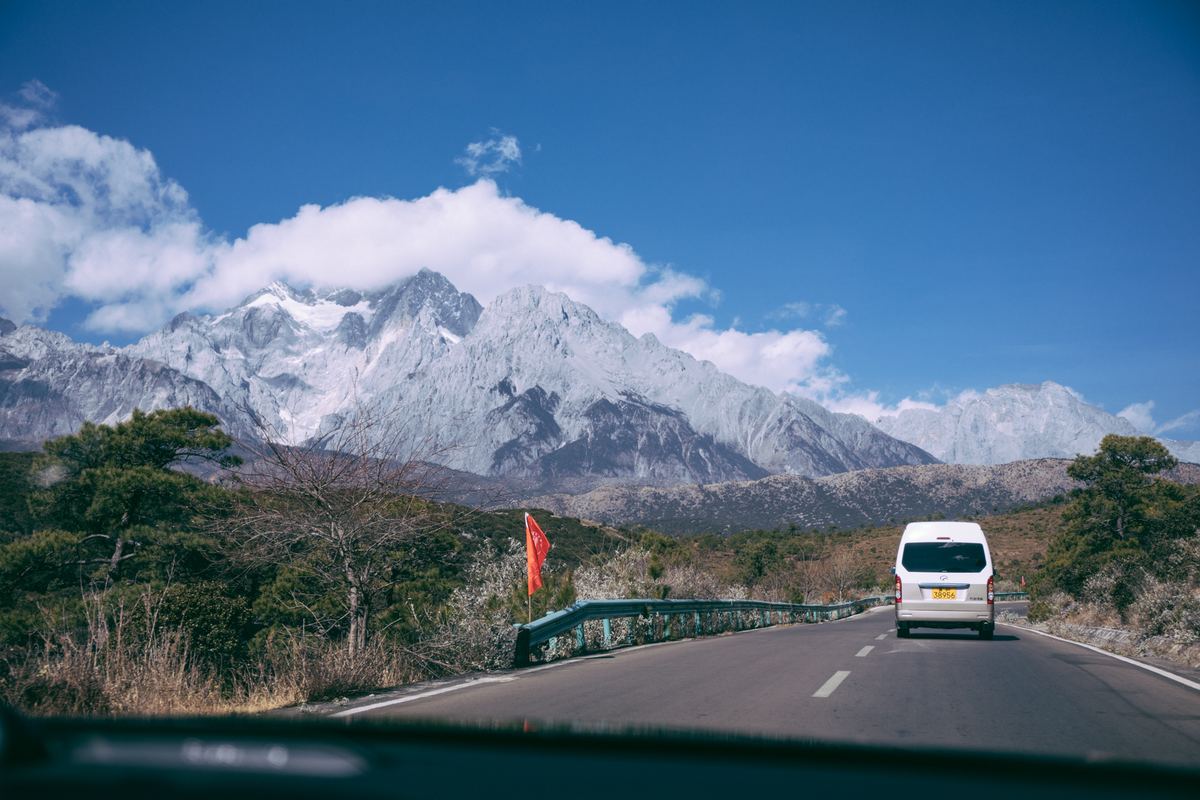
I tested my theory on a friend’s hire car a few years back, on the stretch of road between Dali Old Town and Lijiang Jade Dragon Snow Mountain. It was pouring with rain, the tarmac was glistening, and there was a lorry crawling up the pass at 20 km/h. I went to overtake, went to change down, and grabbed thin air.
Nearly clipped the lorry’s wing mirror. Scared the life out of me, and the poor bloke in the passenger seat.
So this time? I went automatic. No shame in it. Your brain’s already re-wiring itself for left-hand traffic, road signs in characters, and driving norms that are… let’s call them “flexible”. Why add gear changes to the list of things to think about?
If you’re dead set on a manual, fair play. Just do yourself a favour and spend the first hour pootling around Kunming’s suburbs before you head for the hills. Don’t dive straight onto the Chuxiong to Dali expressway with your brain still in RHD mode.
The cars on offer: what I’d pick for different trips
I’ve rented both a saloon and the Tank 300 on separate Yunnan trips, so I’ve got a fairly good handle on what’s worth the cash.
- VW Lavida / Jetta (260/day, 3,000 deposit, unlimited mileage): My go-to if I’m sticking to main roads between Kunming, Dali and Lijiang. Comfortable on the expressway, easy to park in old town car parks, cheap enough that you don’t stress about every stone chip. I drove one from Kunming to Dali in a day last spring, no issues at all, even with a boot full of camping gear.
- Tank 300 2.0T (400/day, 5,000 deposit, 300 km/day limit): The one to go for if you’re heading up to Shangri-La, or down any of the unpaved side roads near the Tibetan border. I rented one last autumn when I wanted to poke around some of the smaller villages north of Lijiang. Worth the extra cash for the ground clearance, just keep an eye on that daily kilometre limit if you’re doing long stretches. Adds up fast.
One thing to note if you’re planning Dali Lijiang car rental for foreigners as a one-way trip? There’s a 1,500 one-way return fee if you drop off in Lijiang. I did that once, decided it was worth it to save two days of driving back the same road, but it’s a cost to factor in early.
Deposits, insurance, and the scratch I thought I’d have to pay for
I’m the sort of person who inspects every inch of a hire car before I drive off, and I still got caught out once.
It was on the Tank 300 trip. I parked in a tiny village car park outside a noodle shop in Eryuan, came back an hour later, and there was a thin scratch along the passenger door. Looked like someone’s bike handlebars had caught it.
I was fuming, convinced I’d be out of pocket. Turned out the scratch hadn’t gone through the primer, so it was free. No charge, no argument, just the bloke from the rental company running his finger over it and shaking his head.
Here’s what I’ve learned about the fine print, from actually having to use it:
- The rental deposit comes back 5-7 working days after you return the car, once they’ve checked for traffic fines. Don’t book it the day before you fly home and expect the cash back in your account before you leave.
- Insurance covers compulsory and commercial cover. Minor scratches under 1,500 you pay yourself. Anything over 1,500 goes through insurance, and you pay 30% of it.
- No depreciation charges, no downtime fees for paintwork or replaced parts. If you have major damage, downtime is waived within 5 days. I’ve never had to test that bit, and I hope I never do.
- Mechanical breakdowns are covered. If you crash it or get stuck in a ditch because you were showing off, towing’s on you.
Oh, and the 600 booking deposit? Non-refundable if you cancel for personal reasons. I found that out the hard way when I got sick with a cold two days before a trip and had to bail. Lost the whole 600. Annoying, but fair enough.
A few last tips from someone who’s been there
Pickup and return at the airport or the city office, whichever’s easier for your itinerary. I prefer airport pickup, because I don’t have to faff with taxis when I’m tired.
Navigation? The rental place sorts you out with a working system. Don’t rely on your phone if you’re heading up into the mountains – signal drops out fast.
Parking in Dali and Lijiang old towns can be a pain in peak season. Go early, or park on the edge and walk. I once spent 40 minutes circling Dali Old Town looking for a spot in August, sweating through my shirt, vowing I’d never drive into an old town again in July or August.
Seasonality matters. The roads up to Shangri-La can get icy in winter. Rainy season in summer means landslides on smaller roads. Plan accordingly.
And for the love of all that’s holy, do the pickup checklist properly. Walk around the car, take photos of every scratch, every dent, every chip on the windscreen. Point them out to the person handing over the keys, get them noted down. Saves arguments later.
I’m off back to Yunnan next month, renting the Tank again for a trip up to the meadows around Shangri-La. Going automatic, obviously. I’m too old for stalling at mountain pass junctions.