Route overview
A rental car for foreigners makes this straightforward: Start in Shijiazhuang, run east into the water country at Baiyangdian for boats and reed marsh, then across to Tangshan for the Nanhu park and the rebuilt walls of Luanzhou. The last day belongs to the Qing eastern tombs at Zunhua before the long run back. Mostly expressway, with a few slow county roads between the lake and the coast range.
Highlights
- Baiyangdian reed marsh
- Gazi village
- Yanling detachment memorial
- Tangshan Nanhu park
- Luanzhou old town
- Qing eastern tombs
Suggested itinerary
- Day 1D1 Shijiazhuang to Baiyangdian, about 130 km (Gazi village, Yanling memorial, lake boats)
- Day 2D2 Baiyangdian to Luanzhou, about 70 km (Nanhu park, Luanzhou old town, Qing tombs approach)
- Day 3D3 Luanzhou to the Qing tombs and back to Shijiazhuang, about 350 km
Day by day
Day 1 Shijiazhuang to Baiyangdian
About 130 km
Gazi village
Gazi is a village in the middle of the lake, named after the boy soldier in an old film, water on four sides, reached by boat or a narrow causeway. Mud-brick houses, a stone mill and an old well have been kept as a small site selling reed weaving, salted duck eggs and lotus tea. Forty minutes covers it: the point is the old water village, not polish. Boats leave from the village quay for the reed channels, agree the price and the loop before boarding, an hour and more. Park on the ground outside the causeway.
Yanling detachment memorial
The memorial sits on an island in the lake and tells of the wartime Yanling unit, local fishermen who fought the Japanese with fowling guns and ice boats. Small: photographs, objects, a reconstructed cabin and gun racks, thirty to forty minutes, and the story of this water country falls into place. From the embankment outside, the reed beds run to the horizon, white in autumn wind. Entry is covered by the lake ticket, boats extra.
Baiyangdian reed marsh
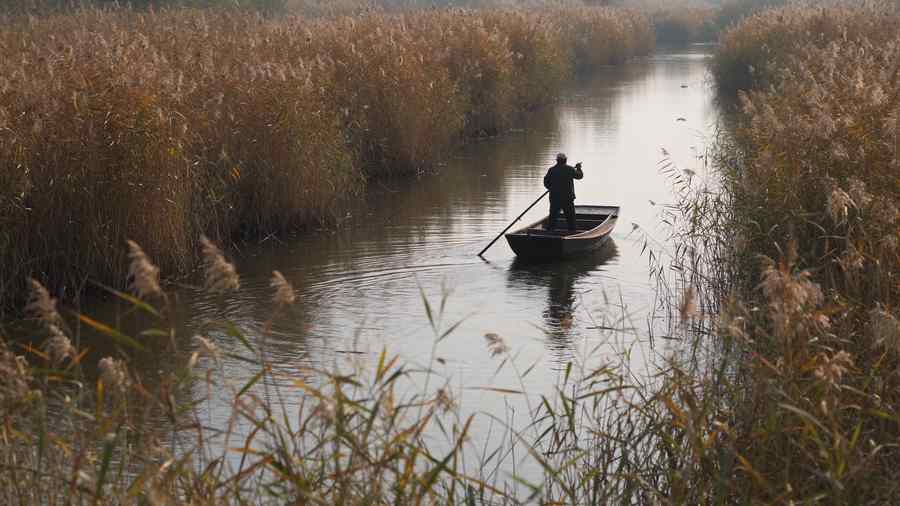
Baiyangdian is the largest freshwater marsh in north China, fed by nine rivers, cut into channels by reeds so that the boat turns and the far bank disappears. The local wooden boats are the way to see it: a boatman poling, almost silent, birds moving in the reeds. Lotus opens pink and white in summer; in autumn the reeds yellow and cutting boats work the channels. Boats ground in the shallows and the boatman wades to push. No shade on the water, take a hat.
- Where to eat
- The whole-fish table is the local specialty: carp, black fish and catfish stewed in one pot with cornmeal cakes; salted duck eggs from the lake shore are worth carrying away. In Tangshan, chess-piece sesame cakes and honey candy.
- Roads and driving
- In a rental car for foreigners, jinggangao expressway then Baocang to Anxin, county roads to the lake quay. Roads around the lake are narrow and busy in season, and the car park is a walk from the boats.
- Where to stay
- County town hotels in Anxin around 200 CNY; guesthouses in the lake villages are basic and very quiet at night.
Tips for the day
- Agree the boat price, route and duration before boarding
- Mosquitoes are serious, trousers and repellent
- Arrive early for parking in season
Day 2 Baiyangdian to Luanzhou via Tangshan
About 70 km plus the city loop
Tangshan Nanhu park
Nanhu began as subsidence from the Kailuan coal mines; after the city turned away from coal the hollow was filled with water, planted and paved into Tangshan largest park. The lake is wide, a greenway runs around it, two hours by rented bicycle or a section on foot. A few industrial relics have been left in place as landscape, old rails and mining equipment. Free entry, parking by the hour, busy at weekends. Cool by the water at dusk, which is when the city walks here.
Luanzhou old town
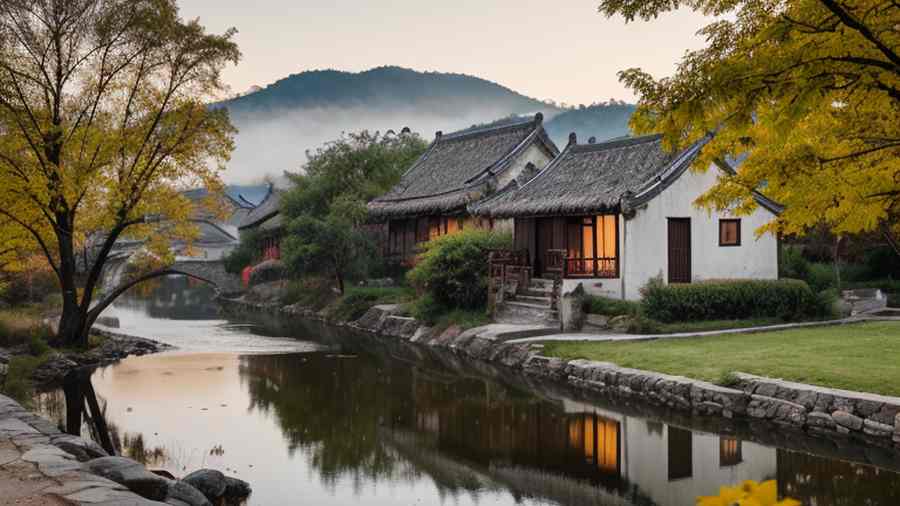
Old Luanzhou stood by the Luan river, a trading town on the eastern approach to Beijing, a prefecture under Liao, Jin and Yuan. What stands now is a rebuild on the Ming and Qing layout: walls, gates, bell and drum towers, one main street of shops and inns, convincing enough at night with the lights on. An hour covers it. On the river embankment outside you can place the old ferry landing. No entry fee, park outside the walls, performances on holidays.
Luan river embankment
The embankment above the old town is where the ferries worked, carrying grain and timber down to the coast. Now it is a paved path with a view over the water and the rebuilt walls behind. Twenty minutes, best at sunset, when the town lights come up and the river goes flat. Wind is constant, hold onto a hat.
- Where to eat
- Tangshan: chess-piece sesame cakes, honey candy, and Qianxi chestnuts in autumn. In Luanzhou old town the snack street does sesame cakes and Luan river fish, forty to fifty a head.
- Roads and driving
- In a rental car for foreigners, baocang to Jingha expressway, heavy trucks through the Tangshan stretch; wide roads around Nanhu but plenty of lights. Tangshan to Luanzhou on the national road, surface average, watch the village speed limits.
- Where to stay
- Inns inside Luanzhou old town, 200 to 300, good for the lit streets; or chain hotels in Tangshan city.
Tips for the day
- Nanhu is big, a bicycle saves the legs
- The old town is best after dark
- The embankment is windy
Day 3 The Qing eastern tombs and the run home
About 350 km: 40 km to the tombs, then 310 km to Shijiazhuang
Qing eastern tombs
The eastern tombs lie under Changrui mountain in Zunhua, the largest imperial cemetery of the Qing after the entry into China: Shunzhi in Xiaoling, Kangxi in Jingling, Qianlong in Yuling, Xianfeng in Dingling and Tongzhi in Huiling, with Cixi in Dingdongling. The site runs more than ten kilometres north to south, too much on foot, so drive between the halls. Qianlong Yuling has an open underground palace with fine stone carving and Buddhist figures, worth the descent; Cixi hall used the best timber. Stone figures line the spirit way, best in autumn colour. One combined ticket, checked at each hall, park at each gate.
- Where to eat
- Zunhua does Jingdong meat pies and chestnut stewed chicken, chestnuts fresh in autumn; on the road back, donkey meat sandwiches at a Hebei service area.
- Roads and driving
- National road from Luanzhou through several towns, watch the limits. Inside the tomb site the lanes are narrow and winding, keep it slow. Home on Jingha then Jinggangao, all expressway, about three and a half hours for 310 km.
- Where to stay
- Back to Shijiazhuang today, no overnight. One more day in Zunhua town puts Jingzhong mountain on tomorrow.
Tips for the day
- Plan the halls around the combined ticket hours
- The underground palace is cold, take a layer
- Long drive home, stop once at a service area
Costs to expect
Fuel, tolls, parking, boat and entry tickets are paid on the spot; the rental car is booked separately and no package price is quoted.
Driving tips
- Boat prices at Baiyangdian are negotiated, agree the route and the total before boarding
- Reed marsh mosquitoes are fierce in summer
- The tomb complex is huge, drive between the halls instead of walking