Route overview
This trip picks up in Nanchang, heads west to Pingxiang for the high meadows and peaks of Wugong Mountain, then moves northeast to the Wuyuan ancient villages, loops via Longhu Mountain in Yingtan and returns to Nanchang over five days and roughly 1,210 km. Expressways join mountain provincial roads with many gentle bends; it suits travellers who like scenery and old villages and can spare half a day for walking each day. A Rental Car for Foreigners in China on this Jiangxi loop finds clear signage between county towns, with hotels and meals concentrated in new town centres, and spring and autumn bring comfortable weather.
Highlights
- High alpine meadows at Wugong Mountain's golden summit and the Yangshimu peaks above the cloud sea
- Huizhou lanes of Likeng, Rainbow Bridge and Huangling in Wuyuan
- Xianshui Rock cliff tombs and the Tianshi Mansion Daoist heritage at Longhu Mountain
- A Rental Car for Foreigners in China touring Jiangxi hills and villages, with pace and mountain roads planned ahead
Suggested itinerary
- Day 1D1 Nanchang to Wugong Mountain, Pingxiang — 280 km
- Day 2D2 Pingxiang to Huangling, Wuyuan — 540 km
- Day 3D3 Wuyuan stay, short shuttle to Jiangwan — 10 km
- Day 4D4 Wuyuan to Longhu Mountain, Yingtan — 200 km
- Day 5D5 Longhu Mountain back to Nanchang — 180 km
Day by day
Day 1 West from Nanchang up Wugong Mountain
About 280 km today
Yangshimu
Yangshimu lies in Anfu County on the western side of Wugong Mountain, a granite peak-forest section where stone pillars line the ridge, with dwarf pines on the rock faces. After rain, cloud flows around peak waists, making it a representative western Jiangxi cloud-sea and summit spot. Geologically the range was weathered until granite fissures broke into pillars and gorges; early herb collectors found the forest, and trails were later built up. Along the ridge boardwalk you study pillar shapes and layered ranges; on clear days the main summit direction comes into view. Park at the gate lot, take the scenic bus up, then follow boardwalk and stone steps between viewpoints. Railings line the exposed side; steps rise and fall, and the full route takes three to four hours at moderate effort. Mountain damp makes slabs slippery, so wear non-slip shoes; elders can stay on the main boardwalk.
Golden Summit Meadow
The golden summit meadows sit around Wugong Mountain's main peak; on the high ridge there are no full tree stands, instead continuous alpine grassland rolls with the slopes, giving wide open views. Grass stays green in spring and summer and golden in autumn. At high altitude wind is strong and soil thin, so trees cannot take root, and grasses have covered the slopes year after year. From meadow heights you look over rolling grass, ridge lines and cloud sea; slanted sunrise light makes slopes read clearly. From the upper cable-car station follow stone steps and grass paths to the summit; the main route is well marked with supply points and rest shelters. The climb has many steps, a slow one to two hours. Use the cable car to save energy; a jacket is essential in wind and cold, and grass paths turn muddy in rain.
- Where to eat
- Dinner in Pingxiang centres on stir-fried rice noodles, Lianhua blood duck and home-style stir-fries; mountain-town restaurants give generous portions, so have a warm staple before the climb.
- Roads and driving
- Take the Hukun expressway west from Nanchang, then leave onto a mountain provincial road toward the Wugong Mountain gate; slopes and bends are gentle, and sound your horn at blind corners. This transitional leg into western Jiangxi hills is common for a Rental Car for Foreigners in China; if mist rises in the afternoon, slow down and switch on fog lights.
- Where to stay
- Stay at an inn near the Wugong Mountain gate; next morning take the cable car or walk up, and the inn can hold luggage.
Tips for the day
- Cable car and hiking trails have separate entrances; confirm opening hours for the day before choosing where to park.
- Mountain weather changes fast; carry a raincoat, and do not use an umbrella on the meadow in thunder wind.
- Mountain-town petrol stations are small; fill the tank in the county town before going up.
Day 2 Long transfer to Huangling, Wuyuan
About 540 km today
Likeng Village
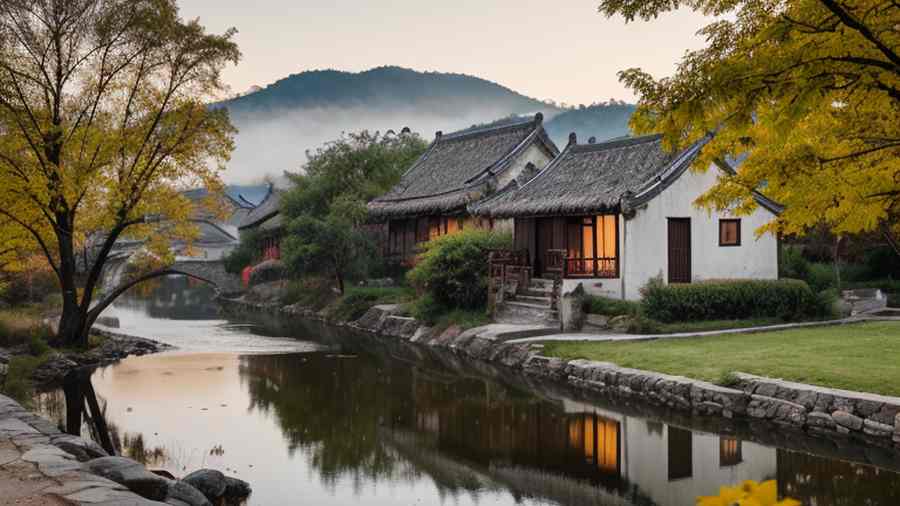
Likeng is a Huizhou-style old village northeast of Wuyuan county town, spread along both sides of a small stream. White-walled, dark-tiled houses stand by the water, stone slab and arch bridges cross, and lanes wind with the current. The village has long been known for Huizhou merchants and a farming-and-studying tradition; Ming-Qing courtyards, ancestral halls and sky-lit patios remain, with wood and brick carvings on lintels and window lattices. Along the bank path you watch small bridges, old horse-head gables and everyday scenes, with soft light in early afternoon. Park in the village-entrance lot and walk in; the main street follows the stream, side lanes lead to old halls, and two to three hours suit a slow visit. There are no motor lanes inside; steps and slab paths cross unevenly, so watch thresholds. Elders can stay on the flat main bank path. Visitor numbers peak at midday.
Rainbow Bridge
Rainbow Bridge spans the river in Qinghua Town, Wuyuan, an aged covered bridge of piers, wooden beams and a tiled roof, so walkers shelter under the gallery. It is named for rainbows that arc over the water after showers; piers stand in sections across the river, and benches line both sides where villagers rest. Wuyuan has many watercourses, and repairing bridges was a long-standing local tradition; this bridge has been restored over generations. From the bridgehead you watch the gallery cross the river with its reflection, comparing villages against the weir and beach stones. Park at the bridgehead lot, walk across and return along the bank, about an hour in all; deck slabs are flat with a few steps. River stones are slippery, so do not wade near the bank. The bridge stays cool in summer, while spring and autumn winds pick up.
Huangling Village
Huangling sits in a mountain hollow east of Wuyuan, a Huizhou hillside village stacked along the slope. Houses follow the mountainside, each courtyard front with drying racks and bamboo trays; in autumn harvest, red chillies, golden rice and pumpkins spread on the racks, producing the drying-autumn scene. Founded by Huizhou clans moving in, lanes run along contour lines, stone walls meet wooden houses, and an old tree, water mouth and tea workshop sit inside. Follow the main Sky Street to see drying trays, old wooden windows and layered opposite-slope villages; lanterns light lanes quietly at dusk. Private cars park in the lower lot and the cable car takes you up; inside, paths are mostly steps and ramps, a full visit of two to three hours. Viewing platforms cluster and crowds gather after midday. Steps vary in steepness, so wear non-slip shoes.
- Where to eat
- On the long transfer day, lunch is handled at an expressway service area; once in Wuyuan, dinner features mashed tofu, steamed rice-flour dishes and steamed red carp, with light savoury flavours. Setting off early with a Rental Car for Foreigners in China, rest properly at service areas before the afternoon hill stretch to avoid drowsiness behind the wheel.
- Roads and driving
- Take the Hukun expressway east from Pingxiang, skirt the Nanchang outer ring and join the Deshang expressway toward Wuyuan; the route is mostly expressway, and near Wuyuan you leave onto a national road and mountain link road where bends increase and vehicles pull out from villages.
- Where to stay
- Stay at the foot of Huangling or in Wuyuan county town; you can start slowly next morning for the villages. For morning mist, stay in a hillside guesthouse.
Tips for the day
- The day's mileage is long; swap drivers and stop at a service area every two hours to stretch.
- Huangling vehicles all park in the lower lot; the cable car or shuttle takes you up, so pack light.
- Old village stone slabs are slippery; on rainy days the tiles reflect light, so wear non-slip flat shoes.
Day 3 Slow day in Wuyuan, Jiangwan old town
About 10 km today
Jiangwan
Jiangwan is a Huizhou old town in northeast Wuyuan, backed by Houlong Mountain and fronting a small river. Lanes are slab-paved, and ancestral halls, courtyards and a commercial street spread around the water mouth. The town produced many scholars through its history; gateways keep inscribed plaques and brick carvings, and the lane pattern follows old clan settlement layout. As a relaxed stop on a Rental Car for Foreigners in China staying in Wuyuan, it moves more slowly than crowded hillside villages, letting you study Huizhou sky courts and gate towers. Along the main street visit the ancestral hall, old lanes and stores, and sit in a tea house. Park at the town-gate lot and walk in; the main street is flat, side lanes have thresholds and steps, two to three hours suffice. Light inside old houses is dim, so watch floor changes; crowds thin in the afternoon.
- Where to eat
- Lunch in the old town can be steamed cakes, Qingming rice cakes and clay-pot soup from small street shops made fresh; afterwards rest on a bench by the ancestral hall's sky-lit courtyard.
- Roads and driving
- No long drive today; the short shuttle from county town to Jiangwan runs on a provincial road, the car park is at the town gate, and you walk in along smooth village lanes.
- Where to stay
- Keep the same hotel or lower-mountain inn in Wuyuan; leave luggage in the room and tour the town light.
Tips for the day
- Smoking is banned in ancestral halls and old houses; sky-courtyard floors are damp, so do not crowd railings for photos.
- Town shops open early; walk the main street after breakfast for emptier lanes.
- Mosquitoes are common by the rice fields outside town, so carry long sleeves and repellent.
Day 4 South from Wuyuan to Longhu Mountain's Xianshui Rock
About 200 km today
Xianshui Rock
Xianshui Rock runs along the Luxi River at Longhu Mountain, a water-facing red sandstone cliff where ancient hanging-coffin remains sit in crevices and platforms; wooden coffins rest in high cave openings, a direct site for studying old Yue burial customs. Danxia low hills close in on both banks, bamboo rafts move along the current. Cliff burial was long practised in southern riverside hills; later people used ropes and gear to lift coffins into caves, and exact methods remain under study. View the cliffs from a raft or boat, watching cave positions, wall texture and opposite slopes, while guides outline the period and burial background. Park in the site lot and board at the dock; the visit is mainly from the boat, with a bank path supplementing one section. The boat trip takes about an hour; landing paths are flat with few steps. Bring a light jacket for river wind.
Tianshi Mansion
Tianshi Mansion stands by the Luxi River beside Shangqing Town, a Daoist complex where successive Celestial Masters lived and performed rituals. Courtyards open along a central axis, with gate, ceremonial gate, main hall and rear hall in sequence; ancient camphor and pines stand tall, and steles and plaques remain under the eaves. It is one of the core Longhu Mountain Daoist sites, restored over generations, combining official courtyard layout with temple arrangement. Through the gate study the central-axis hall plan, listen to ritual music and rules, and read stele and plaque inscriptions under old trees. Park in the front-square lot and walk in; the compound is mostly flat courtyards with a few thresholds and steps, about an hour and a half. Keep quiet in halls and do not touch offerings or steles. Visit side courtyards first when the main hall is busy; stone slabs are slippery in rain.
- Where to eat
- Dinner in Yingtan features chestnut chicken, Shangqing tofu and Luxi River fish; riverside farm restaurants line the old town with savoury home-style flavours.
- Roads and driving
- Join the expressway from Wuyuan toward Yingtan through the Shangrao area; the expressway runs smoothly, and after exiting you take the scenic link road through river channels and low hills, watching junction signs.
- Where to stay
- Stay at a guesthouse near Longhu Mountain scenic area or an inn inside Shangqing old town; next morning you can set off early in the cool to tour the river.
Tips for the day
- Xianshui Rock boat departures are fixed; confirm sailing and return times at the dock before setting out.
- Cliff tombs are viewed from the boat; wear the life jacket and do not stand or walk while it moves.
- Riverside stone steps are slippery in the hills; after rain check each footing before stepping.
Day 5 Shangqing old town, back to Nanchang
About 180 km today
Shangqing Old Town
Shangqing old town is built along the Luxi River, a fairly intact riverside market town at the foot of Longhu Mountain in eastern Jiangxi. The old street is bluestone-paved, stilt houses and brick-timber shops stand side by side, and dock steps lead to the water. The town grew around Tianshi Mansion and Daoist visits; since Ming and Qing times it has been a stop for pilgrims and traders, and lanes still follow the old port pattern. Along the street look at wooden shop fronts, the old dock and riverside banyans, and sit at a tea house watching ferries. Park outside town and walk in; the main street runs flat along the river, side lanes lead to old houses, one to two hours suffice. Riverside steps are slippery, so keep off closed dock sections. Elders walk the main street slowly; food shops concentrate in the middle.
- Where to eat
- Breakfast in the old town is clear-brice rice noodles, fried dough sticks and rice dumplings; before the afternoon return, pick up some bean products and pastries in town for the road.
- Roads and driving
- Join the expressway from Shangqing toward Nanchang; bends on the hill country are gentle, and traffic grows near the Nanchang ring road, so merge according to ramp speed limits.
- Where to stay
- No overnight stay is arranged; you return to Nanchang the same day. If you want an extra night, stay in an inn inside Shangqing old town and take the expressway back next morning.
Tips for the day
- The old town is quiet early in the morning; walk the main street before breakfast, and check doors are closed before leaving.
- Watch trucks overtaking on the return expressway; check mirrors and blind spots before pulling out.
- Parking in small town lanes is tight; fold mirrors after parking to leave passing space on both sides.
Pages that help on this route
- Rental packages and what is included
- Temporary driving permit in China
- All routes by province
- A car that suits this route: Toyota RAV4 (Compact SUV)
Costs to expect
Included: vehicle use, basic insurance, pick-up and drop-off. Not included: tickets, meals, hotels, fuel and tolls.
Driving tips
- Bring your passport and temporary driving permit into the hills; check brakes and lights before winding roads.
- Spring and autumn mornings and evenings in the hills are cool; wind on the meadows is strong, so pack a wind jacket and non-slip hiking shoes.
- Parking in old village lanes is limited; use public car parks outside the village and walk in.
- With a Rental Car for Foreigners in China crossing counties, watch for pedestrians and non-motorised vehicles at village entrances, and pass market towns within the speed limit.