Route overview
A four-day loop from Shenyang, arranged as a Rental Car for Foreigners in China: south first to Liaoyang for the white pagoda and Guangyou Temple, then Anshan for the jade Buddha, the Tanggangzi hot springs and the Qianshan hills, returning to Shenyang. About 250km on plain and hill roads with roughly an hour of driving a day, it suits visitors after Liao and Jin architecture, Buddhist sculpture and northern hill scenery, and works well for families with elders or children.The loop is also sold as a short break for Liao and Jin architecture.
Highlights
- Study the Liao brick pagoda and its carvings in Liaoyang
- See the rebuilt halls and old steles at Guangyou Temple
- Visit the giant jade Buddha in Anshan
- Walk stone steps through pine forest and Taoist shrines on Qianshan
Suggested itinerary
- Day 1D1 Shenyang to Liaoyang, 70km
- Day 2D2 Liaoyang to Qianshan in Anshan, 80km
- Day 3D3 Qianshan and Tanggangzi, about 30km
- Day 4D4 Anshan back to Shenyang, 100km
Day by day
D1 Shenyang to Liaoyang
Total driving today 70km
Liaoyang White Pagoda
The Liaoyang white pagoda stands in a free park north of the old town, built in the Liao dynasty and among the most complete Liao brick pagodas in the northeast: over seventy metres tall with thirteen close eaves, each face carrying shrines, attendants and flying figures whose brick carving is still crisp. The park around it is open to all, a circuit shows the sumeru base and centuries of repairs, and old locust trees and stone benches are where locals play chess. Parking sits at the gate, the walk to the pagoda is flat, climbing is not allowed and viewing is from outside the railing, the paths are level with no steps, and half an hour covers it; lilac and plum bloom in spring. Guests on a Rental Car for Foreigners in China often treat the pagoda as their first stop in Liaoyang.
Guangyou Temple
Guangyou Temple adjoins the pagoda and was first founded in the Han dynasty, long the largest monastery in Liaoyang; most buildings were rebuilt in the past twenty years, with gate, Heavenly King Hall, main hall and sutra library on one axis. The scale is large, the main hall seven bays wide, and the statues and murals inside are modern. The rear court keeps several Ming and Qing steles and a length of old wall footing, rare originals that reward a close look. A car park sits on the front square, the approach is flat, floors are level stone with many low steps at the halls, photography is fine outside but no flash indoors, and an hour covers the visit.
- Where to eat
- In Liaoyang try lamb soup, pagoda sweets and guobaorou; small restaurants line North Street in the old town.
- Roads and driving
- Leave Shenyang on Qingnian Avenue and take the Shenliao road, flat the whole way, then follow signs to the pagoda park car park.
- Where to stay
- No accommodation is booked; hotels in Liaoyang's old town are close by.
Tips for the day
- The pagoda cannot be climbed, photograph from outside the railing
- No flash inside the halls
- Old town streets are narrow, keep cars off the pavement
D2 Liaoyang to Qianshan, Anshan
Total driving today 80km
Anshan Jade Buddha Temple
The Jade Buddha Temple on the eastern hills of Anshan was built for a single block of Xiuyan jade carved into a seated Buddha over seven metres high and more than two hundred tonnes, the stone's natural colour bands kept in the face; Shakyamuni faces front and Guanyin crossing the sea fills the back, making it the signature work of Xiuyan carving. The halls are in a classical style with elaborate coffered ceilings, the front square is broad, and side galleries display rough jade and carvings. Parking is outside the main gate, the approach is flat, floors are level, hats come off indoors, a few steps lead to the hall, an hour covers the visit, and photography inside is not allowed.
Tanggangzi Hot Springs
Tanggangzi south of Anshan is one of China's earliest developed hot springs, with a sanatorium from the late Qing; the water runs near sixty degrees and carries radon and sulphur, which locals credit for joints and skin. Old sanatorium blocks stand beside newer bathhouses, day tickets are sold without staying, pools are indoor and out, and in winter steam rises off the outdoor pool against the snow. Parking sits at the gate, the approach is flat, floors are anti-slip with handrails, poolside steps are wet, elders should not bathe alone, and drink water before and after rather than going in on an empty stomach.
- Where to eat
- Anshan is known for nanguo pears, stuffed pancakes and lamb soup; restaurants at the springs cost more, so eat in town.
- Roads and driving
- Shenhai expressway from Liaoyang then Anshan city roads, plain and hill roads until the Qianshan approach turns to mountain road.
- Where to stay
- No accommodation is booked; the Tanggangzi sanatorium or central Anshan hotels both work.
Tips for the day
- Hydrate around bathing, do not soak long with heart trouble
- No photos in the Jade Buddha hall, remove hats
- Weekends are busy, book ahead or arrive early
D3 Qianshan and Tanggangzi
Total driving today about 30km
Qianshan
Qianshan southeast of Anshan is a granite outlier of the Changbai range, its peaks close together with temples and Taoist shrines scattered among them: Longquan Temple, Wuliang Observatory and the Five Buddha summit, some built against rock with steps cut up the face. Two main valleys, north and south, divide the reserve, and the north route from Longquan to Wuliang is the classic stretch, about a thousand steps and two hours, lined with pine and oak that turn yellow in autumn. Cars stay in the large lower car park and shuttles run to the valley mouths; steps are steep, narrow and slick in rain, so wear grippy shoes, carry water, and stop at Wuliang if the climb to the summit feels long.
Longquan Temple, Qianshan
Longquan Temple sits halfway up the northern valley of Qianshan, founded in the Tang and among the larger monasteries here. A spring that never dries rises in front of it, and the halls climb the slope in tiers, main hall, Dharma hall and sutra library linked by stone stairs. Brick and wood carving survive well, ancient pines in front are said to be centuries old, and a platform behind the temple opens the northern peaks. The walk from the shuttle stop is a gentle stone slope, the temple itself has about a hundred steps with places to rest, photography indoors is not allowed, and free tea is offered before you continue up.
- Where to eat
- Farm restaurants at the foot of Qianshan serve braised dishes and wild greens, with shoots in spring and mushrooms in autumn.
- Roads and driving
- Qiandong Road from Anshan to Qianshan; inside the reserve you rely on shuttles and walking, with bends on the mountain road.
- Where to stay
- No accommodation is booked; hot spring hotels at the foot of Qianshan are convenient.
Tips for the day
- Steps are slick, do not wear flat cloth shoes after rain
- Last shuttle at five, do not linger on the mountain
- Few shops up there, carry water and snacks
D4 Anshan back to Shenyang
Total driving today 100km
Anshan 219 Park
219 Park in central Anshan commemorates the city's liberation in 1948 and holds a lake, a small hill, a zoo and fairground rides, the everyday walking ground for locals. The lake is open with a three-kilometre circuit, tai chi and dancing groups in the morning, bridges and pavilions around the water, and boats for hire in summer. Car parks sit at several gates, the approach to the lake is flat, paths are level with only a few steps up the hillock, a circuit takes an hour, and there is no ticket.
Shenyang Hunhe Riverside Park
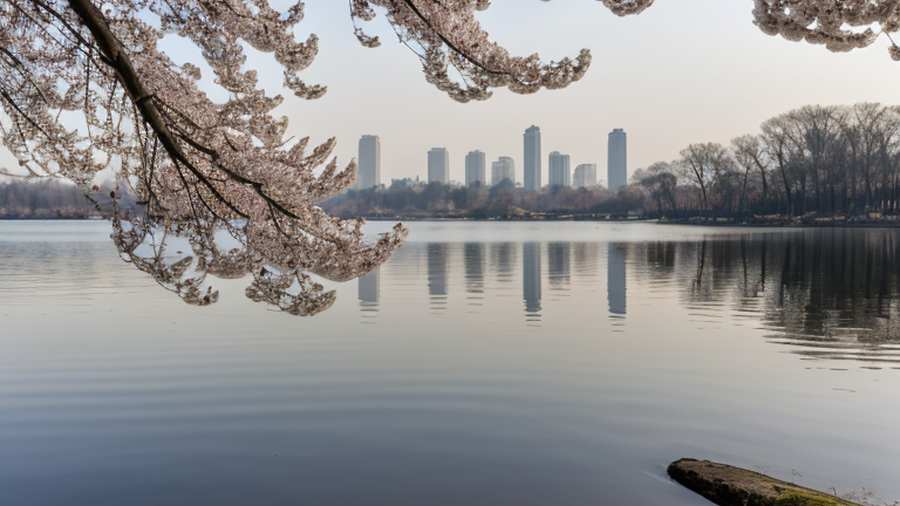
Hunhe Riverside Park on the south bank of the Hunhe in Shenyang is a stretch of the long river park, the water wide and the city towers across it, their lights reflected after dark. Boardwalks, waterside platforms and sculptures recalling the old river wharves fill the strip, and locals run and fly kites here in the evening. Park in the municipal bays outside, the approach is flat, the boardwalk has no steps, and twenty to thirty minutes is enough before driving back to return the car.
- Where to eat
- Back in Shenyang, Laobian dumplings, chicken frames and smoked meat pancakes are the local staples.
- Roads and driving
- Shenhai expressway from Anshan to Shenyang, motorway throughout, with peak-hour restrictions once inside the city.
- Where to stay
- No accommodation is booked; return the car at the Shenyang pickup point.
Tips for the day
- Riverside parking is scarce, weekdays are easier
- Children crowd the 219 Park lake, drive slowly
- Refuel inside the third ring before returning
Pages that help on this route
- Rental packages and what is included
- Temporary driving permit in China
- All routes by province
- All cars in the fleet
Costs to expect
Included: basic vehicle use and route guidance notes. Excluded: tickets, parking, fuel, meals, accommodation and personal spending.
Driving tips
- Qianshan is all stone steps, wear grippy trainers
- Book hot spring rooms ahead at weekends
- Liaoyang old streets are narrow, use designated parking
- Autumn mornings are cold, carry a jacket