Route overview
Five days north from Xi'an: the Yellow River squeezed into a roaring chute at Hukou, then south along the river road to Hancheng for its Ming lanes and the Sima Qian shrine, with the last two days given to Mount Hua. Expressway and riverside road alternate, bends but sound surface. A Rental Car for Foreigners in China trip that puts the great river and the west sacred peak in one loop.
Highlights
- Rental Car for Foreigners in China: the roar at Hukou carries for miles
- The river road runs tight between cliff and water
- Ming courtyards at Dangjia village still have families inside
- One day on Mount Hua leaves legs and memory both full
Suggested itinerary
- Day 1Xi'an to Hukou, about 350 km
- Day 2Hukou and Qankun Bay to Hancheng, about 220 km
- Day 3Hancheng and Dangjia village to Huayin, about 130 km
- Day 4A full day on Mount Hua, sleep below the peak
- Day 5Mount Hua and Tongguan back to Xi'an, about 180 km
Day by day
North from Xi'an to Yichuan
About 350 km, 5h
Hukou Waterfall
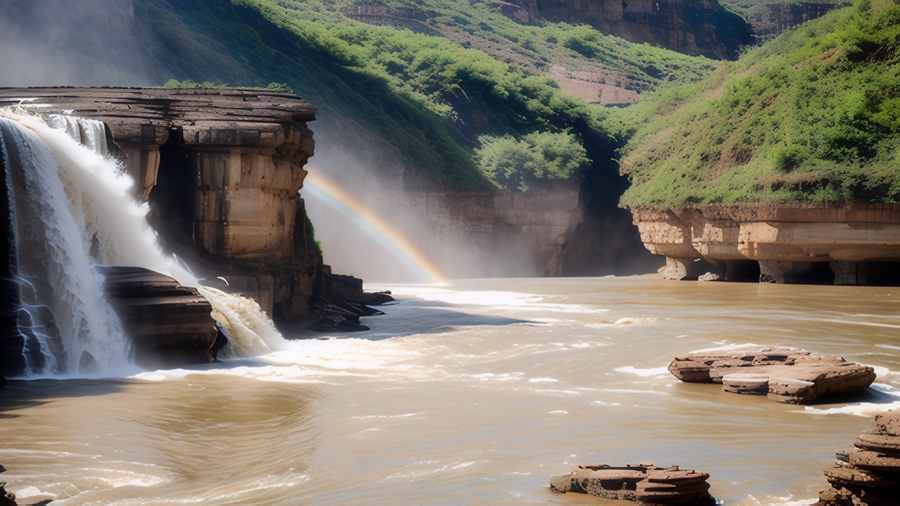
On the main stream of the Yellow River east of Yichuan, the channel narrows from over three hundred metres to a few dozen, and though the drop is only a dozen metres the whole river seems poured into a stone trough, roar and spray rising together. The gorge records the river cutting through the Luliang range, with potholes worn into the bed. Both banks have walkways, the Shaanxi side closer to the water, an hour for the loop, parking at the gate, steps slick with spray.
Mengmen Shoal
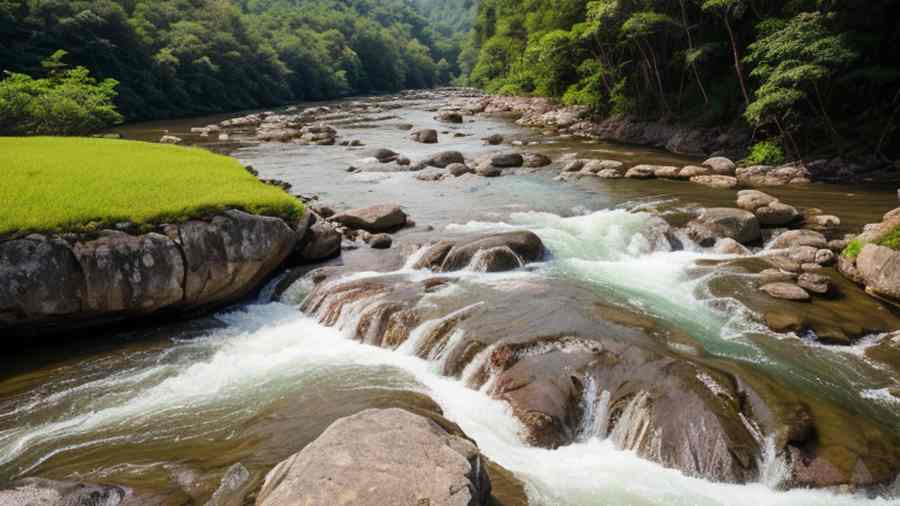
A short drive below Hukou, two great rocks split the channel and almost vanish when the river is high; locals call it Mengmen, and old texts place it above the Dragon Gate. From the bank the water squeezes between the stones and turns white, a good place for a wide view of the falls. Ten minutes from the scenic gate, roadside parking, a few steps down, no ticket needed, and the wind takes hats and tripods.
- Where to eat
- Northern Shaanxi lamb noodles and potato dishes, plain kitchens outside the gate
- Roads and driving
- Expressway then a short provincial road
- Where to stay
- Yichuan town or Hukou village
Tips for the day
- Protect cameras from spray
- Steps stay wet
- Walkways can close at peak flow
South on the Yellow River Road
About 220 km, 4h
Qankun Bay
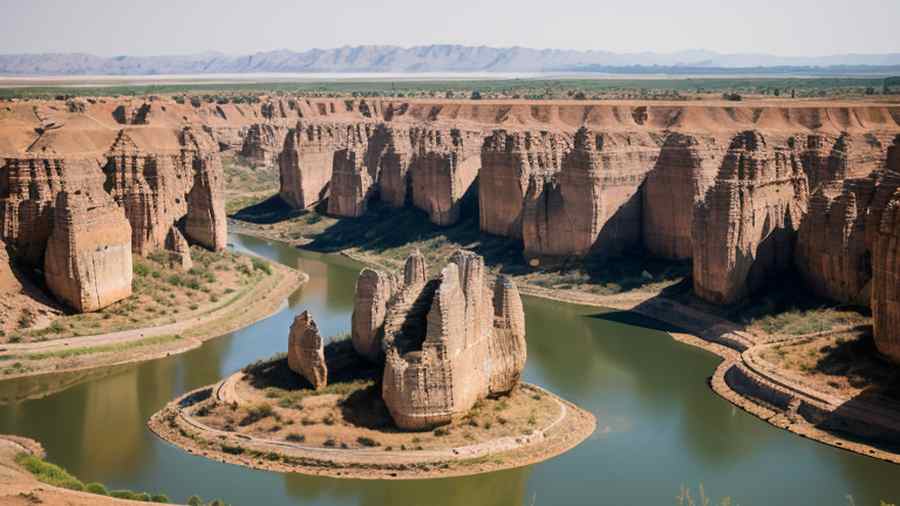
In Yanchuan the Yellow River turns in a loop close to a full circle, and from the rim deck it looks like a ribbon held by hills, deepest at sunrise and sunset. This is loess country, gullies cut fine by rain. The deck sits in a safe spot, ten minutes on foot, easy parking, a small ticket, strong wind, and a sheer drop beyond the rail.
Dangjia Village
Northeast of Hancheng, Dangjia village has been held by one clan since the Yuan, and more than a hundred Ming and Qing courtyards crowd the slope, gate towers, brick carving and mounting stones intact, many still lived in. Lanes are narrow, flagstones polished by feet, ninety minutes for the loop, ticket covers the open houses, parking at the entrance, best light late in the day.
Sima Qian Shrine
On a loess bluff at Zhichuan near Hancheng, the shrine to Sima Qian climbs the slope in terraces, stone steps from the gate to the tomb between old cypresses. It honours the historian of the Records of the Grand Historian, steles and a statue telling his life, and from the top the Yellow River and the town come into view. Parking at the foot, twenty minutes of steps, a small ticket, best in autumn.
- Where to eat
- Hancheng pepper yoghurt, buckwheat noodles and fried pastries
- Roads and driving
- Riverside scenic road, many bends, gentle grades
- Where to stay
- Inside Hancheng old town
Tips for the day
- Speed limits are strict
- Do not drive into the old lanes
- Watch the wind at the rim
Hancheng to Huayin
About 130 km, 2h
Hancheng Old Town
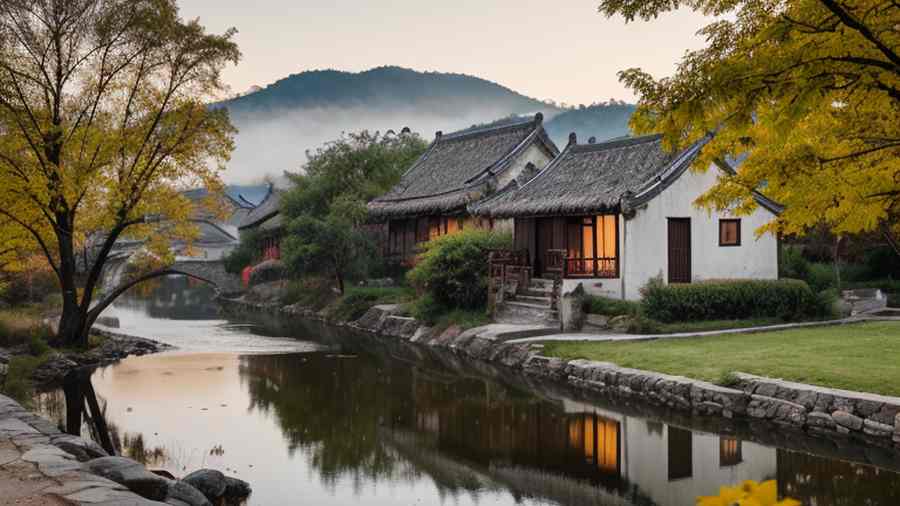
Hancheng keeps its Ming and Qing street grid, the Confucian temple, city god temple and several lanes linked without heavy rebuilding, quiet in the morning. The temple's pond and main hall are intact under old cypresses. No gate ticket for the district, a few courtyards charge separately, park outside the wall and walk in, two hours is enough.
Western Peak Temple
At the foot of Mount Hua, this temple was where emperors and officials sacrificed to the western peak, its axis running gate, hall and steles in one line, glazed tiles and stone rails intact, tall imperial tablets in the yard. Fewer visitors than the mountain, a good primer before climbing. Tickets sometimes separate from the mountain pass, parking in the square, an hour to walk, keep voices low inside.
- Where to eat
- Huayin knife noodles and buckwheat sheets, many kitchens at the foot
- Roads and driving
- Mostly expressway, town roads near the mountain
- Where to stay
- At the foot of Mount Hua
Tips for the day
- Book the cable car slot early
- Reserve a mountain bed ahead
- Bring a windproof layer
A Full Day on Mount Hua
On foot, 0 km driving
West Peak of Mount Hua
Mount Hua is famous for exposure, and the west peak gives the biggest view with the least walking: cable car, then stone steps, cliffs sheared like knife cuts, cloud rising from the gorge. A legend of an axe-cleaved rock sits on top, and beyond the rail the wall falls away. Queues are long in season, the first cabin saves an hour, and the summit runs seven or eight degrees colder with wind.
Plank Walk in the Sky
On the cliff east of the south peak, planks are fixed to a vertical face with hundreds of metres of gorge below, the mountain's best known exposed passage. A harness is required, numbers are capped, and the timid can watch from the ledge. A queue and a small extra fee at the entrance, closed in rain or ice, with height and weight limits and no place for a weak heart.
North Peak and the Sword Terrace
The north peak is where the cable car lands, lowest of the five but wide open, showing east, south and west peaks in one sweep. A stone terrace carved with the duelling swords story draws a photo queue. Stone steps link all peaks with clear signs, four to five hours for the circuit, and a moderate walker can do north and west alone.
- Where to eat
- Mountain food is pricey, carry snacks and water
- Roads and driving
- Shuttle and cable car, no driving
- Where to stay
- Mountain guesthouse or a hotel below
Tips for the day
- Gloves and knee support help
- Queue early for the cable car
- Check notices for closed trails
Mount Hua and Tongguan back to Xi'an
About 180 km, 3h
Tongguan Old Town
Tongguan guards the corner where Shaanxi, Shanxi and Henan meet, the Yellow River and Wei joining below, the old eastern gate of Guanzhong. The rebuilt town climbs the slope facing the river, walls, bell tower and lanes in one piece, a museum on the pass and its ferries. Two hours for the loop, parking outside, a modest ticket, and dusk on the wall shows the two rivers meeting.
Wei River Plain
West of Tongguan the road follows the Wei, the north slope of the Qinling to the south and loess terraces to the north, fields even and villages close. This is the granary of Guanzhong, wheat in spring and corn in autumn, roadside stalls selling persimmons and pomegranates. No need to rush, services are frequent, a good stretch to slow down before the city.
- Where to eat
- Tongguan pork sandwich and Yellow River carp
- Roads and driving
- Expressway, straight and busy
- Where to stay
- Back to Xi'an
Tips for the day
- Watch the trucks
- Avoid the evening city rush
- Refuel before returning the car
Pages that help on this route
- Rental packages and what is included
- Temporary driving permit in China
- All routes by province
- All cars in the fleet
Costs to expect
Tickets for Hukou and Mount Hua, the cable car and a night on the mountain carry most of the cost, fuel and tolls add a share, northern Shaanxi noodles keep meals cheap, quoted by the licensed agency.
Driving tips
- Spray at Hukou soaks cameras fast
- The river road has many speed checks
- Stone steps on Mount Hua are steep, bring gloves
- Drivers should keep a jacket for cold mornings