Route overview
A rental car for foreigners makes this loop straightforward: leave the city on the Jingzang expressway and stop at Juyongguan on the climb, then carry on to Badaling. Day two is a return run to Longqing Gorge for the boat through the limestone narrows, with Chadao old town kept for dusk. Day three goes northwest to the Guya cliff rooms and the Kangxi meadow, then back to the city from Kangzhuang. Mostly expressway, with long climbs and tight bends once you leave it; the two weeks of autumn colour are the pick of the year.
Highlights
- Badaling Great Wall
- Juyongguan pass and its Cloud Platform
- Longqing Gorge boat
- Chadao old town
- Guya cliff dwellings
- Kangxi meadow by Guanting reservoir
Suggested itinerary
- Day 1D1 Beijing to Juyongguan and Badaling, about 80 km (Juyongguan wall, Cloud Platform, Badaling wall)
- Day 2D2 Badaling to Longqing Gorge and back, about 60 km (gorge boat, Baihua Cave, Chadao at dusk)
- Day 3D3 Badaling to Guya and Kangxi, then Beijing, about 130 km (Guya cliff rooms, Kangxi meadow)
Day by day
Day 1 City to Juyongguan and Badaling
About 80 km: 50 km to Juyongguan, another 30 km up to Badaling
Juyongguan Great Wall
Juyongguan fills the Guanshu valley northwest of Changping, the northernmost of the Taihang passes and Beijing’s front door for centuries. What stands now is the Ming rebuild: a wall running up both ridges, watch towers along the crest, and a circuit on foot that takes a little over an hour. Give the Cloud Platform in the middle of the pass twenty minutes of its own. It is a Yuan stone base with six scripts cut into the arch tunnel, and the grooves are still deep enough to read with a torch. Park in the lot below the pass; before ten in high season there is usually space. The wind on the wall is strong even in summer.
Badaling Great Wall
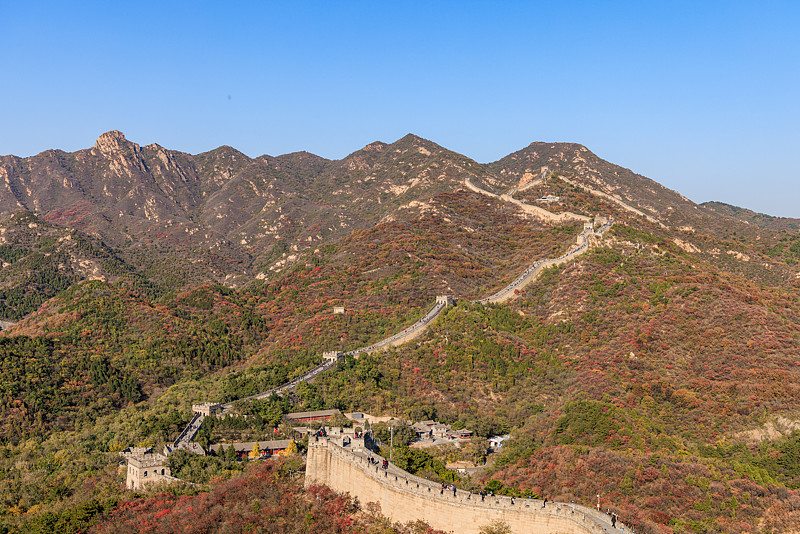
Badaling is the best known stretch of the Ming wall, built along the ridge above the pass where the road north drops into the Yanqing basin. The open section runs north and south from the central platform. The north line is steep, with the good-han slope around North Tower Eight; the south line is gentler and much quieter, easier with children or older walkers. Most bricks are original Ming work, the steps vary in height and the steepest pitches come close to forty degrees, so going down costs more than going up. Cable car and toboggan are separate tickets. Entry needs a real-name booking online and walk-up tickets are usually gone on holidays. The car park sits a fair walk from the gate and the shuttle costs extra.
- Where to eat
- Lunch in the farm restaurants along the Guanshu valley: free-range chicken stewed with mushrooms, or small fish braised under a cornmeal flatbread, around 50-60 CNY a head. For a hot dinner, drive ten minutes to Yanqing town, or go to Liugou village for the fire-pot tofu set, tofu, pickled cabbage and pork belly layered in one pot with cornmeal cakes, which is the dish Yanqing is known for.
- Roads and driving
- In a rental car for foreigners, take the Jingzang expressway out of the city; past the Juyongguan toll gate you enter the Guanshu valley, a continuous climb with heavy truck traffic and one lane each way, so judge overtaking carefully. The stretch ices over in winter and even a salted surface slides. After the Badaling exit the road is reserved for the scenic area and queues form by eight in the morning on holidays. The return is a long descent: use a low gear and let the engine hold the car instead of riding the brakes.
- Where to stay
- For a rental car for foreigners the first night is easiest in Chadao village, Badaling town: guesthouses stand ten minutes on foot from the wall ticket office, so you do not fight for parking the next morning, and courtyard rooms run 200-300 CNY. For more comfort, go back to Yanqing town, where chain hotels around Guishui north street cost 300-500 and restaurants and shops are close.
Tips for the day
- Book both Juyongguan and Badaling online in advance with passport details
- There is no shade on the wall: hat and sunscreen in summer, gloves in winter
- Keep the parking and shuttle tickets, they are checked on the way out
Day 2 Badaling to Longqing Gorge and back
About 60 km return: 30 km each way
Longqing Gorge
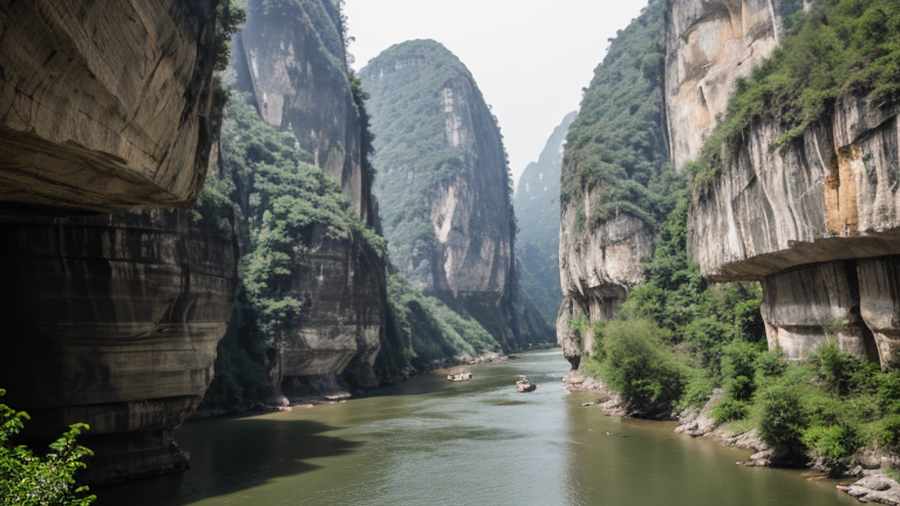
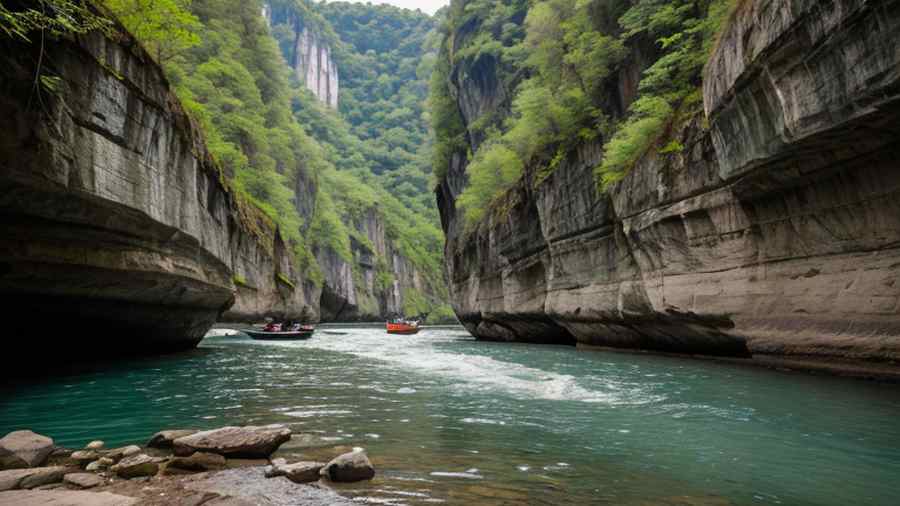
Longqingxia is the Gucheng river held back by an arch dam, opened to boats in the 1980s. Limestone cliffs stand on both sides and at the narrowest point the boat almost brushes the rock, which is why people call it the little Three Gorges. The ride runs about forty minutes without a stop and the air coming down the gorge stays cool even in June. From the landing a stretch of boardwalk leads to Baihua Cave, an artificial cave of stalactites, worth a look and no more. In winter the gorge runs an ice lantern festival with frozen falls lit along the walls, the busiest weeks of the Yanqing year. Ticket and boat are separate, and without the boat there is no way into the gorge.
Chadao old town
Chadao was a Ming garrison town built in front of Badaling: one walled ring, an east gate and a west gate, troops and grain kept here ready to move up to the pass. Little of the old housing survives and the street you walk now is a rebuild in grey brick, running inns and snack stalls. Come at dusk when the day crowd has gone, stand on the wall and look north, the Badaling ridge sits right on the skyline. The town is small, half an hour covers it, no entry fee, park at the village mouth.
- Where to eat
- Farm restaurants at the gorge gate and in Gucheng village serve rainbow trout, roast lamb leg and chicken stewed with wild mushrooms; prices run above the city, so confirm portions before ordering. Back in Badaling town, a bowl of Yanqing buckwheat noodles in lamb broth costs about fifteen yuan.
- Roads and driving
- Two ways to the gorge in a rental car for foreigners: the expressway to Yanqing town then the old county road, wider but longer, or the Xianglong road direct, fifteen kilometres shorter with tight bends and a narrow surface where one car has to give way. The gorge car park sits below the dam on a steep ramp, so pull the handbrake hard. Return the same way and slow down after dark, when livestock are often on the road.
- Where to stay
- Staying on in Chadao saves moving luggage. For a change, take a farmhouse room in Gucheng village below the gorge, or a hotel in Yanqing town; Gucheng is very quiet at night and you can hear the water.
Tips for the day
- Ticket and boat ticket are separate, and the boat is the only way into the gorge
- The gorge runs several degrees cooler than outside, take a long-sleeve layer
- The ice lantern festival runs December to February and rooms sell out early
Day 3 Badaling to Guya, Kangxi and back to the city
About 130 km: 38 km to Guya, 18 km on to Kangxi, 75 km back to the city
Guya cliff dwellings
Guya Ju is a granite cliff in a side valley north of Dongmenying village, near Zhangshanying. More than a hundred rooms are cut straight into the rock face, some the size of a small house, others no wider than a bed, linked by carved steps and passages. Every opening faces south, out of the wind, with drainage channels cut above the doors. Who cut them and when is still argued: the common reading is that Xi people sheltered here between the Tang and the Five Dynasties, others say border troops were quartered here. The climb takes twenty minutes on narrow steps, so wear grippy shoes and stay out of the caves that are closed.
Kangxi meadow
Kangxi sits on the east shore of Guanting reservoir at Kangzhuang, a flat river meadow that made its name with riding, bonfires and yurt camps for Beijing weekenders. Water quality and wetland protection have since taken land back, so the open area is far smaller than the old guides suggest and the riding concessions are tightly run. Ring ahead and ask which section is open that day rather than driving in on an old map. The hour worth keeping is dusk: wide water, wind flattening the reeds, birds moving overhead.
- Where to eat
- Eat on the way back at Kangzhuang or Badaling town: fish from Guanting reservoir stewed in the local style, with a bowl of millet porridge. To take something home, buy Yongning huoshao in Yanqing town, a charcoal-baked flatbread that holds meat or egg and keeps well.
- Roads and driving
- In a rental car for foreigners, head for Guya Ju on the expressway to Yanqing town, then to Zhangshanying on the Binhe north road; the last few kilometres are village road, steep and tight, pulling over to pass. From Guya to Kangxi it is the Kangzhang road down to Kangzhuang, mostly flat. Return on the Jingzang expressway: the Kangzhuang to Badaling stretch is a long descent and the inbound side jams after four in the afternoon, so leave early.
- Where to stay
- The third day ends back in the city, so no hotel is needed. If you want a fourth night, Yanqing town and Kangzhuang both have hotels and you can add the horticulture park or Yeyahu wetland the next morning.
Tips for the day
- The Guya steps are narrow, keep your pack slim and your hands free
- Which part of Kangxi is open changes year to year, ring before you go
- Aim to be on the expressway before three in the afternoon
Pages that help on this route
- Rental car for foreigners: packages and pick-up
- Temporary driving permit for foreign licence holders
- All 31 provinces route index
- Tank 300 details: steadier on the Guya village road
Costs to expect
For two people, three days on this loop runs around 2,000-2,600 CNY with a rental car for foreigners booked separately: two nights, wall and gorge tickets with the boat, fuel, tolls and parking. Car rental is separate.
Driving tips
- Book Juyongguan and Badaling online in advance with passport details; holiday walk-ups are usually gone
- Mountain mornings are cold even in October, take a jacket
- The Guanshu stretch of the Jingzang expressway carries heavy trucks and ices over in winter, so skip it in snow
- Start the return before 4 pm; the Kangzhuang to Badaling stretch is a long descent, use a low gear instead of the brakes