Route overview
Pick up the car in Yinchuan, visit the Western Xia royal tombs and their museum at the foot of the Helan Mountains, then drive south to the Huoshizhai Danxia landforms and Zhenhu Lake in Xiji before returning to Yinchuan on day five. Around 670 km in total, a mix of expressway and provincial mountain roads, well suited to travellers on a Rental Car for Foreigners in China who enjoy northwest history and geology.
Highlights
- Western Xia royal tombs and museum below the Helan Mountains
- Red Danxia cliffs and hill forts at Huoshizhai
- Zhenhu barrier lake and the Jiangtaibao historic site
- A relaxed northwest loop made for a Rental Car for Foreigners in China
Suggested itinerary
- Day 1D1 City pick-up in Yinchuan, Western Xia Tombs, Western Xia Museum — 30 km
- Day 2D2 Stay near the tombs, Gunzhongkou valley — 20 km
- Day 3D3 Tombs area to Huoshizhai, Xiji — 300 km
- Day 4D4 Huoshizhai area, Yuntai viewpoint, Shisi Mountain — 10 km
- Day 5D5 Xiji, Zhenhu Lake, Jiangtaibao, back to Yinchuan — 310 km
Day by day
Day 1 Pick-up in Yinchuan, the Western Xia tombs at the Helan foot
About 30 km today
Western Xia Royal Tombs
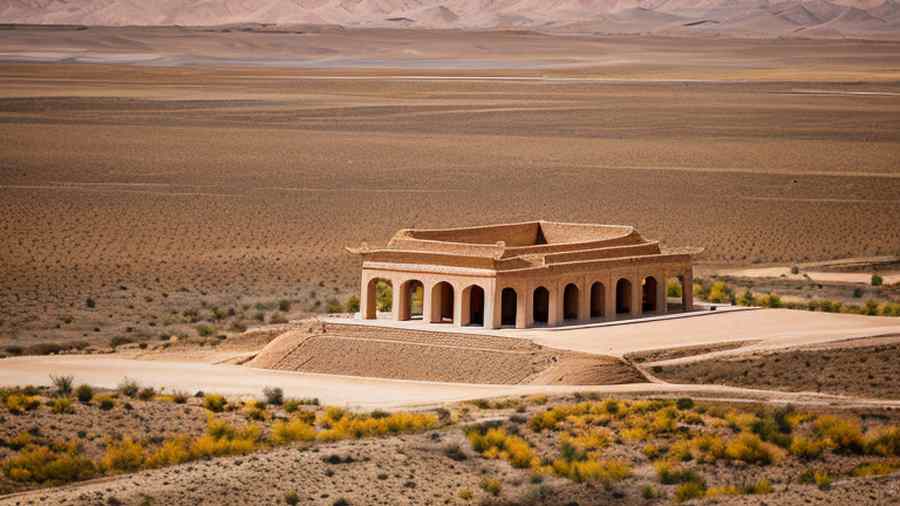
The Western Xia royal tombs lie about thirty kilometres west of Yinchuan at the Helan foot, opening onto the Yinchuan plain. They hold the mausoleums of Western Xia emperors and nobles. Only rammed-earth mounds remain above ground, their silhouettes on the gravel plain often compared to eastern pyramids. Platforms, stele bases and stone sculptures hint at the original layout, with museum finds giving context. Start at the entrance map, then follow the connecting road to the better-preserved mounds; walking is mostly flat with few steps. Park at the entrance lot, large but queued on holidays. Expect moderate walking in open sun, bring water and sunscreen; less mobile visitors can use the shuttle. The drive from the city is straightforward and signed, a comfortable first stop on a Rental Car for Foreigners in China loop.
Western Xia Museum
The Western Xia Museum sits beside the tomb area, displaying steles, porcelain, bricks, tiles, clay figures and inscribed fragments excavated on site. Its galleries explain the chronology, official system, Buddhist practice and written script of the Western Xia state. Rooms are organised by period and theme; start with the script and territory display, then move to building parts and everyday objects found in the tombs, reading the labels as you go. The route is a one-way circuit taking about an hour, all indoors on level floors with almost no steps, suitable for older visitors and children. A small lot sits by the entrance; when it is full, park at the main tomb lot and walk over. The hall can feel cool in summer, so carry a light layer. The museum gives context that makes the earthen mounds outside much easier to understand.
- Where to eat
- Lunch in the town outside the tombs: Ningxia hand-grabbed lamb, lamb soup with bread and noodles; dinner back in Yinchuan on stewed lamb, offal soup and goji pastries. Visitors on a Rental Car for Foreigners in China trip often try the lamb dishes here.
- Roads and driving
- Head west from central Yinchuan on the signed road to the tombs, about half an hour on a straight, lightly trucked road; connectors between sites are signposted.
- Where to stay
- Stay near the tomb area or in west Yinchuan, close to the Helan foot for day two.
Tips for the day
- Visit the museum before the tomb mounds, so the history makes sense
- The open tomb area has little shade; carry enough water
- Parking is at the entrance, then use the site shuttle into the tombs
Day 2 Slow day near the tombs, the Gunzhongkou valley
About 20 km today
Gunzhongkou Valley
Gunzhongkou, or Bell Valley, is a ravine on the eastern Helan slope not far from Yinchuan, one of the earlier developed mountain valleys along the range. The mouth curves like a bell, with hills closing in on three sides; locals have long used it as a summer retreat. Inside the valley stand old temples, cliff inscriptions and rock scenery. Follow the bottom path inward between exposed granite and drought-tough shrubs; at the fork, a side trail climbs for views over the ridge and the Yinchuan plain beyond. Walk the main path first, and take the uphill branch only if you feel like it. Parking is at the valley mouth, a small lot that fills on weekend mornings. Steps and gravel alternate; the start is gentle, the climb steeper, so average walkers can stay on the main trail.
- Where to eat
- Lunch at a farmhouse restaurant below the valley: stewed dishes, noodles and local pasta; back in town in the afternoon for goji products and dried fruit as road snacks.
- Roads and driving
- The car stays put today; a short hop along the mountain road to Gunzhongkou, narrow but gently curved, with Helan rock faces on one side. Keep right when passing oncoming cars.
- Where to stay
- Stay at the same hotel near the tombs or west Yinchuan; no hotel change, leave luggage in the room.
Tips for the day
- Buy water in the town before climbing; shops are scarce in the valley
- Valley paths are gravelly, wear grip-soled shoes
- Wind picks up and it cools in the evening, bring a jacket
Day 3 South to Xiji, first view of Huoshizhai Danxia
About 300 km today
Huoshizhai Danxia
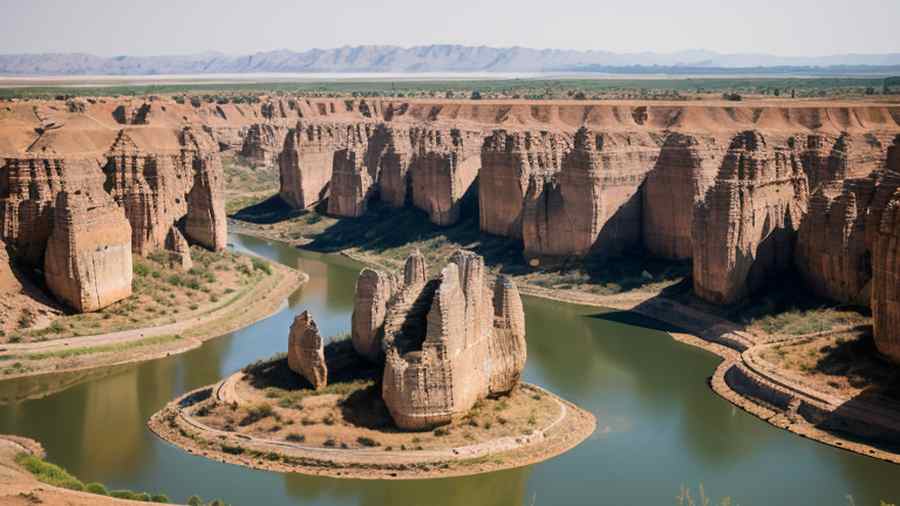
Huoshizhai sits in the hills north of Xiji county town, an unusual Danxia area in the northwest: red conglomerate carved by water and weathering into odd peaks, steep cliffs and fort-like ridges, mixed with trees and valleys that turn reddish-brown in bright sun. In earlier times the slopes served as refuge forts, and cave grottoes and wall traces remain. Walk the site trails between red rocks, climb a viewing platform for the sweep of red ridges, then drop to the valley floor for trees and a stream. Park outside the main gate and enter on foot or by shuttle. Trails mix steps and gentle slopes; the climbs have continuous stairs, so it is a moderate outing in grip-soled shoes. After rain the rock is slippery, take your time. The landscape differs sharply from the gravel plains near Yinchuan, and a half day suits it well.
Xiji County Market
Xiji county town spreads along a tributary of the Qingshui River, a small market town in the Guyuan hills with straight streets and, on market days, stalls of potatoes, grains, dried fruit and mountain produce. It has no ticketed sights; after a long drive it is a calm stretch to walk through local shopping and restock water and snacks. The market clusters around the main street and wet market; park in marked roadside bays or an open lot at a corner, then walk in. Lanes are level with few steps, easy for pushchairs and older visitors, though mornings are crowded, keep valuables close. Half an hour is enough before noodles at a local shop; toilets and small stores sit nearby. The road back opens onto pale-gold autumn fields.
- Where to eat
- Lunch at a motorway service area or a town toward Guyuan on noodles and simple dishes; dinner in Xiji county town on stewed vegetables, potato noodles and lamb sides.
- Roads and driving
- Take the Fuyin expressway south out of the city, then a provincial road toward Xiji after Guyuan; the final mountain section has bends but smooth tarmac. This is a common way to run a long Rental Car for Foreigners in China trip across the northwest; stop at service areas twice on the drive.
- Where to stay
- Stay in Xiji county town or a guesthouse by the Huoshizhai gate, close to the Danxia for day four.
Tips for the day
- Check fuel before the long leg; service areas are spaced apart
- Watch for cattle and sheep on mountain roads, especially early and late
- County-town rooms are limited, book ahead in peak season
Day 4 Slow day in the Huoshizhai area, viewpoint and grottoes
About 10 km today
Yuntai Mountain Viewpoint
The Yuntai viewpoint stands on a high terrace to one side of Huoshizhai, facing the red Danxia peaks and valleys, one of the better places to see the ridges in a sweep. No large building stands on the terrace, just paved paths and railings; red rock layers unfold along the gully, with loess plateaus and villages in the distance. The ridges formed when sedimentary rock rose and weathered; the viewpoint was levelled on the high ground later. Walk up from the parking spot along a slope path for about ten minutes, pause for photos, and return the same way. Parking is a small area below the terrace, limited bays. The path is mostly gentle gradient with a few stone steps, easy work; the wind can be strong, stand firm. Red tones deepen in slanting morning and evening light.
Shisi Mountain Grottoes
Shisi Mountain grottoes are cut into the cliff face of a rocky hill beside Huoshizhai, one of the Buddhist cave remnants in the area. Caves and niches are laid out in layers up the cliff, with statues partly remaining; period and building history are given in the on-site labels in general terms. The cliff is not huge, but caves sit some height above the ground, reached by stone steps and a plank walkway. Look at the arrangement of niches and the weathered rock, with the valley and trees behind. Follow the boardwalk from cave to cave; do not enter closed grottoes. Park in the foot lot and walk up the track. Steps are fairly steep and numerous; average walkers can stay on the lower platform. The boardwalk is narrow, give way politely, and keep clear of loose stone on the face; climbing after rain is not advised.
- Where to eat
- Lunch at the guesthouse or a village below: mashed potato, stewed dishes and steamed bread; buy fruit and water in town in the afternoon for the return leg.
- Roads and driving
- No long move today; short hops on country lanes between the guesthouse, viewpoint and grottoes. Lanes are narrow, with pedestrians and non-motor vehicles at village gates, so keep speed low.
- Where to stay
- Stay another night in Xiji town or the Huoshizhai guesthouse, no change of lodging.
Tips for the day
- The viewpoint is windy, hold hats and phones securely
- Grotto interiors are dim, hold the handrail on steps
- Villages are quiet after midday; slow and sound the horn gently at gates
Day 5 Zhenhu Lake and Jiangtaibao, back to Yinchuan
About 310 km today
Zhenhu Lake
Zhenhu Lake sits in the countryside near Xiji county town, a barrier lake formed when an earthquake landslide blocked a river channel. The water is long and narrow, framed by loess plateaus and slopes with reeds and shallows at the edge. As an inland northwest lake it differs from southern water towns: open, still water with migratory birds passing through in seasonal shifts. It lies down a country road southwest of town, signed from the county seat. Walk a stretch of the shore path for the water and the fields across the bank; do not climb onto unreinforced slopes. Park at the small lakeside lot, limited bays. The path is level with few steps, a half-hour stroll; wind and sun are strong, bring a jacket and water. An hour stop here on the return leg changes the rhythm after relics and Danxia.
Jiangtaibao Fort Town
Jiangtaibao sits beside the road in eastern Xiji, a small fort town remembered for a historic rendezvous; the fort name echoes earlier military garrison traditions, and a memorial complex, square and exhibition hall on the main street cover that modern history. Displays rely on text panels and objects. Look at the fort wall outline, the memorial square and the hall exhibits. Park at the town-gate lot and walk to the square and hall, about an hour. The street is level with few steps, and the square is wheelchair accessible. Hall lighting is modest, so read the panels at an easy pace. Small eateries and shops in town offer supplies. The expressway back toward Yinchuan branches off from here without a detour. As the closing cultural stop, it contrasts with the earlier royal tombs and grottoes across different periods.
- Where to eat
- Lunch at Jiangtaibao or a town along the way: cold skin noodles, pasta and stir-fries; dinner back in Yinchuan with a wider choice.
- Roads and driving
- In the morning take the provincial road to Zhenhu Lake and Jiangtaibao, then join the Fuyin expressway back; the motorway is straight, traffic builds after midday, so stop at service areas.
- Where to stay
- No overnight stay is arranged; if you want an extra night, stay in Yinchuan city for an easy departure next day.
Tips for the day
- The return leg is long; fill the tank and check tyres before leaving
- Wind off the lake is strong; stay back from slippery banks for photos
- Swap drivers on the long expressway; rest in a service area when sleepy
Pages that help on this route
- Rental packages and what is included
- Temporary driving permit in China
- All routes by province
- A car that suits this route: Toyota Highlander (7-Seat Hybrid SUV)
Costs to expect
Included: vehicle use, basic insurance, pick-up and drop-off. Not included: tickets, meals, hotels, fuel and tolls.
Driving tips
- Bring your passport and temporary driving permit to pick up the car, keep them with you
- Northwest sun is strong; pack sunglasses, sunscreen and drinking water
- Provincial mountain roads are signed 60—80 km/h, slow down through villages
- This loop suits a five-day Rental Car for Foreigners in China trip; fill the tank before leaving