Route overview
Pick up in Taiyuan, drive west to Qikou old town in Linxian for the Yellow River ferry and Lijiashan cave dwellings, then north to Yingxian for the wooden pagoda and Jingtu Temple, with Xuankong Temple in Hunyuan on the way; a slow day in Yingxian old town on day three, and back to Taiyuan along the Great Wall and Han tombs on day four. Around 740 km of loess plateau roads and northern Shanxi basin lanes, alternating old towns, Liao-Jin architecture and walled beacon ruins, suited to travellers on a Rental Car for Foreigners in China who love Shanxi villages and historic buildings.
Highlights
- Qikou Yellow River ferry and Lijiashan cave dwellings
- Yingxian wooden pagoda and Jingtu Temple Liao-Jin halls
- Hunyuan Xuankong Temple and Guangwu Great Wall
- A western and northern Shanxi loop for a Rental Car for Foreigners in China
Suggested itinerary
- Day 1D1 Taiyuan, Qikou old town, Lijiashan — 210 km
- Day 2D2 Qikou, Yingxian wooden pagoda, Jingtu Temple, Xuankong Temple — 300 km
- Day 3D3 Yingxian, old town lanes, Sanggan River wetland — 10 km
- Day 4D4 Yingxian, Guangwu Great Wall, Shanyin Han tombs, Taiyuan — 220 km
Day by day
Day 1 West from Taiyuan, Qikou old town and the Yellow River ferry
About 210 km today
Qikou Old Town
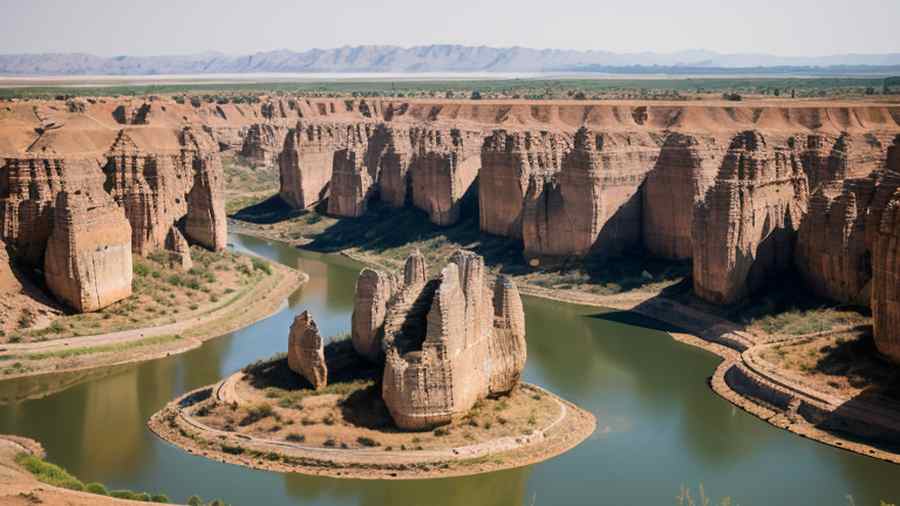
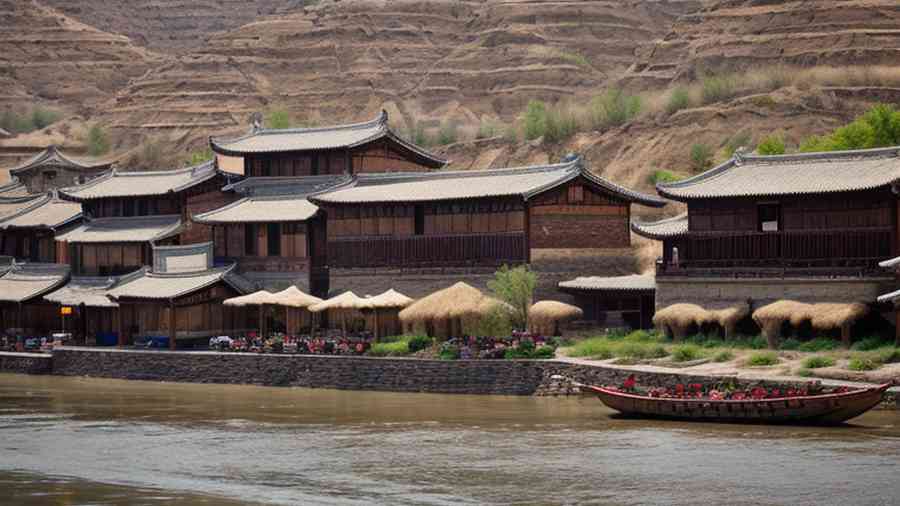
Qikou old town sits on the Yellow River bank in southwest Linxian, a Ming-Qing merchant river-and-land transhipment port where the Yellow and Qiushui rivers meet; cargo loaded at the wharf and carried overland, the town rising in layers up the loess slope. Old lanes keep shop fronts, draft banks, wharf steps and courtyards; doors and plaques show the layout. Look at shop fronts, the river ferry and the town from the rear hill. Enter at the town gate, walk the main street down to the Yellow River for the wharf and Shaanxi hills across, about two hours. Park outside town and walk in; cars are barred in the old lanes. Cobbled slopes rise and fall with many steps, moderate work, mind the bank edge. The Yellow River road brings visitors on a Rental Car for Foreigners in China straight to the signed gate.
Lijiashan Cave Dwellings
Lijiashan climbs the slope behind Qikou, a cave-dwelling village cut layer by layer into the loess cliff; courtyards and roof terraces link into paths, the village merged with the hillside. In the late Qing and early republican years many villagers traded away and returned to build cave courtyards whose lintels and brick walls still carry decorative detail. Look at the layered cave layout, courtyard brick carvings and the view over Qikou and the Yellow River from the slope. Walk up the rear hill from the old town, follow the paths between courtyards, about an hour. Park at the foot lot and climb on foot. Slopes and stone steps are fairly steep, moderate work; older visitors go slow. This is a residential area, keep voices quiet at doorways.
- Where to eat
- Lunch at a Lüliang or Linxian town on western Shanxi pasta, mínjiān noodles and stews; dinner in Qikou on Yellow River carp, minced-meat noodles and farmhouse stir-fries. Visitors on a Rental Car for Foreigners in China trip should stock water and snacks in the city before the hills.
- Roads and driving
- Taiyuan to Qikou by motorway to Lüliang, then the Yellow River road; the last section climbs and bends along the river but tarmac is smooth. Keep right and slow when passing oncoming cars.
- Where to stay
- Stay at a Qikou old-town inn or a Lijiashan guesthouse; cave-dwelling rooms give a local night.
Tips for the day
- Old-town lanes and slopes are many; keep luggage light
- Wind off the Yellow River, add a layer in the evening
- The town station is small; fill up at Lüliang before the hills
Day 2 North from Qikou, Yingxian pagoda and Xuankong Temple
About 300 km today
Yingxian Wooden Pagoda
The Yingxian wooden pagoda stands in Fogong Temple northwest of Yingxian town, formally the Sakyamuni Pagoda of Fogong Temple, one of the oldest surviving tall timber-frame pavilion pagodas. The whole tower joins wooden members by mortise and tenon; five floors outside, hidden layers between, its outline rising clear over the northern Shanxi plain. The open courtyard carries steles and old cypresses. Look at the Dougong brackets, eaves and timber structure, and the courtyard steles. Enter the temple, reach the platform before the pagoda; interior climbing follows site rules, exterior viewing takes about an hour. Park in the square before the temple. The courtyard is level with few steps around the tower; the internal stairs are narrow and steep, so average visitors can stay on the lower level.
Jingtu Temple
Jingtu Temple stands inside Yingxian county town, one of the better-preserved Jin-dynasty monasteries in northern Shanxi. Its halls centre on the main shrine, holding Ming painted sculptures and murals, with timber frames and fittings kept in old form. The monastery is compact with fewer visitors than the pagoda, a quiet place for architectural detail. Look at the main hall frame, painted figures and murals, and the courtyard cypresses. Enter along the central axis to the hall, view sculptures and eaves components before it, about forty minutes. Park in marked bays around the temple. The courtyard is level with few steps; hall light is dim, read murals against the labels. Do not touch sculptures, and follow photography rules inside.
Xuankong Temple
Xuankong Temple clings to the cliff of Jinlong Gorge on Mount Heng south of Hunyuan county town, a monastery complex half-way up the rock face whose timber halls are held by wooden posts and beams driven into the cliff; walkways join the pavilions along the wall, looking hung from the rock from afar. The temple dates back centuries and was rebuilt repeatedly, halls spread at different cliff heights. Look at the cliffside pavilions, suspended walkway and gorge shape. From the foot lot first take in the whole view, then climb the narrow boardwalk through halls along the entry route, about an hour. The access passage is narrow and steep, entered in limited batches; average or height-sensitive visitors can watch from the foot viewing platform. Gorge wind is strong, wear grip shoes, and hold children close.
- Where to eat
- Lunch at a Xinzhou or Shanyin town on noodles; evening in Yingxian on northern Shanxi pasta, oat noodles and lamb stew.
- Roads and driving
- From Qikou head back toward Lüliang for the motorway, through Xinzhou and Shanyin to Yingxian, then east to Hunyuan for Xuankong Temple; a long transfer day on a Rental Car for Foreigners in China northern Shanxi loop, rest twice en route.
- Where to stay
- Stay in Yingxian county town, close to the old-town stroll on day three.
Tips for the day
- Pagoda courtyard parking is the square before the tower, limited bays
- Xuankong climbing is capped and queues on holidays are long
- The Hunyuan to Yingxian road bends gently; slow when passing oncoming cars
Day 3 Slow day in Yingxian old town, Sanggan River wetland
About 10 km today
Yingxian Old Town Lanes
Yingxian old town spreads around the wooden pagoda, keeping an old street and courtyard layout. Lane sides hold single-storey shops, blacksmith stalls, grocery stores and residential doors; plaster and wooden gates carry age marks, with locals buying vegetables, mending bikes and making pastries along the way. The district has no ticket, a slow look at everyday life in a northern Shanxi county seat. Look at old shop fronts, weathered walls and residential scenes. Walk slowly through the lanes beside the pagoda court, about an hour there and back. Park in the pagoda square and walk in. Lanes are level with few steps; mornings are busy with stalls and cycles, keep clear. Ask before photographing people.
Sanggan River Wetland
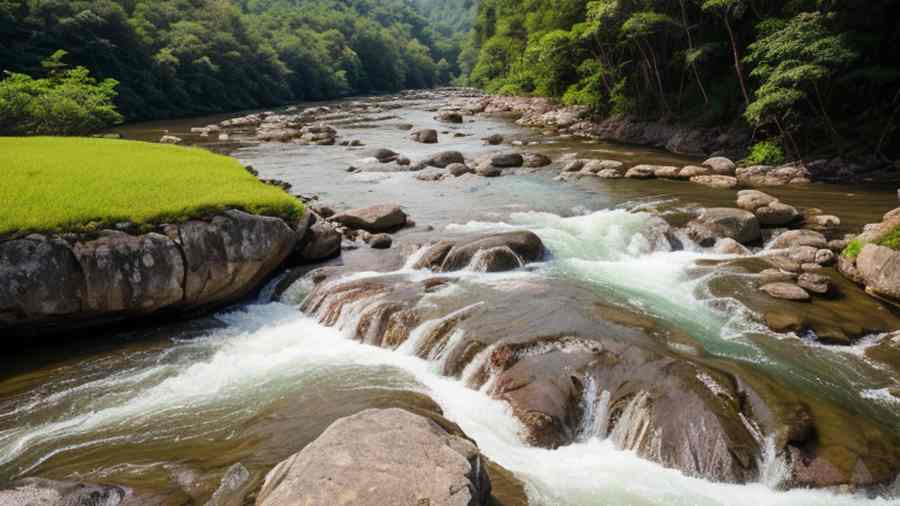
The Sanggan River wetland lies on a river bend outside Yingxian town, where a tributary spreads into shallows and reed beds with tree belts and paths along the bank; waterbirds pause on the shallows, busy during spring and autumn migration. No large recreation facilities here, just a natural bend against farm fields. Look at the water, reed belts and distant village fields. Turn off the suburban road onto the wetland path and walk a stretch of bank, about an hour. Park on roadside open ground or the trailhead lot. The path is level with few steps; bank soil is soft, stay out of the water. Wind and sun are strong, bring a hat and water.
- Where to eat
- Lunch at an old-town eatery on sliced noodles, cold jelly noodles and pickles; afternoon brick tea at a street teahouse.
- Roads and driving
- No long move today; hop or walk between old-town lanes and the wetland. County roads are straight, watch pedestrians and cycles.
- Where to stay
- Continue in Yingxian county town, no hotel change.
Tips for the day
- The old-town morning market is lively, good for local daily life
- The wetland is open and windy; wear a hat
- County eateries close early afternoon; do not delay lunch
Day 4 Wall beacon towers and Han tombs, back to Taiyuan
About 220 km today
Guangwu Great Wall
The Guangwu Great Wall runs over slopes around Guangwu town in Shanyin county, a surviving Ming section of the Shanxi wall. Loess and stone-built ramparts rise and fall along the ridge, beacon towers standing at intervals over open fields and terraces. This stretch was not heavily restored; weathering shows clearly, while crenellations and watchtower outlines remain legible. Look at the ridge-line wall, beacon mounds and open hill shapes. From the track beside Guangwu village climb onto a section of wall and walk slowly along the high ground, about an hour. Park on the village edge. The climb mixes dirt and gravel with ups and downs, grip-soled shoes; wall edges are loose, do not step on crenellations. Wind keeps it cold, dress warm.
Shanyin Han Tombs
The Shanyin Han tombs spread across the plain south of Shanyin county town, a Han-era burial ground whose surface mounds remain, varied in size among farm fields; weathered over centuries, the earth hills sit gently on the plain. The burials are underground, so the surface shows mounds and farmland, with labels noting period and distribution. Look at the mounds' arrangement across the fields and the rural setting. Stop at viewpoints along the field road, walk to the mounds for about half an hour. Park in the roadside area. Field tracks are level with few steps; loose patches on mounds are soft, do not climb in. Mosquitoes are common in summer, bring repellent.
- Where to eat
- Morning breakfast in county town; lunch at a Shanyin or Shuozhou town on noodles; dinner back in Taiyuan.
- Roads and driving
- In the morning head south from Yingxian through Shanyin for the wall and tombs, then join the motorway to Taiyuan; plain roads are straight, traffic builds after midday.
- Where to stay
- No overnight stay is arranged; if you want an extra night, stay in Taiyuan city for an easy departure next day.
Tips for the day
- The wall section has rolling dirt tracks; wear walking shoes
- Do not climb the Han tomb mounds
- Fill up in Shanyin county town before the return leg
Pages that help on this route
- Rental packages and what is included
- Temporary driving permit in China
- All routes by province
- A car that suits this route: BAIC BJ40 (Rugged 4x4)
Costs to expect
Included: vehicle use, basic insurance, pick-up and drop-off. Not included: tickets, meals, hotels, fuel and tolls.
Driving tips
- Show passport and temporary driving permit at pick-up, carry them throughout
- Spring and autumn dust winds in northern Shanxi; bring a scarf and windproof jacket
- Old towns and temples have many stone steps; wear grip-soled shoes
- This loop suits a four-day Rental Car for Foreigners in China trip in Shanxi; fill the tank before leaving