Route overview
A four-day loop around the Tianjin suburbs, arranged as a Rental Car for Foreigners in China with pickup and drop-off in the city. Roughly 190km of flat plain, river embankments and rice fields, linking an old temple in Baodi, the Chaobai river banks, the Xiaozhan military academy site and the rice villages of Jinnan. Traffic is light and parking is easy, and three of the four days keep driving under an hour, which suits visitors who would rather walk the water country than sit in city jams.
Highlights
- See Liao-era timber halls and the old pagoda at Guangji Temple in Baodi
- Follow the Chaobai river embankment past reed flats at sunset
- Learn the story of the late Qing New Army at the Xiaozhan training ground
- Walk the rice fields and irrigation channels around Xiaozhan
Suggested itinerary
- Day 1D1 Tianjin city to Baodi Chaobai River, 80km
- Day 2D2 Baodi to Xiaozhan in Jinnan, 80km
- Day 3D3 A day on the spot around Xiaozhan
- Day 4D4 Xiaozhan back to Tianjin city, 30km
Day by day
D1 Tianjin city to the Chaobai River at Baodi
Total driving today 80km
Guangji Temple, Baodi
Guangji Temple stands on South Street in Baodi town, first built in the Liao dynasty and among the oldest Buddhist sites surviving in Tianjin. The main hall keeps Liao timber framing, with bracket sets and column bases rare among northern buildings of the period, and a pagoda base plus Ming and Qing restoration steles remain alongside. The compound is small and a circuit takes half an hour, with the hall framing and inscriptions the real subjects; the ginkgo in front turns gold in autumn and daylight through the windows shows the timber best. A few spaces sit at the gate, or park at the municipal lot on the street corner and walk two hundred metres. Ground inside is level brick paving with only a threshold at the hall door, and free incense is offered at the entrance.
Chaobai River, Baodi Reach
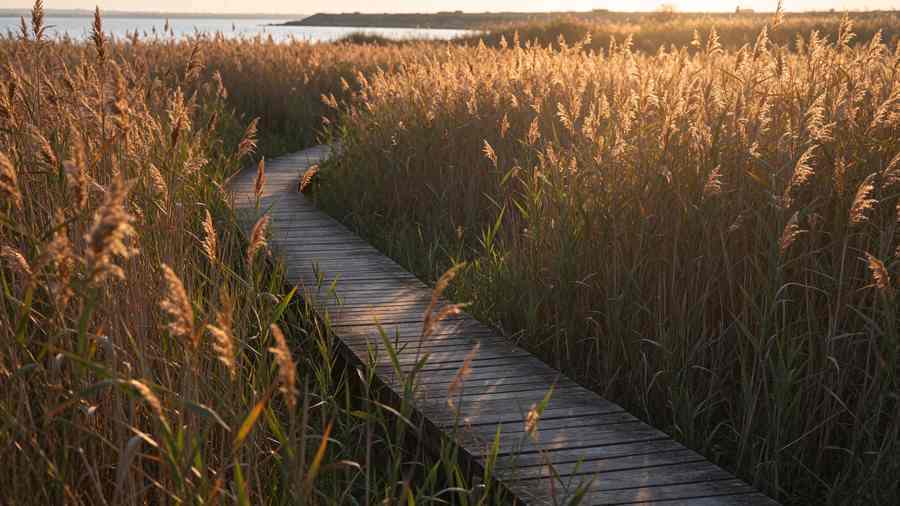
The Chaobai runs south from Miyun and Huairou and widens across Baodi into broad gravel flats and reed beds, with an embankment road and waterside platforms used by locals for fishing, kites and cycling. The embankment is two-lane asphalt with long views; at dusk the sun drops onto the water and egrets and ducks work the reed edges, with fishing boats, nets, poplar rows and village roofs beyond. Free parking ground sits beside the platforms, a short gentle slope leads to the river, and the flats are sand rather than steps, fine on foot though awkward with a stroller. The hour before sunset is best, and you should head back before full dark.
- Where to eat
- In Baodi town try cornmeal cakes with fish stewed in brown sauce; farm restaurants near the embankment serve iron-pot stews with local river fish.
- Roads and driving
- Jingjin expressway then local Baodi roads; flat asphalt the whole way, slow for village entrances and watch for crossing e-bikes.
- Where to stay
- No accommodation is booked; Baodi town hotels or riverside guesthouses work if you want another night.
Tips for the day
- Guangji Temple closes over lunch, mornings are safer
- The embankment has no lighting, leave soon after sunset
- Platform edges are unrailed, keep children close
D2 Baodi to Xiaozhan, Jinnan
Total driving today 80km
Xiaozhan New Army Site
The Xiaozhan site in Jinnan marks where Yuan Shikai drilled the late Qing New Army. Drill halls, an officers' school and barracks have been rebuilt to the original camp plan, and the museum shows uniforms, rifles and drill manuals that explain how the Beiyang force took shape here. The compound is compact, an hour and a half covers the halls and grounds, and two drill displays a day in front of the hall, performed in grey cotton uniforms, hold children's attention. A dedicated car park at the main gate holds about thirty cars and rarely fills; inside are level floors with a few steps, gravel and rammed earth in the yard, benches in the halls, and a stamp point at the exit.
Tianjia Lake
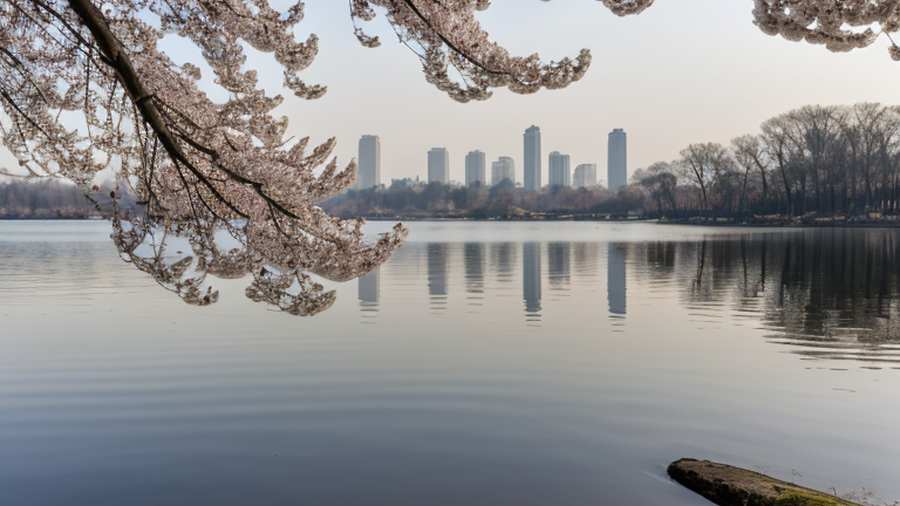
Tianjia Lake southwest of Xiaozhan was formed from clay pits left by brick making and later turned into a country park with a lakeside path. The water is open, willows and reeds line the shore, and locals come to fish and walk. A full circuit is about four kilometres and half takes an hour, with a timber boardwalk on the east shore close to waterweed and ducks, fishing platforms on the west, and lotus in bloom through July and August on the north side. Free parking ground sits by the lake, the approach is flat with no steps, and an evening walk here is breezy and comparatively bug-free.
- Where to eat
- Xiaozhan is known for its rice served with braised pork; several old restaurants in town cook river fish.
- Roads and driving
- Jinwei highway then Jinnan local roads; flat going with village speed limits and limited lighting at night.
- Where to stay
- No accommodation is booked; hotels in Xiaozhan town or wider Jinnan are close by.
Tips for the day
- Do not touch the exhibits in the drill hall
- The east boardwalk is slippery after rain
- Town streets are narrow, park properly rather than on the road
D3 A day around Xiaozhan
Total driving today about 15km
Xiaozhan Rice Fields
The Xiaozhan rice district on the edge of town is the home of a famous northern rice variety, its paddies cut into squares by straight irrigation channels and bordered with poplars. After transplanting in May and June the water mirrors the sky, and by September and October the ears bend over, which is the best time for photographs and walks. Viewing paths and a few platforms were built through the fields, cars stop on roadside ground, and the ridge path is a few dozen metres away: firm earth, flat but narrow, awkward with a stroller. There is no ticket and no fixed hours, light is best early and late, and walkers should keep off the seedlings and clear of the sluice gates; boards along the field explain the breeding and irrigation behind the local rice, and a test plot two hundred metres north carries labelled varieties. Guests on a Rental Car for Foreigners in China often stop here for photographs of the paddies.
Mili Cube Water Park and the Channels
Mili Cube is a big indoor water park in Jinnan shaped like a sliced blue cube, busy with families in summer. Its surrounding channels and lawns are open public waterside space where locals run in the evening. Without going inside, follow the channel a while and see how the rice district's irrigation system threads through the town; railings and a paved path line it with no steps, and from the bridges you look over willows and low houses. The park car park charges but has plenty of space, free parking sits along the outer channel, a forty-minute circuit keeps the day relaxed, and a small shop nearby sells water.
- Where to eat
- In town, rice cooked in a clay pot or rice congee with local pickles makes a simple meal, and a bag of new-season rice travels well.
- Roads and driving
- Short local hops only, all flat asphalt and village roads.
- Where to stay
- No accommodation is booked; a second night in Xiaozhan town is the easy option.
Tips for the day
- Never drive onto the paddy ridges, cars bog down
- Keep clear of the sluice gates by the channels
- Mosquitoes are heavy in the paddies in summer, long trousers and repellent help
D4 Xiaozhan back to Tianjin city
Total driving today 30km
Xiaozhan Old Street
Xiaozhan Old Street follows the former post road, with brick and timber shopfronts from the 1930s and 1940s and hand-painted old shop names still over the doors. Shops sell rice, pickles and cakes, the street is short and takes twenty minutes, and it is the natural place to buy a bag of local rice before leaving. A statue recalling the New Army stands at the entrance, and old houses at the corner are still lived in, with corn and chillies drying outside. Park at the town government lot three minutes away; the street is level stone paving with no steps, only narrow thresholds at shop doors, busiest in the morning and quiet after noon. An old well with a stone kerb stands at the far end, its history painted on the wall beside it, and guests usually leave with a couple of bags of local rice.
Lower Haihe Embankment
On the way back, drop onto the lower Haihe embankment where the river widens and cargo barges pass, with a linear park and waterside platforms looking at old wharves and bridges. The path follows the water on level ground and suits an evening stroll, with municipal bays outside the embankment for parking, benches and railings along the way, and workshops and warehouses across the water where a train occasionally crosses the iron bridge. Twenty to thirty minutes of watching boats is enough before driving in to return the car; there is no ticket and no booking here.
- Where to eat
- Back in the city, guobacai and jianbing pancakes make a good breakfast or afternoon bite.
- Roads and driving
- Jingu highway then Haihe East Road, mostly urban streets with restricted hours and flooded underpasses to note.
- Where to stay
- No accommodation is booked; return the car at the city pickup point.
Tips for the day
- Old Street shops close after five, buy early
- No vehicles on the Haihe promenade
- Refuel before returning and dodge the evening peak
Pages that help on this route
- Rental packages and what is included
- Temporary driving permit in China
- All routes by province
- All cars in the fleet
Costs to expect
Included: basic vehicle use and route guidance notes. Excluded: tickets, parking, fuel, meals, accommodation and personal spending.
Driving tips
- The Chaobai embankment is single-lane in places, slow early for oncoming cars
- Irrigation ditches border the rice fields, keep the car off the field ridges
- The Xiaozhan museum closes Mondays, check hours before setting out
- Tianjin's outer ring carries heavy trucks, use the parallel local roads where you can