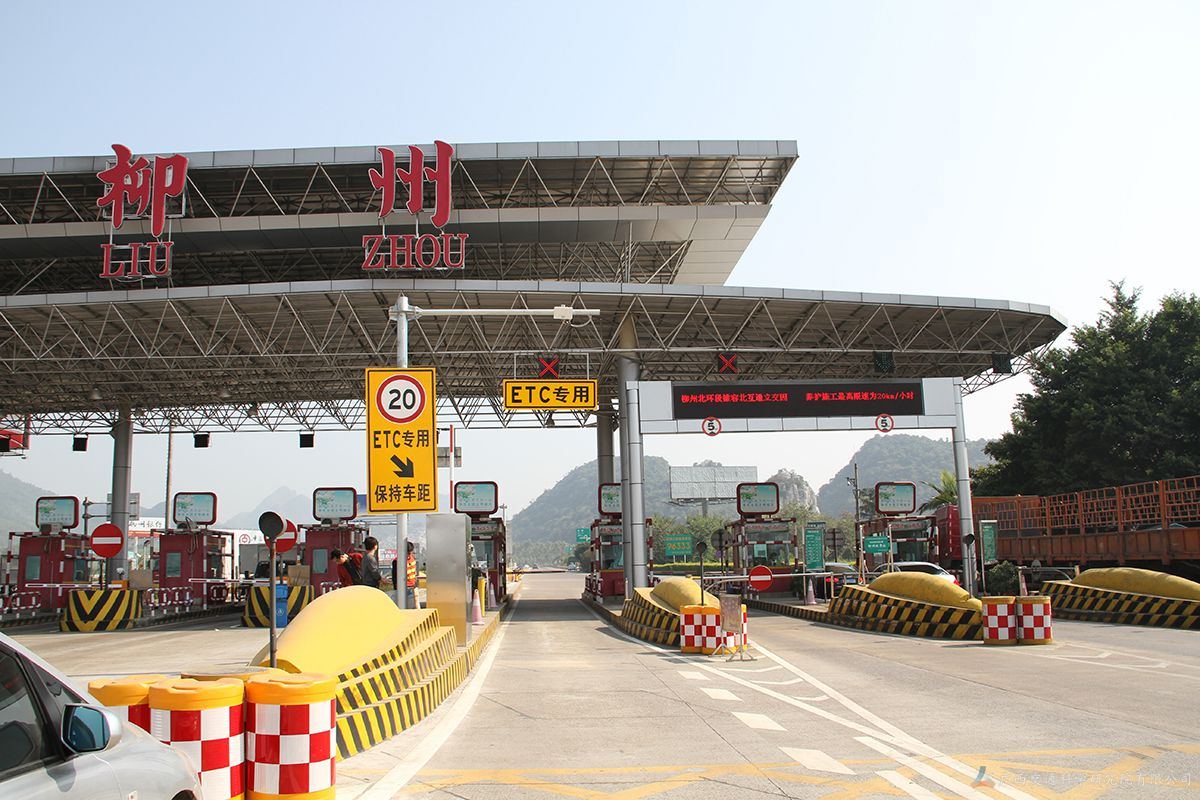
Once guests have the daily rate and fuel sorted, the next practical question is the tolls, because the fast road between Dali and Lijiang is a proper expressway and charges by distance. This is not complicated, but it helps to know in advance how the payment works in a rental car, what the ETC lane is for, and when the older toll-free road is worth taking instead. I have a separate guide on how tolls are paid across China, so this piece stays focused on the Dali Lijiang routes you will actually drive and how to budget for them, rather than the national system in the abstract.
How the expressway charges you
Chinese expressways are distance-based: you take a ticket or register an entry when you get on, and the barrier at the exit works out the fare from how far you have travelled. The amount for any given journey is shown on the screen at the toll gate, so rather than memorise a fixed figure, the reliable approach is to treat the exit display as the authoritative number for that trip. The Dali to Lijiang main link is a moderate run of around a hundred and eighty kilometres, and its toll sits in the modest range you would expect for that distance, without any large bridge or tunnel surcharge. Side trips that branch off and rejoin are simply charged for the kilometres actually covered, so the fare tracks the route you drive rather than being a flat fee.
What ETC is and how the rental car handles it
ETC is the electronic lane that lets traffic flow through without stopping at a booth, reading a small tag mounted behind the mirror. Many rental cars are already fitted with one, and where that is the case you can use the ETC lane and the toll is settled through the rental arrangement rather than paid in cash at the gate; we explain exactly how it is reconciled when you collect the car, so there is no ambiguity. If the vehicle does not have a tag, or you prefer to pay yourself, the staffed lanes accept the usual mobile payment by scanning a code, and the booths on the main routes are set up for that. The highway toll payment guide walks through the methods in more detail, including what to do if a lane is card-only.
The toll-free national road alternative
There is usually an older national road running roughly parallel to the expressway, and it carries no toll, which is why some drivers ask whether it is the better choice. The honest answer is that it is slower and winds through towns and villages, with junctions, traffic and lower speed limits, so what you save in tolls you partly spend in time. It does have a real advantage, though: the older road often passes through the more attractive countryside and the small towns such as Xizhou and Shaxi, which is exactly why the Dali to Lijiang route guide describes both the fast and the scenic options. If you are not in a hurry and want the journey itself to be part of the day, the national road is a genuine choice; if you want a quick transfer and more time at your destination, the expressway earns its toll.
Budgeting tolls across the whole trip
For a typical Dali Lijiang stay, the toll bill is fairly small because most of the enjoyable driving, the Erhai loop and the wandering around the old towns, does not use the expressway at all. Tolls only arise on the transfer days, usually one run between the two and perhaps a leg toward the wider region. A practical way to budget is to count the expressway transfers in your itinerary and allow a modest amount for each, then set that alongside fuel and the daily rate rather than treating it as an afterthought. The northwest loop day-by-day notes show which legs are motorway and which are ordinary roads, which makes the toll estimate straightforward. As with fuel, keeping a small contingency covers the occasional detour that adds a little distance.
Payment habits for visiting drivers
A few things make the tolls smooth. Have a phone with mobile payment set up before you reach the gate, since scanning a code is the common fallback at staffed booths; foreign cards can be linked to the payment apps, and the mobile payment guide covers how that works. Watch the lane signs carefully, because ETC lanes are marked separately and pulling into one without a tag simply means backing out, which holds everyone up. If you are unsure, the staffed lane is the safe default. Keep the entry ticket if the system issues one, since you need it at the exit, and take a moment when collecting the car to ask whether the ETC tag is active and how the charge will be passed on.
Putting tolls in context
It is worth keeping the cost in proportion. The expressway fare is a small fraction of the overall trip, and in return it gives you a predictable, well-maintained road with clear signage and a fast transfer, which is particularly welcome in rain or when the daylight is limited. The toll-free road is there for the days when the journey is the point, and choosing between the two is really a choice about pace rather than money. Knowing the options before you set off means you are not making that decision at the fork under pressure, with cars behind you and a lane you cannot change into.
The short version
Tolls are distance-based and shown at the exit, so use that figure rather than a memorised one. Many rental cars have ETC and settle the charge through the rental agreement; otherwise the staffed lanes take mobile payment by code. The parallel national road is free but slower and more scenic, suiting an unhurried day, while the expressway suits a quick transfer. Tell me your planned route and I will point out which legs carry tolls and how the ETC is handled on the car you take, so there are no booth surprises.
If you are arranging a trip, this Heqing water town guide explains the practical steps.
Zara
Yunnan Province International Travel Agency (Group) Co., Ltd.
WeChat/WhatsApp: +86 13759155671
WeChat handle: qxzj7557
Email: [email protected]