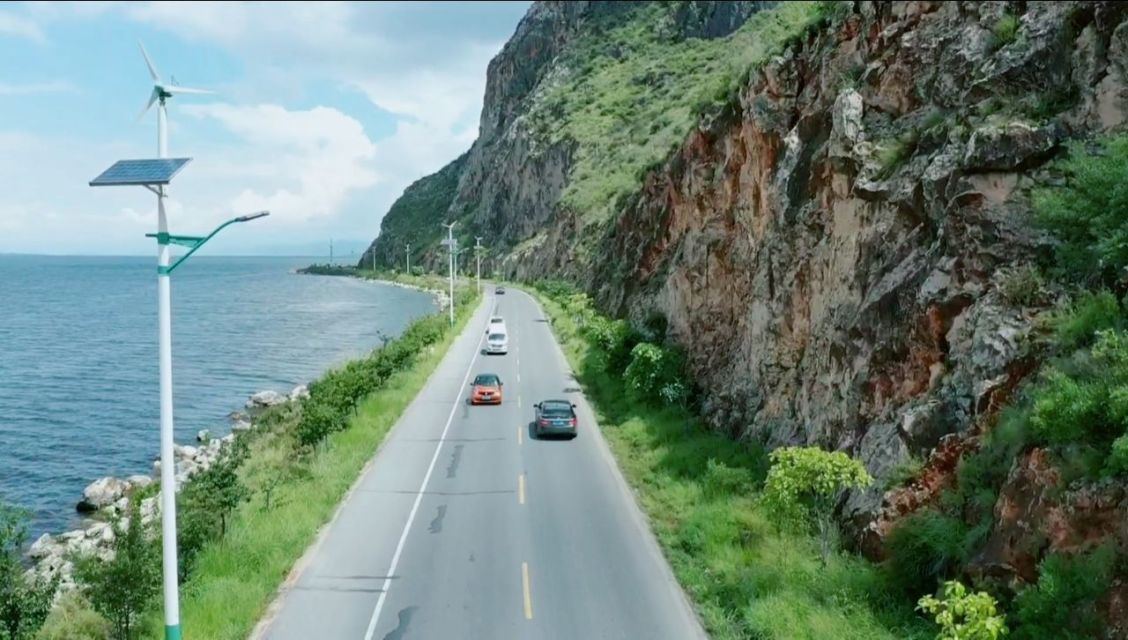
One of the most useful questions I am asked is deceptively simple: how many days should I allow for the northwest Yunnan loop? People tend to under-estimate it because the distances look short on a map, but this is mountain country, and the hours behind the wheel are longer than the raw kilometres suggest. Getting the length right matters more than almost any other planning decision, because a rushed loop leaves you driving in the dark and missing the very places you came to see. Having helped many travellers pace this route in a Yunnan rental car, let me set out how I think about the days and the daily mileage.
What the northwest loop covers
The classic arc runs from Kunming or Dali through Lijiang and on toward Shangri-La, linking the Erhai lake country, the Lijiang old towns and the higher Tibetan plateau around Shangri-La. Some people do it as a one-way journey, ending at a different city, while others loop back to where they started. The roads are good and sealed throughout, but they climb and descend constantly, with bends that hold your average speed well below what a motorway would allow. That gap between map distance and real time is the thing to build the itinerary around.
How many days make sense
My honest view is that a comfortable loop covering Dali, Lijiang and Shangri-La wants around seven to ten days, depending on how deeply you explore. You can technically move faster, but anything under five or six days turns into a string of long drives with little time to stop, and I would not recommend it for a first visit. A shorter Dali and Lijiang-only trip works well in four or five days, while adding Shangri-La and the surrounding plateau realistically adds another three or four. Rather than chasing a number, decide which places matter to you and let the route tell you the time it needs.
Daily mileage and driving time
I plan mountain days at a gentler target than flat motorway days, usually aiming for somewhere in the region of two to four hours of actual driving rather than marathon stints. That leaves the afternoon free for the old towns, the lakeside walks and the viewpoints, and it keeps everyone fresh. On winding roads a distance that looks modest can take the better part of a morning, so I never judge a day by kilometres alone. If you choose the Tank 300 for the higher plateau, note it carries a daily allowance of three hundred kilometres, whereas the ordinary saloons come with unlimited mileage; the car and seats guide sets out the difference, and it is worth matching the car to the route's length.
A sensible sample rhythm
Here is the kind of pacing I suggest. Begin with a gentle day around Kunming or straight to Dali, then give Erhai a full unhurried day. Move on to Lijiang and stay two nights, which lets you do the old town and a mountain day without repacking daily. From there drive up to Shangri-La, where another two nights cover the high plateau, the monastery and the surrounding grasslands. Then either return the car one-way or make your way back by a different route. Building in two-night stops rather than changing hotels every night is the single change that makes the loop feel like a holiday instead of a transfer.
One-way versus return
If you would rather not retrace your steps, a one-way rental lets you finish in a different town, and the arrangement and any fee are confirmed up front; the one-way rental notes explain how it works, and the Lijiang direction carries a set one-way charge. Returning the car where you started avoids that fee but means driving the corridor twice, so the choice depends on whether your time or your budget matters more. The Dali to Lijiang drive is scenic enough that covering it in both directions is no hardship if you do return.
Booking, season and the bigger loops
In the peak summer weeks and around public holidays, accommodation and cars tighten, so I would book earlier and lock the key overnight towns rather than arriving without a room; the peak-season booking notes cover the timing. If you want to push beyond Shangri-La toward Yading and Daocheng, that is a larger undertaking again, and the Lijiang to Yading loop notes explain the extra days and altitude involved. For most visitors, though, the Dali, Lijiang and Shangri-La arc hits the highlights without overreaching.
Staying flexible and enjoying it
My overall advice is to add a buffer day if you can, because a slower morning, a weather delay or simply a place you want to linger is part of travel in the mountains. Keep the daily driving modest, favour two-night stops, and match the car to your mileage and altitude, and the northwest loop unfolds into a relaxed, memorable trip rather than a rushed dash. I would also build genuine rest into the buffer rather than treating it as spare driving time: a slow morning over coffee, a wander around a market, or an early finish gives the driver a break and keeps judgement sharp on the bends. If two people share the driving, agree the handover points in advance so neither grows tired unnoticed. The broader Yunnan self-drive rental guide puts this route in context, and once the pacing is right, the long days and the high passes become the parts you remember fondly rather than the parts you endure.
If you are arranging a trip, this Nujiang route guide explains the practical steps.
Zara
Yunnan Province International Travel Agency (Group) Co., Ltd.
WeChat/WhatsApp: +86 13759155671
WeChat handle: qxzj7557
Email: [email protected]