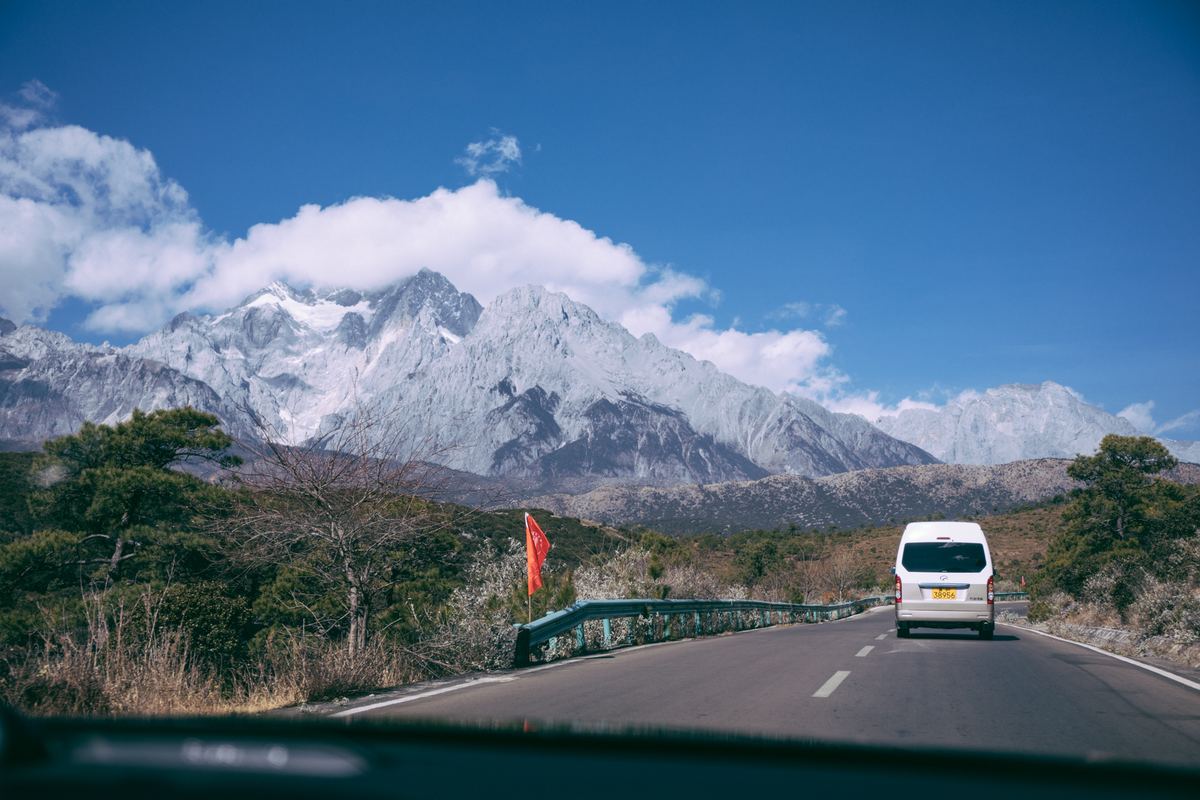
Of all the messages I get from people planning a China self-drive trip, the question that comes up most is simple: which car should I actually hire? It sounds straightforward, but get it wrong and you spend a fortnight cramped in the wrong seats, or pay over the odds for a big 4x4 you never properly use. I have been sorting out rental cars for foreign visitors in Yunnan and the western provinces for years, so let me talk you through the choices the way I would down the pub, starting with what is genuinely on offer.
What is actually on our fleet
First, a bit of honesty. We are a small outfit, not a global chain with a forecourt full of thirty models. We keep two cars in the fleet: the Volkswagen Lavida 1.5L and Jetta 1.4T, which are both conventional saloons, and the Tank 300, a proper boxy off-road SUV. There is a reason for keeping it tight. On long western routes, a car needs to be dependable, easy to mend in a county town, and simple to drive. We would rather know every car inside out than offer a dozen models we cannot stand behind.
Both cars take five seats on paper, run on ordinary 92-octane petrol, and come with the compulsory and commercial insurance already arranged. The temporary Chinese driving permit, which every foreign driver needs because China does not recognise international permits, is something we handle for you at 1,500 RMB; it usually takes one to three working days and is valid for 3 months.
The saloon: Lavida or Jetta, and who it suits
Think of the Lavida and Jetta as the sensible, unflashy choice. They are comfortable family saloons, quiet on the motorway, and narrow enough to thread through old town streets where the lanes were never built with cars in mind. The price is 260 RMB a day with a 3,000 RMB deposit, and mileage is unlimited, which matters if you are clocking up big distances between provinces.
Who is it for? If you are travelling solo, as a couple, or as a family of three or four with ordinary suitcases, and your route is mostly paved roads and towns, the saloon is the pick. It is cheaper to run, easier to park outside a guesthouse, and perfectly happy on the motorway from Lijiang to Dali or the roads around Kunming. Most of our guests fall into this group, and I would estimate three quarters of the trips I arrange go out in a saloon with no complaints at all.
A couple I helped last year were convinced they needed a big SUV for a two-week Yunnan loop. In the end they took a Lavida, drove around 1,800 kilometres on tarmac, and told me afterwards they were glad not to have wasted money on height and bulk they never used. That is the saloon in a nutshell: unglamorous, but it just gets on with the job.
The SUV: the Tank 300 and who it suits
The Tank 300 is a different animal. High seating, proper ground clearance, sturdy suspension and a squared-off body that gives you a commanding view down the road. It costs 400 RMB a day with a 5,000 RMB deposit, and there is a 300-kilometre daily mileage allowance rather than unlimited miles.
It earns its keep when the route gets rough. If you are heading into western Sichuan, Qinghai or Xinjiang, taking gravel side tracks, or travelling in the shoulder seasons when mountain roads can be muddy or icy, the Tank 300 gives you confidence the saloon cannot. It also swallows a lot of gear, which helps on longer trips where cold-weather clothes, camping bags and supplies start to pile up.
Who is it for? Groups of three or four doing a genuine long-haul western route, anyone planning unpaved detours, and drivers who simply feel more settled sitting up high with a solid chassis beneath them. If your whole trip is town-to-town tarmac, you probably do not need it, but if the itinerary includes the likes of high passes and remote tracks, that is what it is built for.
What about an MPV?
Plenty of people ask about an MPV, the seven-seat people-carrier style of vehicle. An MPV is genuinely useful for one kind of group: five or six adults travelling together, with several large cases, who want everyone in one vehicle rather than splitting into two cars. The tall cabin and three rows of seats make long journeys sociable, and the luggage bay behind the back row is designed for a full family.
I will be straight with you, though: we do not currently keep an MPV in our fleet. Our experience is that the vast majority of foreign visitors arrive as couples, families of three, or small groups of four, for whom a saloon or the Tank 300 is a better fit. If you are a party of five or six, tell me early and we can talk through the options rather than promise something we have not got. Squeezing five adults and all their luggage into a five-seat saloon would be miserable, and I would rather say so up front.
How the seats actually feel
Both our cars are five-seaters, but do read that with a dose of realism. Five adults technically fit, yet the middle rear passenger gets a raised, firmer perch with less shoulder room, and everyone's luggage still has to go somewhere. For a long day in the car, four adults travel comfortably; five works for shorter hops. If your group is four people with four cases, the Tank 300's cabin and boot make the journey far more relaxed than a saloon.
On the practical side, the boot space and luggage layout deserves as much thought as the seats, especially on airport pickups where cases appear in every shape. Families with young children should know we can arrange a child seat for the family rental rather than relying on holding a toddler on a lap, which is neither safe nor legal in spirit.
Running costs and the paperwork
Beyond the daily rate, remember the Tank 300's 300-kilometre daily allowance; spread across a long trip it is generous for most planned routes, but it is not unlimited like the saloon. On insurance, small scratches under 1,500 RMB are settled directly, while larger amounts go through the insurer with the renter bearing 30% of the claim, so there are no nasty surprises. For a fuller picture of where the money goes, have a look at the overall cost of renting in China, and if you want model-by-model numbers, this rental price comparison lays them out. Before you travel, it is worth checking the documents needed to hire a car so the permit and paperwork are ready before you land.
Three questions to ask yourself
One: how many people and how much luggage? Two adults and a couple of cases point to a saloon; four adults with cold-weather gear lean toward the Tank 300. Two: what is the road surface? Town and motorway tarmac favours the saloon; gravel, high passes and remote detours favour the SUV. Three: what is the budget, and will you actually use the extra capability? Paying for off-road hardware that never leaves tarmac is money wasted, while under-catering for a rough route spoils the trip.
My advice
Do not choose a car based on what looks impressive in a photo. Choose it for the people in it and the roads ahead. Most visitors are thoroughly well served by the saloon, and the Tank 300 is there for the genuine long-haul and rough-road trips. If you are a larger group who would normally want an MPV, message me before booking and we will work out an honest plan rather than leave you cramped. Send me your dates, your group size and your rough route, and I will tell you plainly which car I would take myself.
If you learned to drive in a manual car and wonder how that works with a Chinese rental, this manual versus automatic guide for foreign drivers explains the fleet and how to adapt.
Zara
Yunnan Province International Travel Agency (Group) Co., Ltd.
WeChat/WhatsApp: +86 13759155671
WeChat ID: qxzj7557
Email: [email protected]