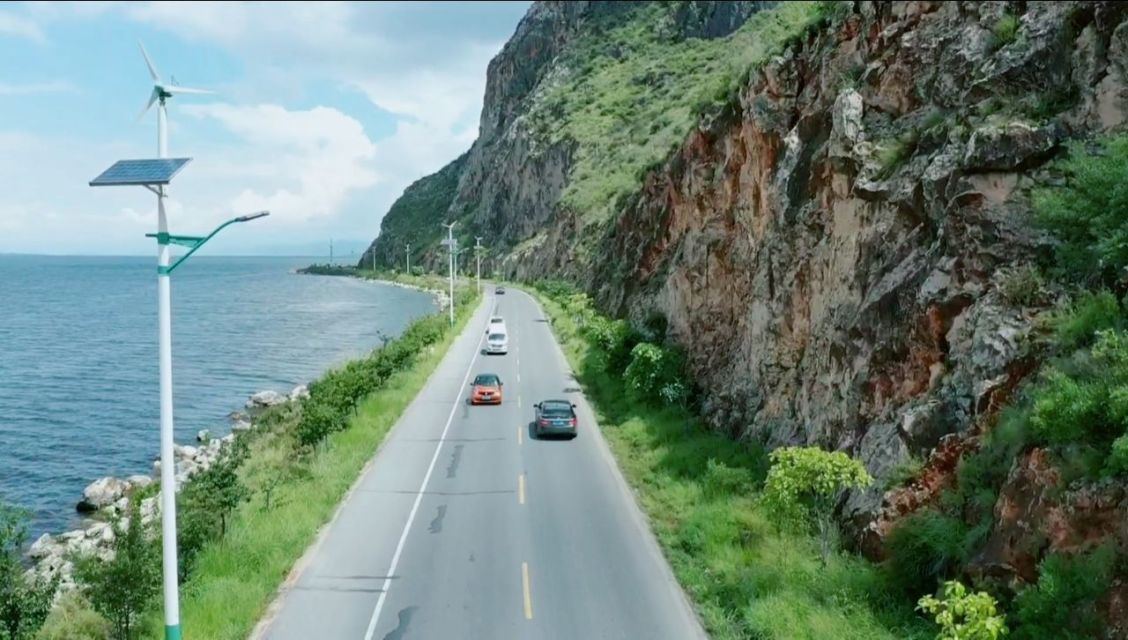
If Shuanglang is the lakefront stop, Xizhou is the countryside one, and I often recommend both on the same gentle day. Xizhou sits a short drive north of Dali on a fertile plain between Cangshan and the lake, and it has kept the feel of a prosperous Bai market town: grand old courtyard homes, a lively morning market and farmland that changes colour through the seasons. With a Dali Lijiang car rental for foreigners it is an easy, rewarding outing, and the surrounding lanes are made for slow driving and quiet stops. Visitors who only see the busy Dali old town miss this calmer side of the Bai world entirely. Here is how to plan the trip and what makes the place special.
A preserved Bai market town
Xizhou grew wealthy on trade and on the tea caravans that once passed through the region, and that history left it with some of the finest traditional residential architecture around Dali. The large courtyard homes, with their white walls, dark timber, painted gables and the distinctive Bai pattern of layered eaves, have been carefully kept, and a couple are open to wander through. The town itself is compact and walkable, with a central square, old shops and a morning market that draws villagers from the surrounding hamlets. There is little of the souvenir-strip feel of the bigger tourist centres. It is a working town that happens to be handsome, and that authenticity is the draw. A Dali Lijiang car rental for foreigners lets you reach it before the day-trip crowds build.
The morning market and local life
If you can make an early start, the market is the living heart of Xizhou. Farmers from the nearby villages bring vegetables, herbs, bean curd and the day's meat, while stalls sell hot snacks, the local rushan cheese cooked over coals and the sweet baba pastries the town is known for. Even if you do not buy anything, walking the aisles gives you an unscripted look at ordinary Bai life, and the vendors are used to curious visitors. The snack stalls are an easy, low-risk way to try regional food while it is fresh. The payment guide helps if you want to buy something small. Later in the day the market quietens and the town takes on a slower, sleepier mood that has its own charm.
The rice fields and the seasons
What sets Xizhou apart from the lakeside villages is the farmland. The flat plain between the town and the lake is a patchwork of small fields, many of them rice, and the colours shift through the year: bright young green in spring and early summer, deeper gold as the crop ripens, then the quieter tones after harvest. Roads and narrow lanes run between the plots, and driving slowly with the windows down is one of the quiet pleasures of the trip. There are no grand viewpoints required; a tree-lined lane with the Cangshan peaks above and water in the fields is enough. The Erhai day guide shows how this countryside fits into the wider loop around the lake.
Slow driving through the lanes
The lanes around Xizhou are narrow, shared with scooters, farm carts and the occasional pedestrian, and they call for a gentle foot rather than pace. This is exactly the kind of place where a car is useful for reaching the quiet spots but should be driven considerately once you are among them. Keep speed low, give way to local traffic and pull over where it is safe rather than holding people up. The mountain and country road guide covers the general principles, and the parking guide explains where to leave the car in the town itself. A short walk between stops is often more pleasant than trying to drive every last metre.
Bai architecture and the courtyard homes
Take time over the buildings rather than just the fields. Bai houses follow a clear traditional plan built around a central courtyard, with the main hall facing in and the walls finished in the local white, decorated under the eaves with ink paintings and calligraphy. The decorated gable ends, the carved timber screens and the stone gateways all carry meaning, and the open courtyards are cool and calm on a warm day. Seeing one of the larger homes from inside helps you understand why the town's merchants built as they did. The hidden towns guide traces more of this regional architecture further afield. It rewards a little patience and a slow look upward at the rooflines.
Food and the Xizhou baba
Xizhou has a quiet food reputation that locals rate more than visitors realise. The baba, a flat layered pastry served sweet or savoury and baked until crisp, is the best-known treat and is best eaten warm from a stall near the square. Rushan cheese, local ham, fresh tofu and the herbal dishes of the Bai table all appear in the small eateries, and a simple lunch made from market-fresh ingredients is a pleasure. The guesthouse guide points to places to stay if you want to sleep out among the fields rather than return to Dali. Portions are honest and prices gentle, which suits the unflashy character of the town.
Building a relaxed Erhai day
Xizhou sits comfortably on the same ring road as the lakeside villages, and the natural plan is a slow loop that takes in the market town, the field lanes and a shore stop such as Shuanglang. Starting early lets you catch the market, wander while the light is good and finish by the water as the day softens. The Erhai rental guide maps the full circle, and the navigation guide keeps the small lanes from becoming confusing. Resist the urge to pack in too much; the point of Xizhou is the calm, and a rushed schedule misses it.
Photographing the fields through the year
The farmland around Xizhou changes so much across the seasons that returning at a different time of year feels like visiting a new place, and the independence of a Dali Lijiang car rental for foreigners means you can follow the lanes wherever the light and the colour are best. In the early growing season the young rice is a bright, almost luminous green, and the water standing in the paddies reflects the sky, which suits the early morning when the air is still. As the crop ripens the fields turn gold and soften into warm tones, particularly in the later afternoon, while after harvest the bare earth and the stubble give a quieter, more graphic set of patterns. The tree-lined lanes make natural leading lines, with Cangshan sitting above them, and the white Bai walls add a clean contrast. There is no need to trespass on the working plots; the lanes and the field edges give enough frames, and the farmers prefer visitors to keep to the paths. A little patience for the soft light, rather than shooting in the bright midday hours, makes a noticeable difference to the photographs and suits the slow mood of the countryside.
The short version
Xizhou is a preserved Bai market town in the farmland a short drive from Dali, reached easily with a Dali Lijiang car rental for foreigners. Go early for the market, walk through an old courtyard, then drive the quiet lanes between the rice fields and try a warm Xizhou baba. It pairs naturally with a lakeside stop on one relaxed Erhai day. Tell me your dates and I will build an unhurried route that gives the market, the architecture and the fields their proper time, so you see the quieter Bai countryside rather than only the busy old town.
Zara
Yunnan Province International Travel Agency (Group) Co., Ltd.
WeChat/WhatsApp: +86 13759155671
WeChat handle: qxzj7557
Email: [email protected]