I’d just stepped off a 3-hour flight from Bangkok to Kunming Changshui Airport last April, the spring sun beating down through the terminal’s glass roof, my carry-on slung over one shoulder, when I realised the folder I’d stuffed with my UK driving licence and printed trip notes was missing the temporary driving licence translation document I’d arranged weeks prior. I’d planned to pick up a pre-booked car and drive straight to Dali that afternoon, the kind of slow Yunnan road trip that makes the 4G back in London feel like a distant memory. If you’ve ever landed in a new country with a planned self-drive route and realised your paperwork is out of order, you know the split-second panic that hits when you realise you can’t just walk to the rental desk and collect your keys.
First: What I did when I realised the document was missing
I leaned against the cold terminal wall for five minutes, replaying the last time I’d seen the paperwork. It was on my kitchen table in London, I realised, folded next to my printed boarding pass. I’d grabbed the pass, but left the document tucked under a magnet on the fridge. No amount of rummaging in my bag was going to fix that.
The first thing I did was walk over to the information desk near the arrivals exit, where a staff member spoke enough English to explain that Yunnan self-drive rental for foreigners is fully supported by local rental operators, even if you don’t arrive with the pre-arranged temporary driving permit paperwork. I’d spent months reading about IDP requirements before my trip, so I tensed up when she mentioned temporary licences, waiting for her to say I needed to sort an IDP first. She shook her head when I asked. No IDP is usable here, she said. The local team can arrange a China temporary driving licence for you for RMB 1,500, no need for you to attend any in-person appointment.
I’ll be honest, I was sceptical at first. I’d read so many forum posts about bureaucratic holdups for foreigners driving in China that I half-expected to be told I’d have to cancel my whole road trip and take the high-speed rail to Dali instead. But she pulled up a list of rental desks located right in the airport arrivals hall, and pointed me toward the one that handles Kunming airport car rental for foreigners specifically.
Sorting the permit at the airport rental desk: no in-person appointment required
I walked over to the desk 10 minutes later, the smell of roasted Yunnan coffee drifting from a kiosk two stalls down, and explained my situation to the agent behind the counter. She asked to see my original UK driving licence, photocopied it, tapped a few details into her computer, and confirmed the temporary licence could be arranged for the RMB 1,500 fee. No forms for me to fill out by hand, no trip to a local police station, no waiting around for a document to be couriered to my hotel.
While the permit was being processed, we walked through the car options for my trip. I’d originally planned to drive from Kunming to Dali, then up to Lijiang, before dropping the car back in Lijiang instead of returning it to Kunming. That one-way return fee, she explained, is RMB 1,500 if you drop the vehicle off in Lijiang. I did the quick mental math: the extra fee was worth it to avoid driving 3 hours back to Kunming just to catch my flight home from the provincial capital.
We talked through the available petrol vehicles, no EVs on offer, which suited me perfectly — I’d read that charging stations are sparse along the more remote stretches of the Yunnan plateau, and I didn’t want to waste time hunting for plugs on the mountain roads between Dali and Lijiang.
- The VW Lavida 1.5L or Jetta 1.4T petrol car comes in at RMB 260 per day, with a RMB 3,000 rental deposit, and unlimited mileage. This is the pick if you’re sticking to the main paved roads between Kunming, Dali, and Lijiang — I drove a Lavida on a later trip, and it handled the gentle mountain gradients perfectly, no strain even on the stretch between Chuxiong and Dali where the road climbs to 2,000 metres.
- The Tank 300 2.0T is RMB 400 per day, with a RMB 5,000 rental deposit, and a 300km per day mileage limit. This is the option if you’re planning to detour off the main highway toward Shangri-La, where the roads are rougher and you need the higher ground clearance. I didn’t pick this for my trip, since I was sticking to the main tourist routes, but I talked to a Belgian couple at a Dali café a few days later who’d driven their Tank 300 up to the Tiger Leaping Gorge viewpoint, and said it handled the loose gravel pull-offs without a hiccup.
I went with the Lavida, paid the RMB 600 non-refundable booking deposit for my personal trip dates, and waited while the agent walked me through the insurance terms. The cover includes compulsory and commercial insurance, she said. Minor scratches under RMB 1,500 are paid by you, any damage above that goes through insurance, and you cover 30% of the cost. Scratches that don’t damage the primer are free, no extra charges. There are no downtime or depreciation charges for paintwork or replaced parts, and downtime fees are waived for 5 days if you have major damage to the car. If the car breaks down for a mechanical reason, the rental team covers it. If you cause the breakdown, you pay for the towing.
That all sounded fair to me. I’d rented cars in 12 countries before, and the small print here was far less predatory than the add-on insurance pitches I’d dealt with in southern Europe.
On the road: Dali Lijiang car rental for foreigners, no surprises
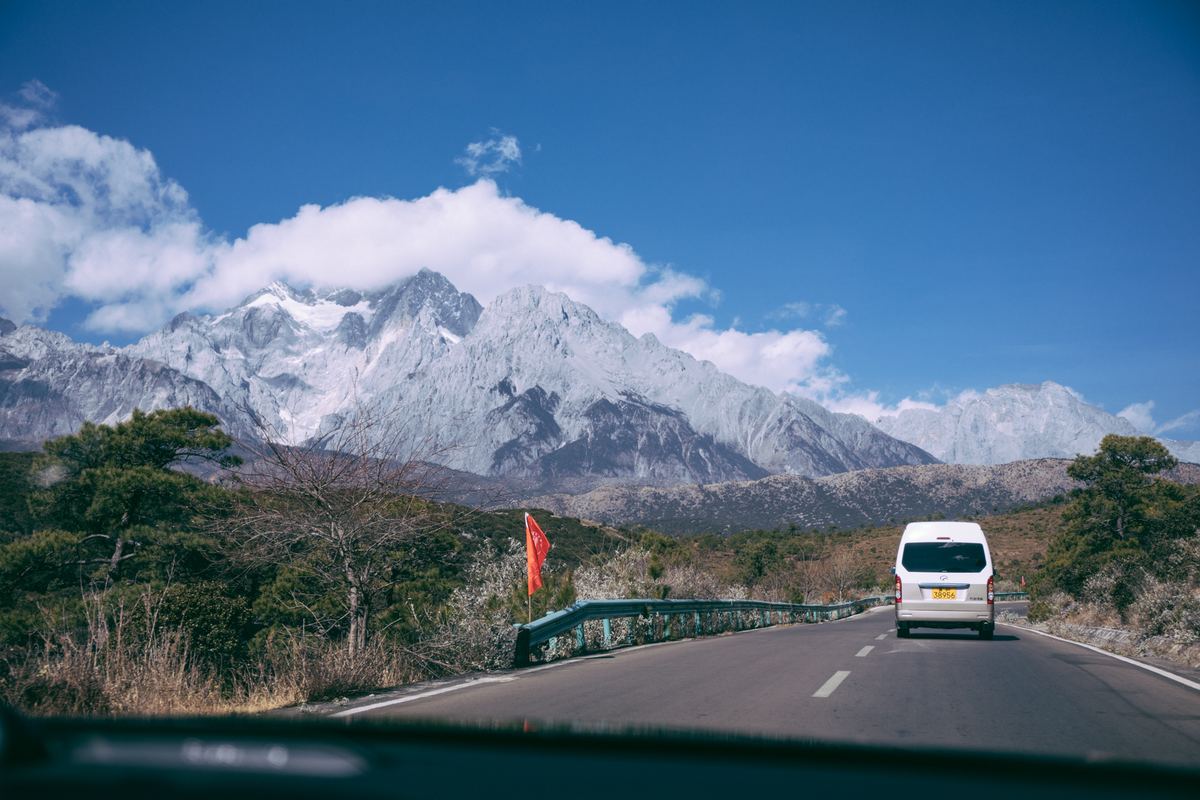
By 2pm that day, I had the keys to the Lavida, the temporary licence printed out and tucked into the glove box, and was pulling out of the airport car park. The drive west to Dali is a smooth, well-signposted highway, the red earth of the hillsides glowing in the late afternoon sun, the distant peaks of the Cangshan range peeking over the horizon as I got closer. I’d pre-downloaded offline maps for the whole route, which saved me when the signal cut out for 20 minutes on the climb up to the mountain pass before Dali.
Three days later, I was parked outside a café in Dali’s old town, sipping a cup of local Pu’er tea, when I ran into a group of travellers who’d planned to do the same Kunming-Dali-Lijiang loop. They’d almost bailed on their self-drive plans because they thought they needed an IDP to rent a car in Yunnan, and had settled for shared minibus tours between towns. That’s the common misconception, I told them. The local rental teams handle the temporary licence for you, no IDP required.
When I drove up to Lijiang two days after that, the air getting thinner and cooler as I climbed higher, I didn’t hit a single police checkpoint where I was asked for paperwork beyond the temporary licence and my original UK driving licence. The drop-off process in Lijiang was quick: an agent walked around the car with me, noted a tiny scratch on the rear bumper that didn’t break the primer, waved off any fee, and told me the RMB 3,000 rental deposit would be refunded to my card 5-7 working days after the team completes a traffic fine check. No hidden charges, no last-minute fees.
The hard lessons I’d tell any first-time visitor
I’d rather you show up at Kunming airport with all your paperwork sorted, obviously. But if you don’t — if you leave your translation document on your kitchen table, like I did — you don’t have to scrap your whole Yunnan road trip. The process at the airport rental desk is straightforward, as long as you have your original home driving licence with you.
Don’t waste time hunting for an IDP to use here — it won’t help. The temporary licence arranged by the local rental team is the only document you need to drive on Yunnan’s roads, and you don’t have to attend an in-person appointment to get it sorted.
Pick the car that matches your route. If you’re sticking to the main Kunming-Dali-Lijiang paved roads, the Lavida is more than enough, and you’ll save money on the daily rate and deposit. If you’re heading further out toward Shangri-La, the Tank 300’s higher clearance is worth the extra cost. Just remember the 300km daily limit on the Tank — I almost booked it for a day trip from Dali to Tiger Leaping Gorge and back, which would have pushed me over the limit, so I stuck with the Lavida for that stretch.
And don’t forget the one-way return fee if you’re dropping the car off in Lijiang instead of going back to Kunming. It’s not a hidden charge, it’s listed clearly on the quote, but it’s easy to overlook when you’re caught up in the excitement of planning mountain drives.