My First Taste of Yunnan Self-Drive Rental For Foreigners: Strawberries and Tea Outside Dali
I was parked on a rutted red dirt track last March, sun warm on the back of my neck, leaning against the bonnet of a petrol VW Lavida, when I realised I’d completely misjudged how good this stretch of western Yunnan is for slow, unplanned detours. I’d driven out of Dali’s old town at 8am, no set route scribbled on a map, just a vague note from a local friend that wild strawberries were carpeting the shaded verges of the lesser roads that wind up into the hills behind Cangshan, and that a couple of family tea farms had opened their gates to casual visitors that spring.
I’d picked up the car two days earlier, rolling straight off a red-eye Kunming flight, and sorted all the paperwork at the airport desk. I’d done a fair bit of overland travel across Europe and Southeast Asia, but I wasn’t sure how straightforward it would be to arrange, so I was relieved to find that a China temporary driving licence can be arranged for 1500 without the client attending in person, no hoops to jump through once I’d handed over the required copies at the pickup counter. That’s the thing people don’t always tell you when they’re planning a trip to this part of China: Yunnan self-drive rental for foreigners is far less hassle than you’d expect, as long as you book through the right local service rather than trying to muddle through on your own.
Pre-Trip Prep That Actually Matters
Let’s get the practical bits out of the way first, because I learned a couple of lessons the hard way on this trip. I opted for the VW Lavida 1.5L, which comes in at 260 per day, unlimited mileage, with a rental deposit of 3000. For context, the sturdier Tank 300 2.0T runs to 400 per day, with a 5000 rental deposit and a 300km per day limit, which I didn’t need here – the roads I was taking were mostly tarmacked, with only short stretches of packed dirt leading to the strawberry patches and tea farms, so the smaller petrol car handled everything perfectly.
The rental deposit is refunded 5-7 working days after return, once a traffic-fine check is complete, which I knew going in, so I didn’t stress about that. Insurance includes compulsory and commercial cover, but it’s worth remembering the small print that saved me a minor panic when I scraped a low stone wall pulling into a tea farm driveway: minor scratches under 1500 are paid by the client; damage above 1500 goes through insurance with the client bearing 30%. Scratches that do not damage the primer are free, too, and there are no downtime or depreciation charges for paintwork or replaced parts, which is a fairer setup than a lot of rental firms I’ve used elsewhere. I didn’t even bother to report that tiny scuff on the bumper once the staff checked it over at dropoff, as it hadn’t broken the primer at all.
One thing I will flag: a booking deposit of 600 is non-refundable if you cancel for personal reasons, so don’t lock in dates until you’re sure your flights are confirmed. Kunming airport car rental for foreigners is set up for seamless pickup and dropoff, right at the terminal, so you don’t have to mess around with long transfers to a city office when you’re jet-lagged. I know a lot of people plan a loop that takes in Dali and Lijiang, too, and Dali Lijiang car rental for foreigners can be arranged for one-way trips if you don’t want to drive back the same way – the one-way return fee for dropping off in Lijiang is 1500, which is well worth it if you want to spend extra days wandering the old town lanes there without backtracking.
Day 1: Wild Strawberry Foraging and a Hillside Tea Stop
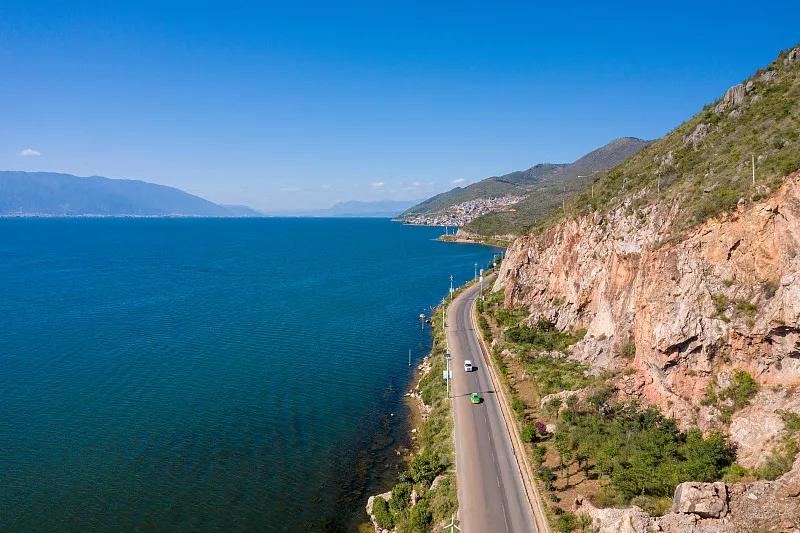
I left Dali at 8.17am, coffee still steaming in a chipped ceramic mug I’d bought from a street stall the night before, and turned off the main tourist road that runs around Erhai Lake, heading west up a narrow lane I’d spotted on a local’s navigation. The air smelled of pine and damp earth, and the sides of the road were dotted with tiny white flowers I couldn’t name, until I rounded a gentle bend and saw a patch of bright red peeking out from under the ferns.
I pulled over, no other cars in sight, and knelt down. The wild strawberries were no bigger than the tip of my thumb, bright sun-ripened red, so sweet they tasted like concentrated jam when I popped one in my mouth. I spent an hour there, knees getting damp from the dewy grass, filling an old plastic food container I’d stashed in the footwell, when an old local woman herding a goat stopped to laugh at me, gesturing at my full container and holding up three fingers to tell me the best patches were further up the hill, where the trees cast just enough shade to keep the fruit from burning in the midday sun.
I followed her directions, and by midday I’d found a little clearing where the strawberries were so thick you could scoop them up by the handful. I ate more than I put in the container, no regrets, then climbed back in the car and drove 20 minutes further up the winding track, until I saw a hand-painted wooden sign nailed to a tea tree that said “family tea farm, no tourists”. The gate was propped open with a rock, so I leaned out the window and called hello, and a man in a faded blue work jacket came out, wiping soil off his hands.
His name was A’wei, he told me, and he’d been running the 12-mu tea farm with his wife for 18 years, no hired help, no fancy packaging for their leaves. He invited me in for a cup of raw pu’er, brewed in a chipped clay pot over a wood fire, and we sat on his veranda for an hour, looking out over the layers of tea terraces rolling down towards the lake far below. He let me help him pluck a handful of new tea shoots, the soft bright green new growth at the top of each bush, and showed me how to roll them by hand in a wicker basket, the scent of fresh tea sticking to my palms for hours afterwards.
I left at 4pm, with a small bag of his unbranded tea leaves tucked in the passenger footwell, and drove back down to a quiet guesthouse I’d booked in a small village outside Dali, no crowds, no loud music, just the sound of frogs croaking in the rice paddies behind the building.
Day 2: Hidden Valleys and a Second Tea Farm Visit
I woke up at dawn the next day, to mist curling over the tops of Cangshan, and drove north along a tiny road that cuts through a valley I’d never seen mentioned in any tourist guide. The verges were still dotted with wild strawberries, but I’d already got more than enough to take back, so I rolled the window down and let the cold mountain air blow through the car, no destination in mind until I saw another small tea farm, this one run by a woman in her 60s who was spreading tea leaves out on large bamboo mats to dry in the sun.
She waved me over, and gave me a bowl of sour plum soup to drink, cold and sharp and sweet, while she told me she’d inherited the farm from her parents, and she only sold her tea to regulars who came back year after year. She showed me the small stone room where she roasted the leaves over a low charcoal fire, the air thick with the warm, rich scent of roasted tea, and let me try my hand at turning the leaves with a bamboo paddle. I burned the tips of my fingers on the edge of the pan, and she laughed, handing me a piece of hard candy to suck on while she did the rest of the batch.
By mid-afternoon, I was driving back towards Dali, stopping once to eat a bowl of crossing-the-bridge noodles at a tiny roadside stall run by a family, no English menu, no photos, just the woman behind the counter gesturing for me to sit down and handing me a huge steaming bowl of broth. I’d covered less than 80km over the two whole days, which is the point of this sort of trip. You don’t do long, mad drives across the plateau to tick off landmarks. You potter, you stop when something catches your eye, you end up on tracks you never would have found if you were relying on public transport or a group tour.
If the vehicle breaks down for a mechanical reason, the rental service covers it, which is a weight off your mind when you’re driving quiet backroads far from any town. The only catch to note is that towing for a client-caused reason is at the client’s expense, so take it slow on those rutted dirt tracks, don’t try to take the Lavida up a steep rough hillside that it’s not built for. I saw someone try that in a sedan a few kilometres from the strawberry patch, and they ended up stuck in a ditch for an hour waiting for a tow.
That’s the beauty of Yunnan self-drive rental for foreigners, honestly. You’re not locked into someone else’s itinerary. You can spend three hours picking wild strawberries if that’s what you feel like, you can linger over a cup of tea with a farmer who doesn’t see many overseas visitors, you don’t have to rush to make a bus timetable. Dali Lijiang car rental for foreigners also works a treat if you want to extend this trip out to three or four days, driving north through the hill villages between the two old towns, stopping for more foraging and tea stops along the way.
I dropped the car back at the Dali city office on my way to the train station, and the staff checked it over in five minutes, no fuss, no arguments about tiny marks. I’d already booked my return flight out of Kunming a week later, and if I’d planned better I could have arranged Kunming airport car rental for foreigners to pick up a car there for the drive back, rather than taking the train. Next time, I will.
You don’t need a big, fancy 4×4 for this sort of trip, unless you’re heading up into the higher parts of Shangri-La. The small Lavida handled every road I took perfectly, the running costs are low, and you’ve got extra boot space to stash all the tea and jars of wild strawberry jam you’ll inevitably end up bringing home with you.