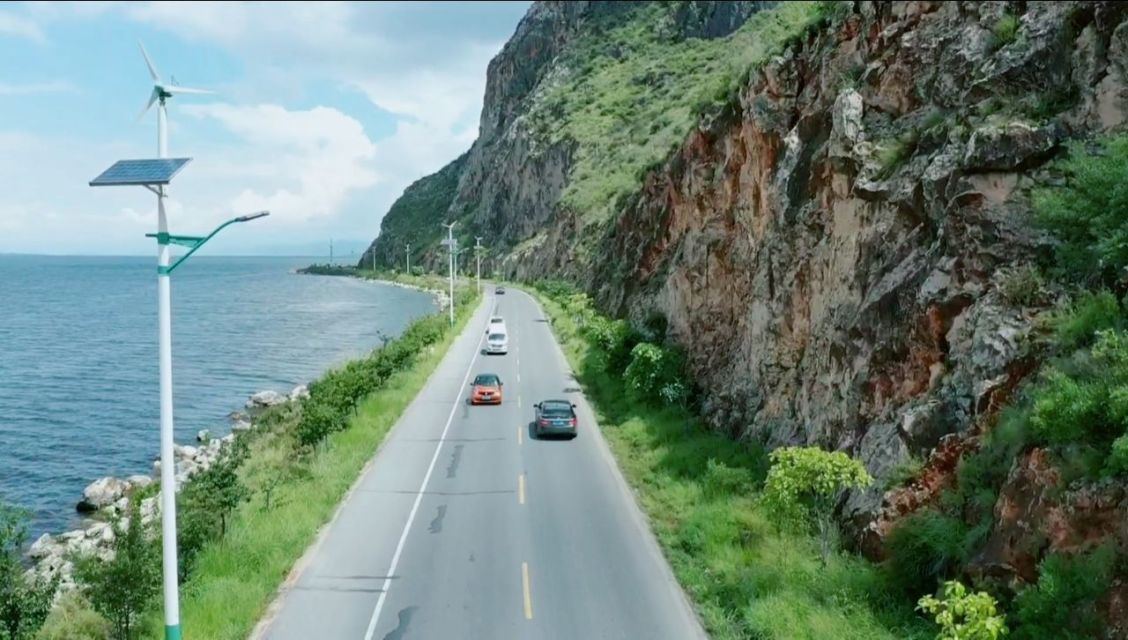
My First Crack At Cangshan Foothill Village Roads In A Full-Size SUV
I was three days into my latest Yunnan trip, wind whipping the willow fronds that line Dali's Erhai Lake shore, when a local tea farmer gestured up at the green, terraced folds of Cangshan behind his small stone courtyard. "The road up to the old tea processing village hasn't been resurfaced this year," he said, tapping the side of my hired compact saloon. "You won't make the rutted bits above the second temple." Yunnan self-drive rental for foreigners has one bottleneck, and this is it.
I'd already planned to head north to Lijiang a few days later, so I dumped my original booking that evening and swapped over to a full-size petrol SUV, the kind with enough ground clearance to bounce over loose stone and tight hairpins without scraping the sump. That's how I ended up spending four days winding through narrow, unmarked village lanes no tour bus ever sees, past wild cherry blossom thickets in the foothills, and learning exactly what works (and what absolutely doesn't) when you self-drive this part of Yunnan as an overseas visitor. That is the side of Kunming airport car rental for foreigners the brochures leave out.
Sorting Your Rental Before You Hit The Tarmac
I've lost count of the number of times I've seen other overseas travellers stuck at a Yunnan car rental desk, confused about what paperwork they need to even turn the key in the ignition. It's straightforward enough once you know the process, and there's no need to mess around trying to sort permits yourself. A China temporary driving licence can be arranged for 1500 without the client attending in person, so you can have everything ready to go before you even step off the plane. Everyone I know who has dealt with Yunnan self-drive rental for foreigners tripped on this.
Last trip I landed at Kunming Changshui, and I'd pre-booked Kunming airport car rental for foreigners so I could pick the SUV up right outside the arrivals hall, no faffing with 40 minute taxi rides to a city office. That saved me two whole hours I would have otherwise wasted on public transport, and I was on the road to Dali before the midday haze had even burned off over the lake. The team walked me through the pickup checklist slowly, pointing out every tiny existing scratch on the paintwork before I signed, which is a habit I now swear by. Do that, and you won't get landed with a dispute over damage you didn't cause when you drop the car back.
There are three petrol vehicle options to pick from, all with insurance that includes both compulsory and commercial cover, so you don't have to chase separate cover once you arrive. I've jotted down the rates as I've seen them, no hidden extras I've ever encountered:
- VW Lavida 1.5L / Jetta 1.4T petrol: 260 RMB per day, rental deposit 3000 RMB, unlimited mileage
- Tank 300 2.0T: 400 RMB per day, rental deposit 5000 RMB, 300 km per day limit
- One-way return fee for drop off in Lijiang: 1500 RMB
Don't forget the booking deposit of 600 RMB is non-refundable if you cancel for personal reasons, so plan your dates with a little wriggle room if you can. The rental deposit gets refunded 5-7 working days after you return the vehicle, once the traffic fine check is complete, so don't panic if it doesn't hit your account the second you hand the keys over. The tricky part of Kunming airport car rental for foreigners is always the bit nobody explains.
Why A Full-Size SUV Is Non-Negotiable For Cangshan's Foothill Lanes
I tried to tackle those foothill roads in a 1.5L saloon two years back. Got 2km up the lane past the Bai village of Xizhou, high centred on a loose rock ledge, and spent two hours being hauled out by a group of laughing goat herders who insisted I stay for butter tea to make up for the delay. That's the day I learned you don't mess around with clearance on these roads.
The Cangshan foothill lanes aren't the paved, signposted highways you get down by Erhai. They're narrow, often just wide enough for one vehicle, with stone retaining walls on one side and a 3 metre drop down to a rice paddy on the other. In late spring, rain washes loose gravel and small rocks down onto the tarmac, and there are stretches where the surface has crumbled away entirely to packed red earth. A small saloon will scrape its sump on every other rut, and you won't have the torque to crawl up the steeper, unpaved sections leading to the remote tea farms.
The Tank 300 I drove this trip handled all of it without breaking a sweat. I crawled up a 12% gradient track that had ruts deep enough to swallow my boot, and the four-wheel drive pulled me through without spinning a single tyre. When I met a local farmer driving a small tractor coming the other way on a 2 metre wide stretch, the extra width of the SUV meant I could nudge up onto a solid grassy verge without tipping, and we both passed with a wave and no scrapes. I'd never have pulled that off in a smaller car.
Just remember the damage rules before you go pushing your luck. Minor scratches under 1500 RMB are paid by the client; damage above 1500 RMB goes through insurance with the client bearing 30%. Scratches that do not damage the primer are free; there are no downtime or depreciation charges for paintwork or replaced parts, and downtime is waived within 5 days for major damage. If the vehicle breaks down for a mechanical reason, that's covered, but towing for a client-caused reason is at your own expense. I always run a finger over any new mark I pick up at the end of each day to check if the primer is exposed, just so I know where I stand.
Navigating Those Narrow Village Lanes: Lessons I Wish Someone Had Told Me
I was 5km up the mountain at golden hour, sun gilding the top of Cangshan's highest peak, when my sat nav stopped working entirely. No signal, no map, just a blank screen staring back at me. I pulled over outside a small courtyard where an elderly Bai woman was hanging turnips out to dry, and she gestured for me to follow the blue-painted electricity poles all the way to the tea village. That's the trick with these roads: the locals never use GPS, they just follow the landmarks.
Don't rely solely on your navigation app. Download your maps before you leave Dali old town, and keep an eye out for the small, hand-painted wooden signs nailed to tree trunks that point to villages and temples. They're never marked on digital maps, but they're 100% accurate.
You will meet oncoming traffic on stretches of road where there is nowhere to pass. The rule here is simple: the vehicle driving downhill reverses. Everyone knows it, no one argues about it. I had a minibus full of school children come at me once on a tight hairpin, and I reversed 30 metres back to a wide passing spot without even thinking about it. The driver gave me a thumbs up as he went past, and one of the kids handed me a piece of candy through the window.
Yunnan self-drive rental for foreigners opens up all these little pockets of the region you'd never reach on a group tour. I stumbled on a small village festival halfway up the mountain, where the whole community was dancing around a bonfire and serving homemade rice wine, and I ended up staying for three hours eating fried erkuai that the grandma of the household cooked over an open fire. I'd never have found that spot if I was stuck on the main highway between Dali and Lijiang.
Dali Lijiang car rental for foreigners makes the whole trip flexible too. I didn't have to rush my time in the Cangshan foothills, because I knew I could drive north to Lijiang at my own pace, stop off at the narrow streets of Xizhou for a bowl of hand-pulled noodles whenever I wanted, and take the winding back road past the lesser-known Erhai eastern shore instead of the main expressway. When I dropped the SUV off at Lijiang's city office a week later, the attendant barely glanced at the car, because I'd taken the time to note every small mark at pickup and drive sensibly on the mountain lanes.
One last tip: park off the main road when you stop to take photos. I saw a tourist get their side mirror clipped by a passing electric tricycle last month, because they'd left their car half sticking out into the only stretch of tarmac. Pull into a farmer's driveway if you can, most people will wave you in happily, and they'll probably invite you in for a cup of tea while you're there.
It's not a race. You don't have to tick every tourist spot off the list. The best bits of this part of Yunnan are the slow, unplanned moments, bouncing down a gravel lane in a full-size SUV, with the wind through the open window and the smell of tea plants drifting down from the mountain.