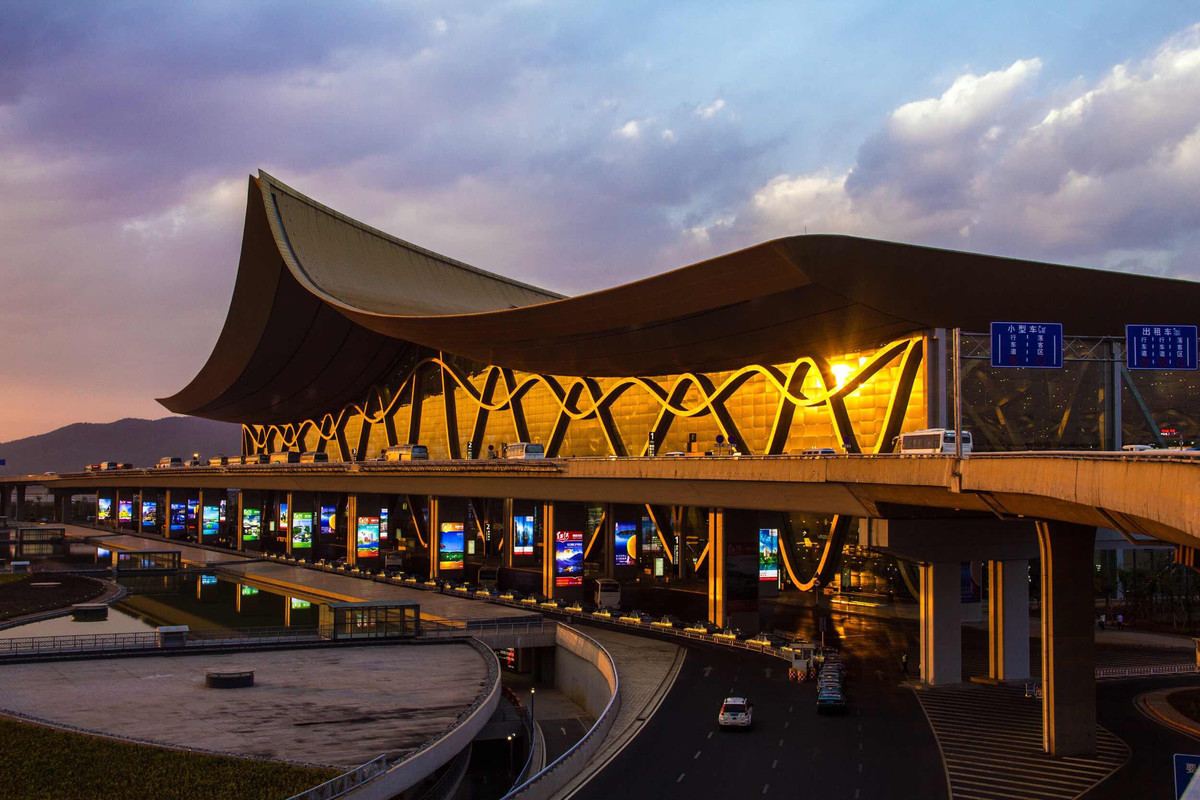
Last October, I stepped off a flight into Kunming Changshui, squinting at the sharp, thin high-altitude sunlight slanting through the terminal windows, and immediately noticed the construction hoarding stretching along the kerbside where I usually meet my rental car contact. I’d planned to pick up a petrol car and drive straight west to Dali, but the usual pickup bay was fenced off, with orange cones blocking the lane. If you’re planning Yunnan self-drive rental for foreigners this year, you’ll almost certainly run into this exact quirk — the terminal renovation works mean pickup points shift without much formal English signage, and it helps to know what to expect before you land.
How the temporary pickup point works during terminal renovations
I stood there for five minutes, rummaging in my bag for the booking confirmation, when a staff member in a high-vis vest waved me over to the temporary check-in desk tucked just inside the domestic arrivals exit. It turned out the usual curbside rental pickup zone had been moved 150 metres along the covered walkway, past the coffee shop with the sticky tile floors near the exit. There was no big sign for foreign visitors, just a handwritten A4 sheet taped to the desk edge.
The key thing to know: pickup is still available at the airport, just at this temporary spot until the renovation works wrap up. You won’t be wandering for miles, but don’t assume the old kerbside spot will be open. When you land, walk out of the arrivals gate, turn left along the covered walkway, and look for the rental check-in desk — that’s where they’ll hand over your car keys and walk you through the vehicle condition check.
I made the mistake last trip of waiting at the old pickup bay for 20 minutes, convinced I’d got the booking wrong, before I asked a cleaner for directions. Don’t do that. The temporary point is well signposted in Chinese, but English signage is patchy, so a quick ask saves time.
Licence arrangements for overseas visitors
A lot of travellers ask me if they can use their home driving licence or an International Driving Permit to rent a car in China, and I always have to give the same blunt answer: you can’t. A China temporary driving licence can be arranged for 1,500 RMB, and you don’t need to attend in person for it to be processed. I sorted mine out before I left the UK, submitting the required documents online, and it was waiting for me at the pickup desk when I arrived. No awkward in-person tests, no long waits at a local office.
I met a Belgian traveller at the Dali old town car park last spring who’d turned up with his Belgian licence, assuming it would work, and had to rearrange his itinerary to wait for the temporary licence to be processed. Don’t be that person. Sort this out before you fly, and you’ll be ready to drive as soon as you land.
Vehicle options and daily rental rates
I’ve rented both of the available petrol models on Yunnan trips over the last two years, and they suit very different kinds of travel.
The first is the VW Lavida 1.5L or Jetta 1.4T petrol, which costs 260 RMB per day, with a 3,000 RMB rental deposit and unlimited mileage. I drove a Lavida from Kunming to Dali, then up to Lijiang and back last spring, and the unlimited mileage was a godsend — I detoured twice to stop at viewpoint pull-offs along the Erhai lake ring road, and never had to worry about racking up extra charges. It’s a smooth, zippy little saloon, perfect for paved roads between the main tourist towns, and easy to park in the tight old town side streets.
The second option is the Tank 300 2.0T, which costs 400 RMB per day, with a 5,000 RMB rental deposit and a 300 km per day mileage limit. I took one on a trip up to Shangri-La last summer, climbing the twisty mountain passes where the air thins out enough to make your ears pop. It’s a solid, high-clearance SUV, great for the rougher side roads off the main highway, but I’d be honest — the 300 km daily limit means you need to plan your route carefully. I cut a detour to a remote village viewpoint short because I was already approaching the daily cap, and had to turn back to Lijiang earlier than I wanted.
If you’re doing Dali Lijiang car rental for foreigners as a one-way trip, dropping the car off in Lijiang rather than driving back to Kunming, there’s a one-way return fee of 1,500 RMB. I’ve done this twice now, and it’s worth every yuan — no point wasting two full driving days retracing the same road when you can take the high-speed train back down to Kunming later.
Deposits, insurance and damage rules you need to know
The rental deposit for whichever car you pick is refunded 5-7 working days after you return the vehicle, once they’ve run a check for any outstanding traffic fines. I got my 3,000 RMB deposit back last trip on day six, no holdups, but don’t expect it to hit your account the second you drop the keys off.
The insurance included with the rental covers compulsory and commercial cover, but there are clear excess rules you can’t skip over. Minor scratches under 1,500 RMB are paid by you, out of pocket. Any damage above that 1,500 RMB threshold goes through insurance, but you’ll still cover 30% of the remaining cost. Scratches that don’t break through the primer layer are completely free to fix, no charge at all. There are no downtime or depreciation charges for paintwork repairs or replaced parts, and if you have major damage, downtime charges are waived for the first 5 days.
I scraped the passenger side mirror of my Lavida on a narrow stone wall in a Lijiang old town car park last year. The scratch didn’t break the primer, so there was no charge at all when I returned the car. I was braced for a bill, but the staff just pointed out the mark, checked it didn’t go through to the metal, and waved me through.
If the car breaks down for a mechanical reason, the rental provider covers the cost of fixing it. If you cause the breakdown — say, you run it off the road and damage the undercarriage — you’ll pay for the towing out of your own pocket. And one hard rule to remember: the 600 RMB booking deposit is non-refundable if you cancel for personal reasons. I learnt this the hard way two years ago, when I had to postpone my trip because of a family illness, and lost that booking deposit. Book early, but be sure your plans are solid before you lock it in.
Practical tips for your Yunnan self-drive route
Most travellers stick to the loop between Kunming, Dali, Lijiang and Shangri-La, which is well-paved, well-signposted, and full of the kind of mountain views that make the early starts worth it. When you pick up your car at the temporary airport point, do a full walkaround before you drive off. Note any existing scratches, dents or wheel scuffs on the condition sheet, so you aren’t held responsible for damage that was already there when you collected the car. I always take timestamped photos of every panel, the wheels, and the interior before I turn the key — it takes five minutes, and saves arguments later.
Navigation works fine once you’re on the main highways, but download the offline maps for Yunnan before you leave the airport, as mobile signal can drop out on the higher mountain passes. Parking in Dali and Lijiang old towns is tight, so I always park in the designated public car parks on the edge of the old town rather than trying to squeeze down the pedestrianised side streets. I’ve seen too many travellers scrape their hire cars on the low stone curbs in those lanes.
Seasonality matters, too. The summer rainy season can make the mountain passes slippery, and winter snow can close the higher stretches up to Shangri-La. Check the road conditions before you set off each day, and don’t push through if the weather turns bad.
Pickup and return are straightforward, whether you choose the airport temporary spot or the city office in central Kunming. Just remember the renovation works mean the curbside pickup point isn’t in its usual place right now — a quick walk to the temporary desk, a quick check of the car, and you’ll be on the road to Dali before the midday sun gets too hot.