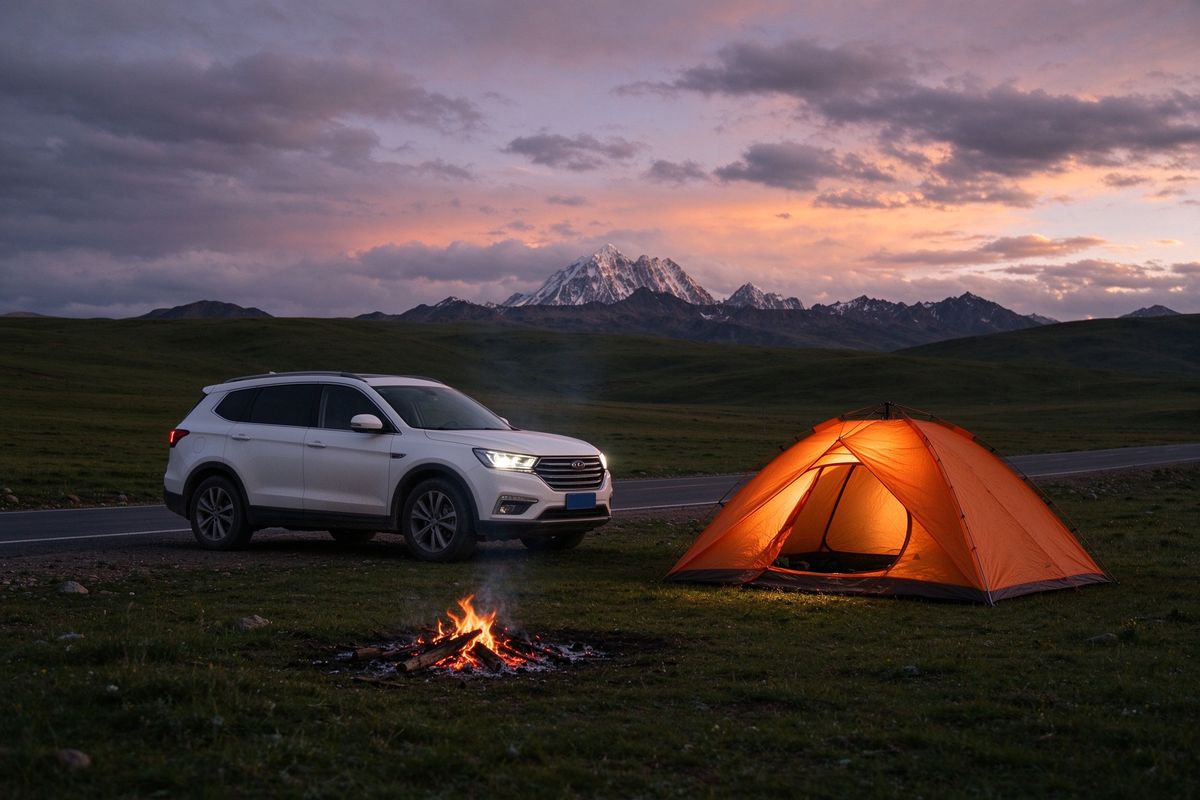
Camping makes a China road trip dramatically cheaper and closer to the landscape — especially in the west, where towns can be hours apart. Here is how to do it well.
Where camping works
- Expressway service areas: many allow overnight parking; toilets and food are available. Free and practical for one night.
- Designated campsites: increasingly common around lakes and national parks (e.g. Qinghai Lake, Hulunbuir).
- Provincial roads and scenic pull-offs: in the west, wide shoulders and grassland pull-offs are used by local travellers; keep the site clean and leave it as you found it.
What not to do
- Do not camp inside scenic areas that prohibit it — rangers do patrol.
- Do not block road shoulders or park on blind corners.
- Respect no-camping rules around nature reserves and border areas.
Gear to carry
A tent that handles wind, a sleeping bag rated for the local night temperature, a gas cooker (check rules about gas canisters on your route), lights, water, and a basic tool kit. In the west, night temperatures can drop below 5°C even in summer at altitude.
One practical note
Keep your customs papers and passport inside the vehicle at night — checkpoints in some areas operate around the clock. Camping plus a licensed agency handling your route filing means you can stop anywhere the route allows.