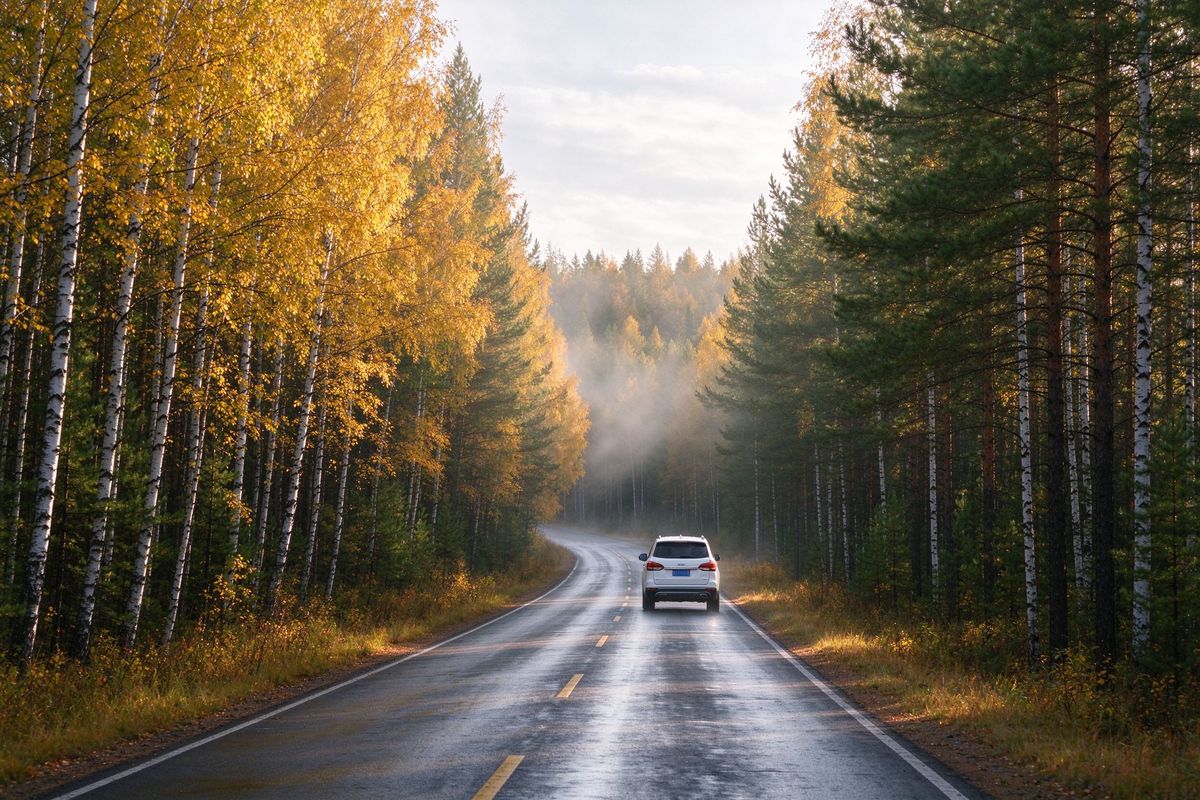
Driving along China’s borders is a different kind of road trip — long horizons, checkpoints, and scenery that most travellers never see. Two routes stand out.
G219: the western border highway
The G219 runs thousands of kilometres along the west and southwest borders. The most demanding and most rewarding section for self-drivers is Yecheng (Xinjiang) to Lhasa (Tibet), crossing passes above 5,000 m through the Ali plateau. This is a 15–20 day expedition for well-prepared vehicles — high clearance, off-road tyres, spare fuel, and serious altitude planning.
The Northeast border loop
From Harbin up through Heihe and Mohe (China’s northernmost village) and across to the Hulunbuir grasslands, the northeast loop follows border rivers through birch and pine forests. Ten to fourteen days, gentler altitudes, and a completely different palette: wetlands, gold birch in early September, and grassland camps.
What border routes demand from your paperwork
- Your customs entry papers must stay with the vehicle — checkpoints are frequent
- Border-adjacent and military areas may require extra permits for foreign travellers
- Route filing matters: your approved scope defines where you may drive
- Photography restrictions exist near some border installations — follow signage
Both routes are in our route library with detailed itineraries. Send us your choice and we will confirm the exact permits and file the route.