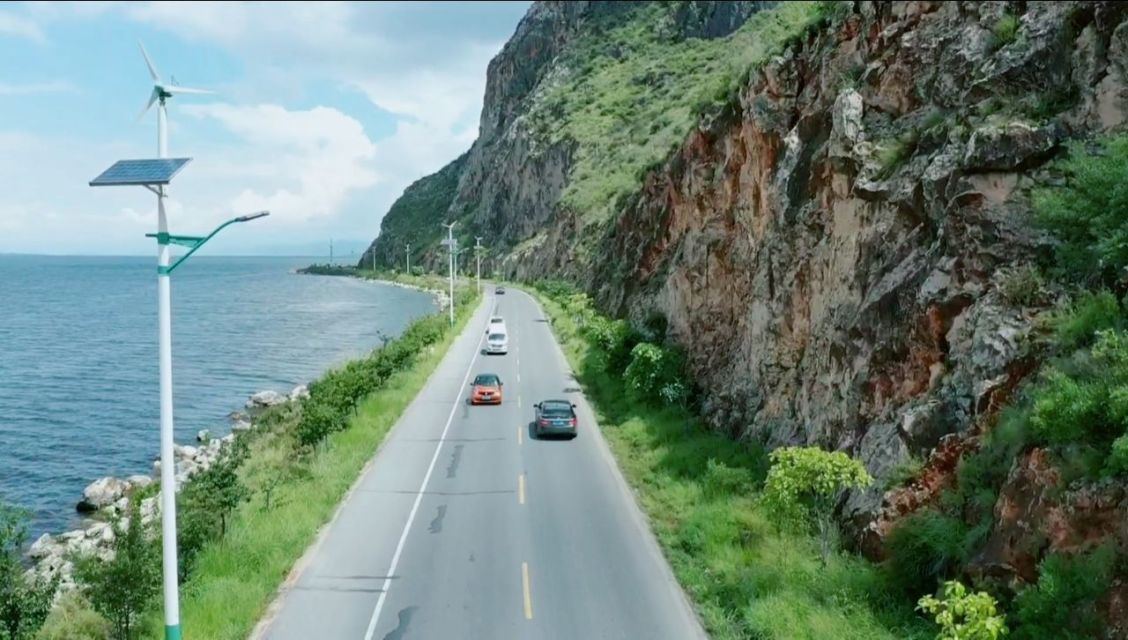
Dali Lijiang car rental for foreigners: safe roadside stops on Erhai’s north shore
I was last on that stretch of road in late March, when the camellia hedges lining the verge were still dripping with overnight mist, and the pale blue of Erhai stretched so far to the east it blurred into the hazy outline of Cangshan’s lower peaks. I’d pulled over 200 metres too far up a narrow tarmacked access lane, thinking I’d found the perfect spot to snap the lake at golden hour, when a farmer on a weathered electric tractor leaned out the window of his cab and waved at me, gesturing at the three rice transporters stacked behind him that couldn’t squeeze past. I waved back, apologised, and reversed 12 metres back onto a small paved layby I’d walked straight past earlier, and that’s when it clicked: most overseas visitors doing this route don’t realise the wide, seemingly empty verges along Erhai’s northern shore aren’t just for sightseeing stops. A lot of them are unmarked farm access routes, and blocking them can leave local families waiting hours to get their harvests, seedlings, or livestock feed up to the terraced fields that run right down to the lake edge.
I’ve done this drive half a dozen times now, in everything from the 1.5L VW Lavida that’s my go-to for tarmac routes around Dali, to the 2.0T Tank 300 when I head further north up to Shangri-La. The first thing to sort before you even set wheels on that shoreline road is the basics of your rental, so you don’t end up flustered and rushing to find a stop before you’ve even worked out how the local navigation works. Yunnan self-drive rental for foreigners works on a straightforward local model: you fly into the country, pick up the car here, there’s no bringing your own vehicle across any border, and a China temporary driving licence can be arranged for 1500 without you needing to attend in person. No faff with other documentation that doesn’t apply here, and all the vehicles are petrol, no electric ones to catch you out with range anxiety on the winding shore roads.
Prepping before you leave the Dali pickup point
Last month I met a couple from Manchester who’d booked their car via Kunming airport car rental for foreigners, and they’d driven straight down to Dali the day they landed, still jet-lagged, and didn’t even check the layby locations marked on their navigation before they set off around Erhai. They ended up blocking a farm access track for 40 minutes while they took photos, and a group of villagers had to carry crates of fresh strawberries past their car by hand because the delivery lorry behind them couldn’t get through. They were mortified, and rightly so.
Don’t be that person. Before you turn the key in the ignition, run through a quick check of the route. The northern shore road runs from Xizhou all the way up to the turnoff for Shuanglang, and there are 12 clearly marked paved laybys dotted along its 28km length, all set back well away from the narrow farm tracks that branch off every few hundred metres. The VW Lavida or Jetta 1.4T cost 260 per day, with a 3000 rental deposit and unlimited mileage, which is ideal for this route, as you can dawdle as long as you like without ticking over a kilometre limit. If you’re heading further up into the hills beyond Lijiang later, the Tank 300 comes in at 400 per day, with a 5000 rental deposit and 300km per day limit, which is more than enough for the Erhai loop plus a run up to the jade village on the way to Lijiang. The one-way return fee if you drop the car off in Lijiang is 1500, which is well worth it if you don’t fancy doubling back to Dali at the end of your trip.
The booking deposit of 600 is non-refundable if you cancel for personal reasons, so it’s worth locking in your dates once you know your travel plans. The rental deposit is refunded 5-7 working days after you return the vehicle, once the traffic fine check is complete, and all insurance includes compulsory and commercial cover. Minor scratches under 1500 are paid by the client, damage above 1500 goes through insurance with the client bearing 30%, scratches that don’t damage the primer are free, and there’s no downtime or depreciation charges for paintwork or replaced parts. Downtime is waived within 5 days for major damage, too, which takes a lot of the stress out of driving unfamiliar narrow roads. If the vehicle breaks down for a mechanical reason, that’s covered, but towing for a client-caused reason is at the client’s expense. I keep a note of that in the back of my phone, just in case I misjudge a muddy verge after rain.
How to spot a safe stop that doesn’t block farm access
That day I almost blocked the tractor, the sun was glinting so hard off Erhai I could barely see the edge of the road, and I misread the worn tyre tracks on the verge as a designated pull-over spot. I’ve since learned three quick checks that take 10 seconds to do, every time you feel the urge to yank the steering wheel to stop for a view.
- First, if the tarmac of the spot you’re thinking of pulling into runs straight back and disappears through a gap in the stone wall that lines most of the northern shore, that’s a farm access track, not a layby. You’ll see tyre ruts dug deep into the dirt on the other side of the wall, and usually a hand-painted wooden sign for a pear orchard or strawberry patch nailed to a post. Don’t stop there.
- Second, if there’s no white painted line marking a designated parking spot on the tarmac, don’t pull fully off the road. Even if the verge looks wide and empty, it might be the only passing space for two large farm vehicles to squeeze past each other, and if you park there, you can trap a lorry full of crops for half an hour. I usually stop with my wheels still 10cm on the tarmac if I just want to lean out the window for a quick photo, and keep the engine running so I can move immediately if someone needs to get past.
- Third, if you see a group of three or more electric bikes or tractors pulled up on a stretch of verge, that’s a spot local people use to chat and share tea at the end of the working day. Pull in a little further up, leave a 3 metre gap for them to move their vehicles out, and you won’t get any aggro. Last time I did that, one of the old farmers handed me a fresh handful of loquats straight off his tree, still warm from the sun.
It sounds obvious when you write it down, but when you’re staring at that view of the lake with the golden light hitting Cangshan’s snow peaks, it’s so easy to zone out and forget that the land right behind the roadside is actively used, not just a pretty backdrop. Dali Lijiang car rental for foreigners is set up to let you take these slow, unplanned stops, after all, so it makes sense to do it in a way that doesn’t disrupt the people who live and work there.
I saw a group of three overseas visitors in a Tank 300 last summer, who’d parked across the entrance to a rice paddy to take a drone shot, and a grandmother carrying a basket of greens on her back had to clamber around the front of their vehicle, stepping in the muddy ditch at the side to get past. They were so busy setting up their camera they didn’t even notice. I flagged them down, explained where they’d stopped, and they were mortified, once they realised what they’d done. They moved the car 200 metres up to a proper paved layby, and even went back later with a bag of oranges they’d bought from a roadside stall to apologise to the family that farmed the paddy.
Little extra tips for the northern shore drive
The stretch between Xizhou and Zhoucheng is the busiest for farm traffic, especially between 7am and 10am, and 4pm and 7pm, when people are heading out to and coming back from the fields. That’s when you’re most likely to meet slow-moving tractors, overloaded electric tricycles, and even the odd herd of goats being herded along the verge. If you stop during those times, double check you haven’t left your car sticking out even a little bit into what looks like a narrow gap.
Yunnan self-drive rental for foreigners lets you set your own pace, so you don’t have to rush. I usually drive that stretch of the shore at 30km an hour, max, so I can glance over at the verges as I go, and spot a good layby before I’m right on top of it. There’s no rush to get to Shuanglang, and the best views are the ones you get to sit and enjoy without feeling like you’re holding up a line of local traffic.
If you’re picking up your car via Kunming airport car rental for foreigners, you can add the temporary driving licence arrangement to your booking before you even land, so you don’t have to sort anything out when you arrive. The pickup checklist will walk you through all the existing scratches on the vehicle, so you don’t get charged for damage you didn’t do, and the navigation system will have all the marked laybys along Erhai’s northern shore pre-loaded if you ask. I usually save three or four of the nicest laybys to my favourites before I leave the pickup point, so I know exactly where I can stop without having to scan the verge at the last second.
I had one moment last autumn, when it rained so hard the tarmac turned black and shiny, and I pulled into what I thought was a small layby, only to feel the back wheels sink an inch into soft mud. I’d misjudged the edge of the paved spot, and if a local farmer on a tractor hadn’t stopped to tow me out, I’d have been stuck there for an hour. I gave him a packet of the Dali roasted tea I had in the footwell to say thanks, and he laughed and told me even local people make that mistake sometimes, when the rain blurs the edge of the tarmac.
You don’t need any fancy extra gear for this drive. Just take it slow, keep half an eye on the verges, and remember that the road isn’t just for tourists heading to viewpoints. The people who live here have been using these access tracks for generations to get their crops to market, and a little bit of care when you pull over goes a very long way.
Dali Lijiang car rental for foreigners is made for exactly this kind of slow, unplanned exploration, the kind where you stop for half an hour to watch the fishermen mend their nets on the shore, or buy a bag of fresh walnuts from an old lady sitting on a stone wall. You just don’t want that memory to be spoiled by the realisation you’ve held up a lorry full of strawberries for 20 minutes.