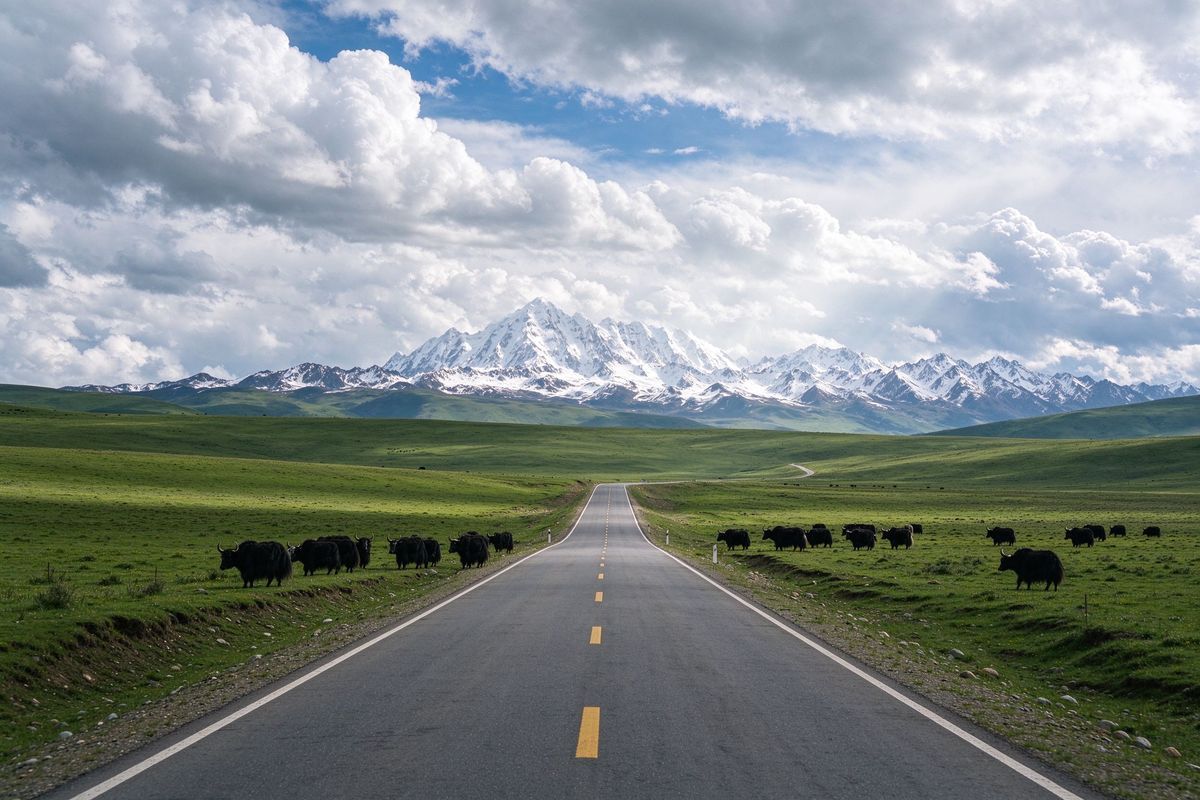
Western China — Tibet, Qinghai, Xinjiang, western Sichuan and Gansu — is where the best driving routes live. It is also a different environment. Here is an honest briefing.
Altitude is the main variable
Most of the plateau sits above 3,000 m, with passes commonly over 4,000 m. Plan slower days, more water, and a rest day at the first high town. Altitude sickness is real but manageable with gradual acclimatisation.
Weather windows
General rule: June–October for most western routes. Winter closes many passes and desert roads can be treacherous. Spring brings wind and sand in Xinjiang; summer brings rain and landslides in Sichuan\u2013Tibet valleys. Plan a flexible day into every itinerary.
Fuel and distance
Towns are far apart. County towns nearly always have fuel, but stretches of 200+ km without a station exist on several routes. Carry a reserve can when routes are remote, and never pass a station below half a tank.
Permits for foreign travellers and vehicles
Tibet and border-adjacent areas require extra approvals; vehicle route filing applies across the west. These are arranged in advance through a licensed agency — this is our core service. Confirm your full itinerary before booking flights.
Road culture
- Trucks are slow on passes — overtake only where allowed
- Free-roaming animals cross roads at dusk in grassland areas
- Speed limits and cameras are strictly enforced in towns and on descent
- Night driving in the mountains is not recommended
Western China rewards patience. Take it slower than you planned, and the roads will do the rest.