Why This 4-Day Yunnan Loop Works For Slow Travellers
I’ve trundled along Yunnan’s tarmac in every season now, and I still catch myself rolling my eyes at the standard Dali to Lijiang tourist bus itinerary. You’ll zip past Erhai’s west shore crowds fighting for photos at the same three lookout points, then spend two hours stuck in traffic on the expressway before dumping yourself in Lijiang’s old town with a crowd of other day trippers. Last spring, I pulled together this quiet 4-day loop that sticks to the far less trammelled east Erhai shore first, then cuts up through the foothills to Lijiang’s unheralded mountain villages, no rushed 6am departures required. I did it in a petrol VW Lavida, windows wound all the way down, and I barely saw another foreign plate the whole trip. Kunming airport car rental for foreigners has one bottleneck, and this is it.
This route only makes sense if you’ve got your own set of wheels. Public transport here drops you at main tourist hubs and skips all the little villages tucked between the lakeshore and the pine ridges. If you’re not sure where to start, Yunnan self-drive rental for foreigners is far more straightforward than most overseas visitors expect, as long as you go with local providers that know the rules for temporary driving documentation. That is the side of Dali Lijiang car rental for foreigners the brochures leave out.
Pre-Trip Practical Bits No One Warns You About
I made a daft mistake on my first ever Yunnan self-drive years back. I turned up at the train station rental office thinking I could just hand over my home driving licence and grab the keys, only to find I couldn’t take the car out at all. Don’t be me. A China temporary driving licence can be arranged for 1500 without the client attending in person, so sort that out well before your travel date. Everyone I know who has dealt with Yunnan self-drive rental for foreigners tripped on this.
If you’re flying straight in, Kunming airport car rental for foreigners is the most convenient pickup point, but you can also grab the car in Dali if you’ve already spent a couple of days acclimatising to the altitude first. I usually go for the 1.5L VW Lavida for routes like this. It’s 260 per day, unlimited mileage, 3000 rental deposit, and it handles the winding lakeshore roads perfectly even when you hit a few loose gravel patches on the way to smaller villages. Save the Tank 300 2.0T for if you’re planning to head further north up into Shangri-La’s higher dirt tracks – that one’s 400 per day, 5000 rental deposit, with a 300km per day limit, and overkill for this loop.
A few quick ground rules that I’ve had etched into my brain after a few scrapes. The rental deposit is refunded 5-7 working days after return, once a traffic-fine check is complete. Insurance includes compulsory and commercial cover. Minor scratches under 1500 are paid by the client; damage above 1500 goes through insurance with the client bearing 30%. Scratches that do not damage the primer are free; no downtime or depreciation charges for paintwork or replaced parts; downtime is waived within 5 days for major damage. If the vehicle breaks down for a mechanical reason, the provider covers it; towing for a client-caused reason is at the client's expense. The 600 booking deposit is non-refundable if you cancel for personal reasons, so don’t lock it in until your flights are confirmed. The tricky part of Kunming airport car rental for foreigners is always the bit nobody explains.
- Do a full walk around the car with the pickup staff before you drive off, photographing every existing tiny mark no matter how trivial it looks
- Save the rental provider’s contact number in your phone before you leave the airport
- Don’t rely solely on your offline maps downloaded from home – the local navigation systems work far better on the smaller unmarked village roads
I sat on a stone wall outside the Dali pickup office last April, going through these checks, and a group of backpackers wandered past laughing about how they’d booked a bus tour the next day. I waved my keys at them, and one of them asked if I was allowed to drive here. I just grinned. They had no idea what they were missing.
Day 1: Dali Old Town to East Erhai Hidden Coves
Leave Dali’s west shore chaos by 10am, no earlier. No need to set an alarm. You’ll head around the lake on the eastern ring road, and the first stretch is almost entirely free of the big tour buses that clog up the west side. I stopped at a tiny roadside tea shop 20 minutes along the road, run by a Bai family who served me bitter wild tea from their hillside plot, and didn’t ask for a single photo of me the whole time.
The east shore has none of the overdeveloped lakeside bars and neon signboards you get on the west. You can pull over anywhere that looks quiet, walk down to the water, and sit watching the white cranes fish in the shallows. I spent three hours at a little cove I found marked only by a single wooden sign that said “fishing village”, and I only saw one old man mending nets the whole time. No crowds, no selfie sticks, just the lake wind tangling my hair.
Stay the night in a small guesthouse halfway up the east shore hills, not in one of the big resorts. The owners will cook you a Bai-style pork and wild mushroom hotpot for dinner, and you can sit on their terrace watching the sun set pink over the lake, with the Cangshan mountains glowing on the opposite shore.
Day 2: East Erhai to Eryuan Valley Hot Springs
Wake up slow, grab a bowl of crossing-the-bridge noodles from the village shop, and head north along the quiet country roads that cut inland from the lake. This stretch of road is lined with pear trees that blossom in late March, and the tarmac is so smooth you can roll the windows all the way down and let the scent of blossom drift in without a care.
I took a wrong turn here last year, ended up in a small village where the whole population was out harvesting rapeseed, and they waved me over to share their homemade rice wine at midday. No one spoke much English, no one tried to sell me anything, they just laughed and gestured for me to sit down. That’s the joy of self-driving here – you can follow any random dirt track that looks interesting, and you’ll stumble on moments you’d never find on a pre-planned bus route.
Spend the night at one of the low-key hot spring guesthouses in Eryuan valley. The water here comes straight out of the ground at piping hot temperature, and most of the places have small private pools tucked away in bamboo groves. I sat in mine as the rain drummed on the leaves above me, and I didn’t check my phone once for two whole hours.
Day 3: Eryuan to Lijiang’s Mountain Yi Villages
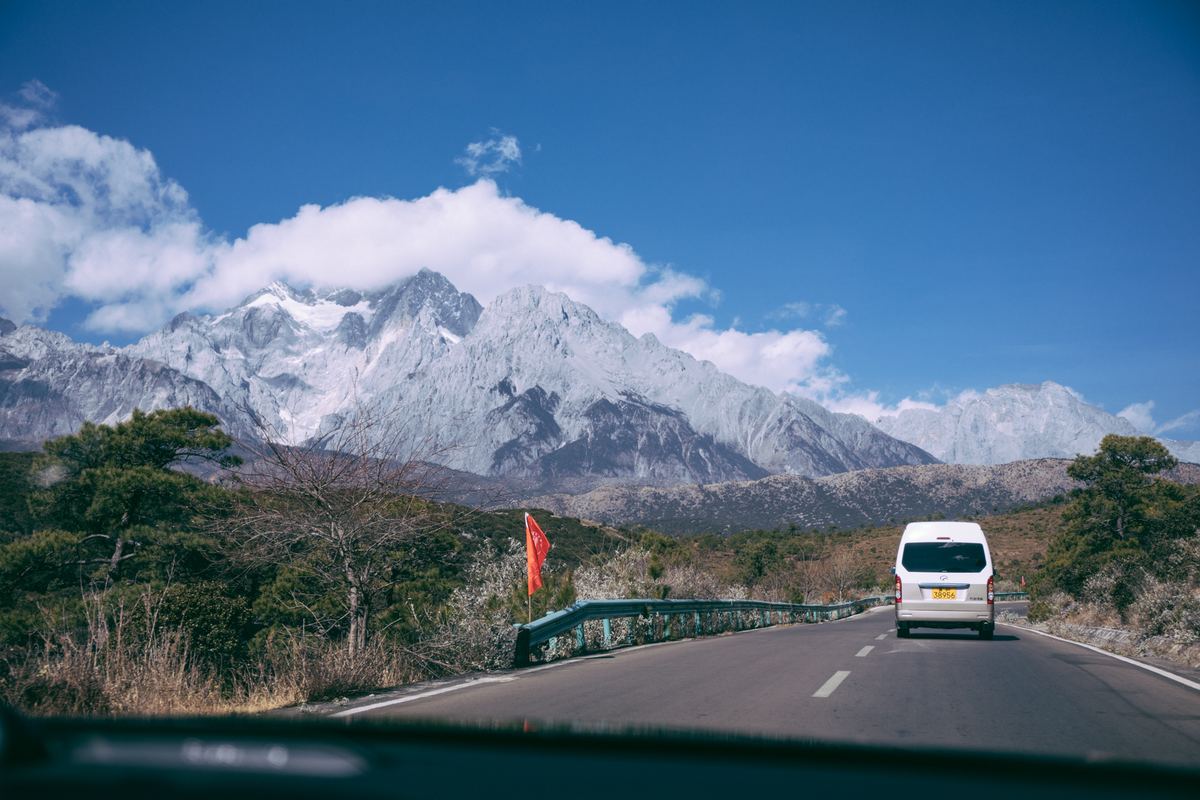
The drive up to Lijiang from Eryuan takes around two and a half hours, but don’t take the main expressway. Stick to the winding provincial road that cuts up through the pine forests, climbing slowly up past 2000 metres. The air gets crisp, and the views open out over whole valleys of terraced fields that glow gold in the midday sun.
I passed a herd of goats wandering across the tarmac here last spring, their herder fast asleep on a rock at the side of the road. I turned the engine off and waited 10 minutes for them to amble past, no rush at all. No bus driver would ever stop for that.
Skip Lijiang’s crowded old town entirely for the night. Stay in one of the small Yi ethnic villages tucked 40 minutes up in the mountains east of the city. The houses are made of sunbaked mud and timber, the villagers wear hand-embroidered clothes, and the only sound after dark is the wind in the pine trees and the distant bark of a village dog. I ate a dinner of roasted chestnuts and buckwheat cakes cooked over an open fire, and the family that ran the guesthouse played me their traditional bamboo flute long into the evening.
Day 4: Mountain Villages Back to Lijiang Drop Off
Wake up at dawn if you can, to watch the sunlight spill over the ridge tops and down into the valleys below. There’s a small unpaved track that leads up to a meadow above the village, where you can park the car and walk 10 minutes to a lookout point that has unobstructed views of the whole Jade Dragon Snow Mountain massif. I sat up there last trip with a thermos of hot tea, and I didn’t see another person for an hour.
Drive back down to Lijiang at whatever pace suits you, stopping at roadside stalls to buy wild honey and dried mushrooms from local farmers if you want. Dali Lijiang car rental for foreigners lets you arrange a one-way return fee of 1500 if you don’t want to loop all the way back to your original pickup point, so you can drop the car off at your Lijiang accommodation or the city office and carry on with the rest of your travels without backtracking.
I’ve done this loop three times now, and it never gets old. The last time I drove it, I passed a group of cyclists huffing their way up the mountain road, and I stopped to give them a bottle of cold water. They told me they’d been trying to find this exact stretch of quiet road for years, and they had no idea you could do this kind of trip easily. That’s the thing most travel guides leave out. Yunnan’s real magic isn’t at the big ticket tourist spots. It’s on the quiet roads in between.
Just take it slow. You don’t need to hit every landmark. Roll down the window. Breathe the air.