Last April, I stepped off a flight into Kunming Changshui with 12 days of Yunnan road trip planned, and a very specific problem: the only available rental at the airport desk was a manual VW Lavida. I’d spent 8 years driving nothing but automatics back home in Yorkshire, and the last time I’d operated a gear stick was on a clapped-out old Ford when I was 19. I’d booked the trip around Yunnan self-drive rental for foreigners long before I noticed the transmission mismatch, and I was not about to waste the whole holiday stuck in Kunming. This is the unglamorous, practical guide I wish I’d had before I turned the key on that tarmac.
Why the manual option is non-negotiable for most Yunnan trips
Let’s get the basics out first, because no one tells you this when you’re scrolling rental listings from your sofa in the UK. For Kunming airport car rental for foreigners, the most accessible petrol cars are the manual VW Lavida 1.5L and Jetta 1.4T, at RMB 260 per day, with a RMB 3,000 rental deposit and unlimited mileage. The only automatic option on offer when I booked was the Tank 300 2.0T, which runs RMB 400 per day, has a RMB 5,000 deposit, and caps daily mileage at 300km. If you’re planning to drive from Kunming to Dali, then up to Lijiang, that daily cap will bite you fast — the stretch from Kunming to Dali alone is just shy of 330km, so you’d be paying over the limit before you even hit the old town gates.
I weighed the numbers for 10 minutes at the pickup counter. The extra cost for the Tank, plus the mileage overage risk, plus the one-way return fee of RMB 1,500 if I dropped the car in Lijiang instead of driving back to Kunming, would have added up to nearly double the total budget I’d set for transport. The Lavida was the obvious call, even if it meant I had to re-learn how to drive stick on a mountain road with thin air and hairpin bends.
One quick admin note before you even think about gears: you will need a China temporary driving licence to pick up the car. The team at the rental desk can arrange this for RMB 1,500, and you don’t have to show up in person to get it sorted. I’d sorted mine a week before flying, so there was no last-minute panic when I handed over my passport at the counter.
My first 20 minutes with the Lavida: what actually went wrong
The pickup bay was glinting in that sharp, high-altitude Yunnan sun when the attendant tossed me the keys. I adjusted the seat, pressed the clutch all the way to the floor, and turned the ignition. The car lurched forward twice, stalled three times, and I swear the attendant was holding back laughter as he walked me through the bite point.
Here’s what I wish someone had told me before I tried to pull out onto the airport access road: the clutch on these economy manual cars has a very high bite point. You don’t need to rev the engine hard — just let the clutch come up slowly until you feel the car start to roll forward, then hold it there for two seconds before pressing it back down if you stall. I spent my first 15 minutes stalling every time I tried to merge, because I was lifting my foot too fast, like I was driving that old Ford from 2008.
By the time I got onto the G56 expressway heading west towards Dali, I’d got the hang of first and second gear. The hard part, it turns out, isn’t starting on flat ground. It’s the mountain passes.
Uphill starts on the way to Dali: don’t be stubborn
Two days into the trip, I pulled over at a viewpoint halfway up the mountain pass between Chuxiong and Dali, to take photos of the terraced fields below. When I tried to pull back out onto the single-lane mountain road, I stalled. Twice. A local truck driver behind me tooted gently, then pulled alongside, rolled down his window, and gestured that I should use the handbrake to hold the car while I found the bite point.
I’d completely forgotten about the handbrake trick. For anyone who’s only driven automatic on hills, this is non-negotiable: when you’re stopped on a steep uphill slope, pull the handbrake up, find the clutch bite point, feel the engine start to pull, then release the handbrake. No more rolling back into the car behind you. I did this three more times on the way up to Lijiang, and never stalled on a hill again.
Don’t be like me and try to muscle through without it. The roads around Dali Lijiang car rental for foreigners are beautiful, but they’re narrow, steep, and often shared with farm trucks and tourist coaches. You don’t want to be the person stalling at the top of a pass, holding up a line of traffic.
What you actually need to know about rental rules, no fine print
I’ve read enough rental agreements to know the fine print always hides the annoying bits, so I made notes as I went along. First, the rental deposit: for the Lavida, that’s RMB 3,000, and it gets refunded 5-7 working days after you drop the car back, once they’ve checked for any outstanding traffic fines. That felt fair to me — I’d rather wait a few days for the refund than have them rush the check and send me a surprise fine bill a month later.
Insurance is included with both compulsory and commercial cover, but there’s a clear excess structure you need to remember. If you get a minor scratch under RMB 1,500, you pay for it yourself. Any damage over RMB 1,500 goes through insurance, and you cover 30% of the cost. The good bit? Scratches that don’t go through the primer are free to fix, and there are no downtime or depreciation charges for paintwork or replaced parts. If the car breaks down for a mechanical reason, the rental team covers it — but if you cause the breakdown, like grinding the gears so hard you break the gearbox, you pay for the towing.
I had a tiny scratch on the passenger door when I parked in Lijiang, from a stray shopping cart that rolled into it in the car park. It didn’t pierce the primer, so there was no charge at all when I dropped the car back. I was half-expecting a bill, so that was a nice surprise.
One last rule to remember: if you cancel for personal reasons, the RMB 600 booking deposit is non-refundable. I’d nearly cancelled a week before the trip when I had a last-minute work emergency, but I’m glad I didn’t — that 12-day loop from Kunming to Dali, up to Lijiang, and back down was the best road trip I’ve done in years.
Is learning manual worth it, if you’re used to automatic?
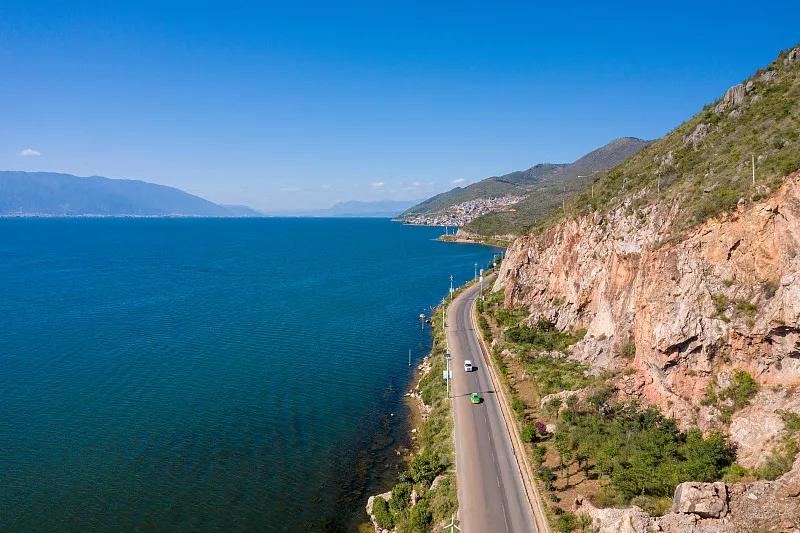
Let’s be honest: if you’re only staying in Kunming city, you don’t need to rent a car at all. The metro is cheap, the taxis are easy to flag down. But if you want to drive out to the Stone Forest, or loop around Erhai Lake, or take the slow road up to Shangri-La, having a rental car makes all the difference.
I’d rather spend an afternoon re-learning manual, save nearly half my transport budget, and get the unlimited mileage that lets me stop wherever I want. The Lavida is a solid, reliable car — it handled the mountain roads without a fuss, the aircon worked perfectly in the 28-degree April heat, and I never had a mechanical issue the whole trip.
You don’t need to be a professional driver to do this. You just need to take it slow for the first hour, remember the handbrake trick on hills, and not panic when you stall once or twice. I did it, and I’m the person who once stalled an automatic car on a flat road because I forgot to take the handbrake off. If I can manage it, you can too.