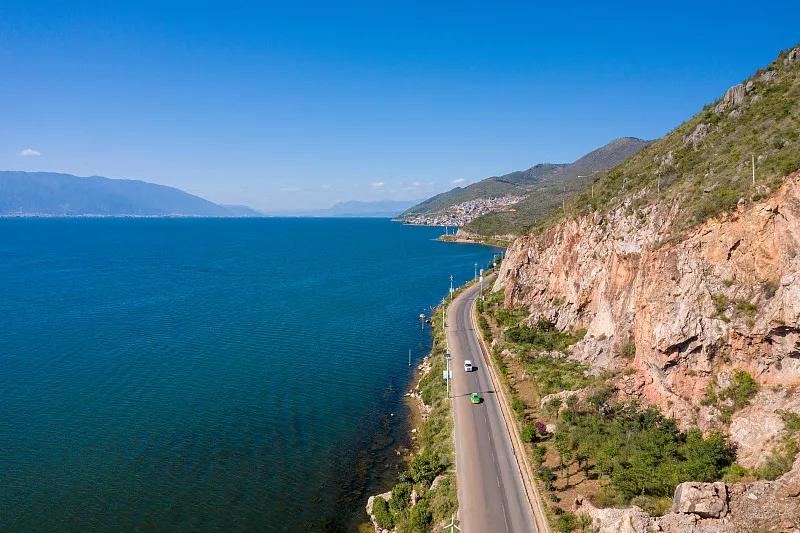
I’ve lost count of how many times I’ve wound up the roads between Dali and Lijiang, craning my neck at the red earth cliffs and the way the mist clings to the Cangshan slopes at dawn. Last spring, I finally did the loop most overseas visitors skip: the 4-day run out to Shaxi Old Town and Yunlong Salt Well Village, in a petrol-powered VW Lavida I picked up right off the tarmac at Kunming airport. If you’re eyeing up Yunnan self-drive rental for foreigners, this route is the sweet spot — not too long on daily driving, enough quiet backroad stretches to feel like an adventure, and no hairpin passes that’ll leave your knuckles white.
Getting sorted with your car before you even hit the road
Let’s cut to the practical bits first, because I’ve seen too many people turn up to pick-up desks panicking because they didn’t sort their paperwork ahead of time. As a visitor, you don’t need to sort an International Driving Permit to drive here — a China temporary driving licence can be arranged for 1,500 RMB, no in-person visit required, which takes the stress out of faffing with local translation offices when you land jet-lagged.
I booked my Kunming airport car rental for foreigners pick-up for 10am, after my 7-hour flight from Hong Kong, and it was the right call. I stood by the arrivals exit sipping a very sweet iced lemon tea, watching the airport shuttle buses puff exhaust fumes into the thin spring air, when the agent rolled up with the Lavida. It had a local Yunnan plate, left-hand drive, no weird modifications, just a full tank of petrol and a phone mount stuck to the windscreen.
Here’s the straight breakdown of what you’ll pay, no hidden surprises I stumbled on: the VW Lavida 1.5L or Jetta 1.4T petrol models run 260 RMB a day, with a 3,000 RMB rental deposit and unlimited mileage. If you want something with a bit more grunt for the rougher village roads, the Tank 300 2.0T is 400 RMB a day, 5,000 RMB deposit, with a 300km daily limit. I checked the daily mileage on my Lavida for the whole loop — it added up to just over 700km total across 4 days, so the unlimited mileage option was perfect for me, no stressing about clocking extra kms on the narrow lanes.
The deposit gets refunded 5-7 working days after you drop the car back, once they run a check for any unpaid traffic fines. Insurance covers compulsory and commercial cover, but don’t think you’re completely off the hook: minor scratches under 1,500 RMB come out of your pocket, anything over 1,500 goes through insurance and you cover 30% of the cost. If the scratch doesn’t go through the primer? It’s free, no charge. No downtime or depreciation fees for paintwork or replaced parts, which is a relief — I’ve rented cars in other countries where they hit you with a “lost revenue” charge if a panel needs repainting, even if it’s only a tiny mark. If the car breaks down from a mechanical fault, they cover it; if you cause the breakdown, towing is on you. Oh, and the 600 RMB booking deposit? It’s non-refundable if you cancel for personal reasons, so lock in your dates early when you know your flight times.
I should note: there are no electric vehicles in the fleet. All cars are petrol, which is a blessing on these mountain roads, where charging points are few and far between between Dali and the village lanes. If you’re doing a one-way drop — say, picking up in Kunming and dropping in Lijiang — the one-way return fee is 1,500 RMB, but for this loop, we’re picking up and dropping back in Kunming, so no extra cost there.
Your 4-day loop, mapped out from my own drive
Day 1: Kunming to Shaxi Old Town, via the old tea horse road
I left Kunming at 11am, once I’d finished the quick walkaround check of the Lavida — noting a tiny chip on the front bumper that the agent marked down on the checklist, so I wouldn’t get blamed for it later. The drive west took me past the Erhai Lake turnoff, but I skipped the crowded Dali old town this time, sticking to the G5611 expressway until the exit for Shaxi. The road narrows after the exit, winding up through pine forests where the temperature dropped 6 degrees from the lakeside plain. I pulled over once to let a local farmer herd 20 black goats across the tarmac, their bells clanging loud enough to hear over the car engine.
Shaxi hasn’t changed much in the 10 years I’ve been visiting. The old stage gate at Sideng Street still has the same faded red lanterns, and the stone paving is worn smooth by centuries of horse traders. I parked at the designated lot at the edge of town — parking is cheap, 10 RMB a day, no need to drag your bags down the cobblestones. That first evening, I sat at a courtyard restaurant eating wild mushroom noodles, watching the sunset paint the surrounding hills tangerine. Total driving for the day: roughly 330km, no long stretches that’ll leave you stiff.
Day 2: Shaxi to Yunlong Salt Well Village, slow roads and old salt pans
This is the day most people skip, and it’s the best part of the loop. I left Shaxi at 9am, when the mist was still curling over the rice paddies, and took the county road south to Yunlong. The road winds along the river, with occasional narrow stretches where you have to pull over to let an oncoming lorry pass. I passed a group of women carrying wicker baskets full of spring bamboo shoots, walking barefoot along the roadside, and waved as I slowed down.
Yunlong’s salt well villages feel frozen in time. The wooden stilt houses cling to the hillside above the river, and you can still see the old wooden salt evaporation racks, where villagers boil brine from the ancient wells to make blocks of salt, just like they did hundreds of years ago. I spent 3 hours wandering the lanes, stopping to chat with an old man who was splitting firewood outside his house — he offered me a cup of bitter local tea, and told me most of the young people had moved to Dali for work, leaving the old village quiet. Total driving for the day: 120km, slow going, no rush.
Day 3: Yunlong back to Dali, a quiet detour off the main road
I took my time leaving Yunlong, stopping at a roadside stall for fried potato cakes dusted with chilli powder for breakfast, before heading back north towards Dali. The road climbs a gentle pass at 2,300m, with views down the valley that make you want to pull over every 10 minutes for a photo. I didn’t fight the crowds at Dali Old Town this time — I booked a small guesthouse on the north side of Erhai Lake, where you can sit on the terrace and watch the sun set over the lake without a hundred other tourists in your frame. If you’re doing Dali Lijiang car rental for foreigners as a longer trip, this is the perfect halfway stop before heading further north, but for our loop, we turn back east the next day.
Day 4: Dali back to Kunming, easy driving to wrap up the loop
The drive back to Kunming is straightforward on the expressway, no tricky mountain passes. I left Dali at 10am, stopped once for a bowl of rice noodles at a service station, and dropped the car back at Kunming airport by 4pm, leaving plenty of time to check in for my flight. The agent did the walkaround check again, noted no new scratches, and told me the deposit would hit my account in about a week.
Hard-won tips I wish someone had told me before I started
I made a silly mistake on the Yunlong road on day 2: I tried to squeeze past a parked tractor on a narrow lane, and scraped the passenger side mirror on a stone wall. It was a light scratch, no primer damage, so no charge at drop-off, but it made me slow right down for the rest of the drive. Don’t rush the narrow village lanes — locals know every pothole, every tight corner, and they don’t expect you to tear past them.
Navigation works fine on the in-car system, but I always download offline maps ahead of time, because there are stretches in the Yunlong hills where mobile signal drops out completely. Parking in the old towns is always at the edge of the pedestrian zone — don’t try to drive down the cobblestones, you’ll just scrape the undercarriage and get a fine from the local traffic police.
Spring and autumn are the best times to do this loop. Summer brings heavy rain that can make the mountain roads slippery, and winter can bring ice on the higher passes. I’ve done this drive in late March, when the wild peach trees are blooming along the road, and it’s perfect — not too hot, not too cold, the skies are clear blue most days.
When you pick up the car, always do the full walkaround with the agent: note every tiny chip, every existing scratch, take photos of the wheels, the interior, the fuel gauge. I always make sure the tank is full when I pick it up, and fill it up myself 10 minutes from the drop-off point, so there’s no argument about refuelling charges.
This loop isn’t for people who want to tick off every famous Yunnan spot in 4 days. It’s for people who want to drive slow, eat good local food, and see parts of Yunnan most package tourists never reach. The Lavida was more than enough for the roads — you don’t need a 4WD for this route, even on the Yunlong lanes, as long as you take it easy on the gravel stretches.