Dashcam failure mid-trip: what to do when you’re on a Yunnan mountain pass
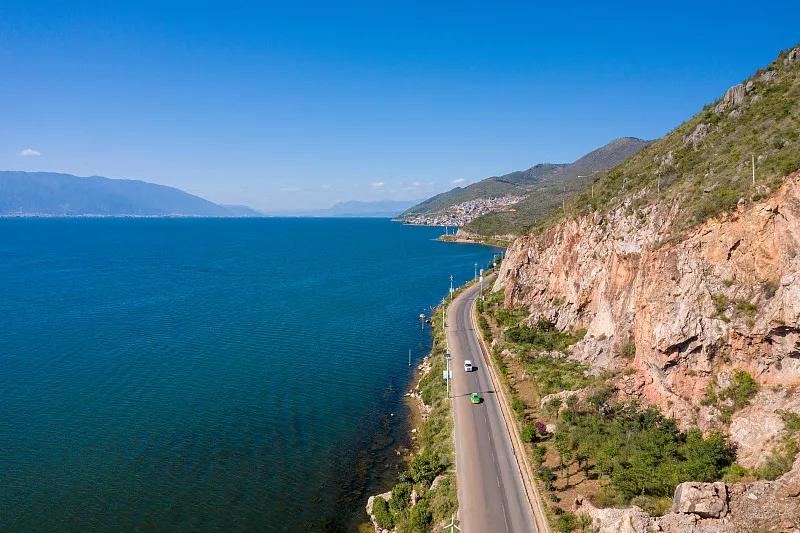
I was halfway up the winding stretch between Dali’s west lake shore and the first high point heading towards Lijiang last October, the air sharp enough to make my knuckles white on the steering wheel, when I glanced down at the dashcam screen and realised it had gone dark. Not the usual flicker you get when a truck’s heavy load bounces over a pothole, just dead, no red recording light, no faint blue glow from the screen. I was in a Jetta 1.4T, the kind most people pick for the twisty Yunnan backroads, and I’d already passed three slow-moving horse carts and a herd of goats that had wandered onto the tarmac in the last 10 minutes. Yunnan self-drive rental for foreigners has one bottleneck, and this is it.
The last thing any self-drive visitor to this part of China wants is a dispute over a scratch or a near-miss when you’re miles from the nearest town, let alone the rental office. I’ve done this route a dozen times now, and that dashcam failure was the first real hiccup I’ve had on a trip that started with Kunming airport car rental for foreigners, so I know exactly how easy it is to panic when something that’s supposed to be a safety net vanishes without warning.
First thing I did, before I even pulled over, was roll the window all the way down. The air smelled of pine and burnt chilli from a roadside food stall I’d passed 2km back. I found a wide, flat lay-by that wasn’t on a blind bend, put the handbrake on, and sat for a full 30 seconds before I did anything else. No point fumbling around with cables if a bus comes round the corner and doesn’t see you parked half on the road. That is the side of Kunming airport car rental for foreigners the brochures leave out.
Notifying the rental team, no need for a panic dash
I pulled out my phone, and sent a quick note to the rental team before I even touched the dashcam’s power cable. A lot of people think you have to try and fix it yourself first, but that’s the wrong move. The team already knows the exact wiring layout of every vehicle on their fleet, they can talk you through a quick check in 60 seconds, and more importantly, they have a timestamped record that you reported the fault the second you noticed it, not after a minor incident that could get tangled up in he-said-she-said later on. Everyone I know who has dealt with Yunnan self-drive rental for foreigners tripped on this.
I told them exactly where I was: 17km north of Dali’s Xizhou old town, parked in a lay-by opposite the small white Buddhist stupa that sits right on the cliff edge. They sent back a note saying there was no rush to get it fixed, keep to the speed limits, and if it didn’t power back on after unplugging and re-seating the USB cable by the passenger footwell, I could drop it off at their Lijiang city office the next day for a replacement unit. No one was breathing down my neck to turn around mid-trip, no extra fees mentioned, no hassle at all.
This is one of the little details that makes Yunnan self-drive rental for foreigners so much smoother than trying to sort out ad-hoc rentals in other parts of the region. The teams here are used to visitors who don’t speak fluent local dialect, who don’t know the nearest repair shop, who just want to keep their holiday on track without detours. I’ve heard horror stories from other travellers who’ve had dashcams die on them in other provinces, where the rental firm demanded they drive 100km back to the pickup point the same day, but that’s not the way this operation works.
I wiggled the cable under the dash, plugged it back in, and the screen stayed black. No big deal. I locked the car, walked 10 steps to the cliff edge, and watched the Erhai Lake glint 300m below for five minutes before I got back in the driver’s seat. No point letting a broken dashcam ruin your view.
Documenting your own footage, no fancy gear required
Before I set off again, I grabbed my phone, propped it up on the dashboard’s non-slip mat, and hit record. That’s the trick no one tells you, and it costs nothing. You don’t need a spare action camera, you don’t need to buy extra gear from a roadside shop. Just make sure it’s positioned so it captures the full view of the road ahead, and that it’s plugged into the car’s USB port so it doesn’t die halfway up the pass.
I kept that recording running for every stretch of road I drove for the rest of the trip. Every time I stopped for petrol, every time I parked at a viewpoint, every time I inched past a cyclist on a narrow stone bridge, I kept the footage running. I also got into the habit of rolling down the window and taking a 10-second clip of the front, back and both sides of the car every single time I parked up for more than 10 minutes. When I stopped for a bowl of crossing-the-bridge noodles outside Dali, I walked all the way around the car, panned slowly over every panel, and saved the clip to a separate folder on my phone that I wouldn’t accidentally delete.
On the day I drove from Dali to Lijiang’s old town, I even paused before I pulled out of my hotel car park to film the empty space around the car, just in case someone scraped past while I was checking my map. It takes 30 seconds, and it’s saved me from a potential dispute once before, when a delivery van nicked the back bumper of a friend’s rental while we were eating dinner in Lijiang. We had the full clip of the van driving off, and the rental team sorted the whole thing out without us having to pay a penny towards the scratch.
I should add, I made a stupid mistake on the first day of that trip. I thought I could just leave my phone recording on the passenger seat, pointing sideways, and it would be fine. It wasn’t. Halfway up the mountain, it slid off the seat onto the floor, and I drove for 20 minutes before I noticed the footage was just a close-up of the car’s rubber footwell mat. Don’t do that. Get a cheap non-slip mat if you don’t have one, or prop it against the windscreen wiper control stalk so it can’t move. It’s a tiny bit of effort that saves you a world of stress later.
What to do when you hand the car back
When I pulled into the Lijiang return point three days later, the first thing I mentioned was the broken dashcam. The member of the team checked the unit, confirmed it had died due to a loose internal battery, and didn’t charge me a single penny for the fault. I handed over the folder of clips I’d recorded on my phone, just as a backup, and they told me it wasn’t even necessary, but they’d keep it on file just in case any random traffic fine popped up in the post-trip check.
That’s the great thing about Dali Lijiang car rental for foreigners, the teams here don’t look for ways to nickel and dime you for tiny, unavoidable mechanical faults. Remember, if the vehicle breaks down for a mechanical reason, the rental team covers it, no questions asked. The only time towing falls to you is if the damage is caused by something you did, like misjudging a sharp bend and scraping the undercarriage on a rock, but even then, the rules are laid out clearly from the start.
The rental deposit, which sits at 3,000 for the petrol VW Lavida or Jetta most people pick for this route, gets refunded 5-7 working days after you drop the car off, once the full traffic fine check is complete. I’ve never had an issue with that, even after trips where I’ve accidentally strayed into a bus lane in central Kunming for 10 metres. The insurance covers all the compulsory and commercial bits you need, and the rules for damage are straightforward: minor scratches under 1,500 are paid by you, anything above that goes through insurance, with you covering 30% of the cost. Scratches that don’t damage the primer are completely free, no extra charges, no faff about depreciation or downtime. Even for major damage, downtime is waived for the first 5 days, so you don’t get hit with a surprise bill if you have a minor off on a gravel stretch up towards Shangri-La.
If you’re planning a one-way trip, say picking up at Kunming airport and dropping off in Lijiang, the one-way return fee is 1,500, which is clearly stated before you book, no hidden add-ons. The Tank 300 2.0T is the one I’d pick if you’re heading further north up to the high grasslands, it’s 400 a day with a 5,000 rental deposit, and 300km of included mileage per day, which is more than enough for most people on a leisurely Yunnan loop. The China temporary driving licence can be arranged for 1,500 without you needing to attend in person, which takes all the admin hassle out of the process before you even land.
I’ve had friends turn up to do Dali Lijiang car rental for foreigners and panic the second something small goes wrong, like a warning light popping up on the dashboard or the dashcam cutting out. I always tell them the same thing: pull over somewhere safe, send a note to the team, and grab your phone to record your own footage. You don’t need to be a qualified mechanic, you don’t need to know the local traffic rules off by heart, you just need to take 60 seconds to cover your own back.
Last month I did the same route again, in autumn, when the ginkgo trees around Xizhou turn bright gold and the light is so soft you can barely take a bad photo. I checked the dashcam was working before I even turned the engine on. But if it had cut out halfway up that pass, I wouldn’t have even broken stride. I’d pull over, send a quick message to the team, prop my phone on the dash, and keep driving. The mountains aren’t going anywhere, and a broken dashcam doesn’t have to ruin the best road trip you’ll do all year.
The 600 booking deposit is non-refundable if you cancel for personal reasons, which is fair enough, because the team blocks off that vehicle for you weeks in advance, turning down other bookings to hold it. But once you’re on the road, the support is solid. No hidden hoops to jump through, no surprise fees for small mechanical faults, just you, the road, and the view of the snow-capped peaks ahead of Lijiang.