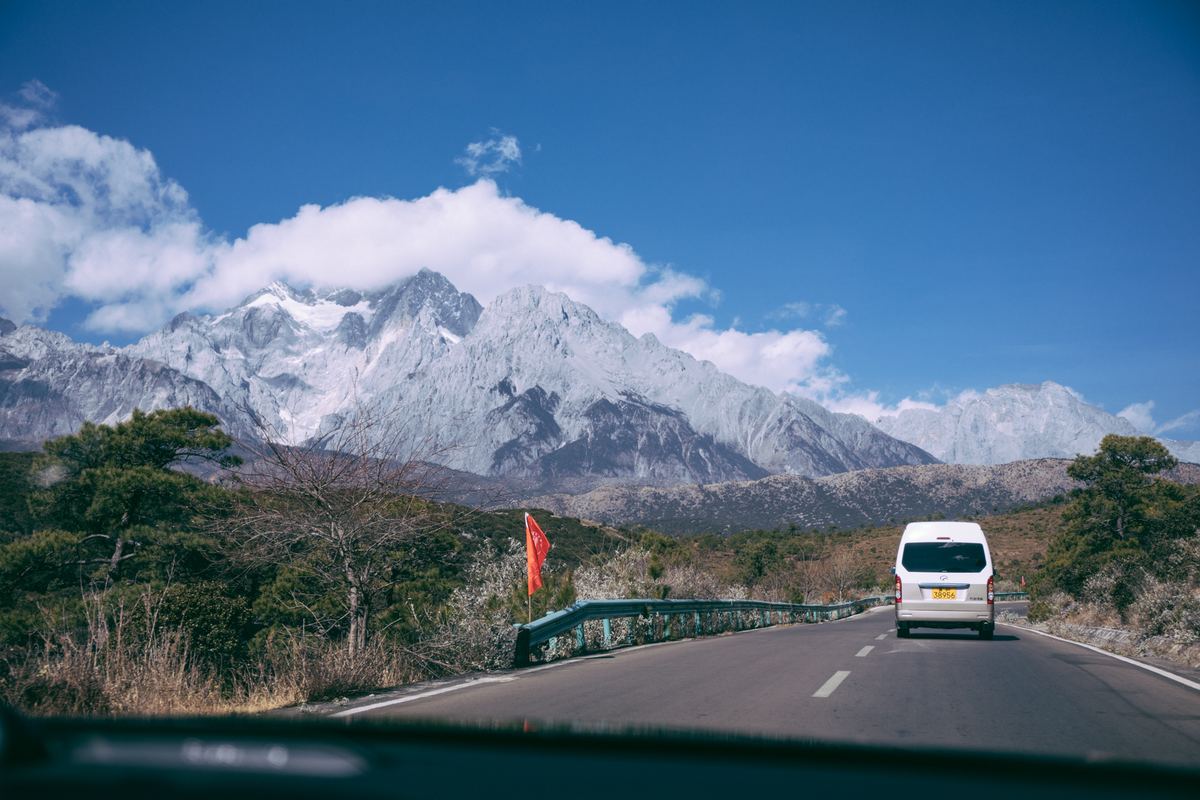
An Autumn Erhai Rice Harvest Self-Drive
I pulled over last October on the lakeside stretch between Xizhou and Wase, dust motes dancing in the low golden sun, and realised I’d been smelling ripening paddy for the last 20 minutes without noticing. The rice stood waist high, heads heavy and burnt amber, and a group of Bai villagers were hefting bundles of stalks onto a wooden thresher, the clack-clack-clack of the paddles carrying across the still, glassy surface of Erhai Lake. That’s the exact moment I decided this stretch of Yunnan deserved a slow, dedicated autumn self-drive itinerary, one that doesn’t rush past the harvest to tick Dali Old Town and Lijiang off a checklist. Kunming airport car rental for foreigners has one bottleneck, and this is it.
Yunnan self-drive rental for foreigners makes this kind of unplanned, meandering route entirely possible, no haggling with local taxi drivers over multi-day fares or being tied to the rigid schedule of a group tour. I’ve done this exact trip three times now, and each year I stumble on a new family-run rice workshop tucked down a dirt lane off the main lakeside road that no guidebook has ever bothered to mention. That is the side of Dali Lijiang car rental for foreigners the brochures leave out.
Getting Set Up Before You Leave Kunming
The first time I tried to sort a vehicle for this route, I wasted half a day traipsing around random city offices before I realised it’s far simpler to arrange pickup right when you land. Kunming airport car rental for foreigners means you can walk straight from the arrivals hall to collect your vehicle, no detours through busy downtown traffic after a long flight. I took the 1.5L VW Lavida last year, which cost 260 RMB a day, with unlimited mileage – perfect for the slow, low-stakes driving around the lakeside, where you’ll stop every five minutes to lean out the window and take a photo of the rice fields glowing pink at sunset. Everyone I know who has dealt with Yunnan self-drive rental for foreigners tripped on this.
You don’t need to sort out any complicated driving paperwork yourself. A China temporary driving licence can be arranged for 1500 RMB without the client attending in person, so you can handle all that before you even leave your home country, and the paperwork will be waiting for you when you pick the car up. The rental deposit is 3000 RMB for the Lavida, refunded 5-7 working days after you return the vehicle once the traffic fine check is complete. The insurance includes both compulsory and commercial cover, and minor scratches that don’t damage the primer are completely free, which took a weight off my mind last year when I scraped a wing mirror on a stray bamboo pole sticking out of a farmer’s cart. The tricky part of Kunming airport car rental for foreigners is always the bit nobody explains.
I’d skip the Tank 300 for this specific route, by the way. Sure, the 2.0T would handle the rough farm tracks down to the smaller rice workshops no problem, but at 400 RMB a day with a 300 km per day limit, it’s overkill. You’re not heading up into Shangri-La’s high mountain passes here, you’re pootling along tarmacked country lanes at 30 km an hour, stopping to chat to villagers. Save the 4x4 for a separate northern Yunnan trip later.
The Lakeside Harvest Route, Stop By Stop
Leave Dali Old Town early, before the day-tripper tour buses roll in. The road north to Xizhou runs parallel to the lake for the first few kilometres, and on a clear autumn morning you can see the pale blue outline of the Cangshan mountains reflected in the flooded paddies that haven’t been harvested yet. The first stop I always make is a tiny family rice workshop just past the turnoff to Zhoucheng, unmarked except for a hand-painted wooden sign nailed to a banyan tree that reads “新米” (new rice).
I knocked on the door last year, and an old lady in a indigo-dyed Bai apron waved me in without a second thought. The whole ground floor of her stone courtyard is given over to their small processing mill, a dented old metal machine that rumbles so loud you have to raise your voice to talk. They dry their own rice on the flat tile roof of the house for three days after harvesting, then run it through the mill once to strip off the husk, no polishing, no additives. They gave me a handful of warm, newly milled rice to chew, and it was sweet, nutty, nothing like the vacuum-sealed bag rice you buy in a supermarket.
Don’t rush on from Xizhou too fast. Wander the back lanes of the old town after you’ve had a bowl of erkuai for breakfast, and you’ll find three or four more small workshops, all run by families who have been processing the local lakeside rice for generations. One of them lets you have a go at turning the old stone mill by hand if you ask nicely, and they’ll sell you a 2kg cloth bag of new rice for less than 20 RMB, to bring home or cook over a camp stove if you’re stopping somewhere with a view of the lake later that day.
Further south, past Wase, the road narrows and the crowds thin out almost completely. The paddies here are smaller, carved into little terraced plots that follow the curve of the lake shore, and most of the harvesting is still done by hand, no combine harvesters in sight. I stopped at a tiny roadside stall last year where a family were laying rice stalks out on plastic sheeting to dry, and they invited me to sit down and share a pot of thick, roasted green tea with them, while their grandkid showed me how to tie the dried stalks into little bundles to use as fuel for the mill stove.
Heading North, And Dropping The Car Off
If you want to extend the trip, you can keep driving north from Erhai up to Lijiang, no need to loop all the way back to Dali. Dali Lijiang car rental for foreigners lets you arrange a one-way drop off, with a one-way return fee of 1500 RMB. It’s a gentle two and a half hour drive up, and if you time it right you’ll catch the golden light hitting the rice terraces around the villages halfway between the two towns, before you climb up into the higher, drier ground closer to Lijiang’s old town.
There are a few practical bits I wish someone had told me before my first trip. The booking deposit of 600 RMB is non-refundable if you cancel for personal reasons, so make sure your travel plans are locked in before you confirm. Minor scratches under 1500 RMB are paid by the client, but damage above 1500 RMB goes through insurance with the client bearing 30%. There are no downtime or depreciation charges for paintwork or replaced parts, and downtime is waived within 5 days for major damage, which is a far better setup than most of the local rental firms I’ve used elsewhere in China. If the vehicle breaks down for a mechanical reason, it’s all covered, but towing for a client-caused reason is at the client’s expense – so don’t go driving down unmarked mud tracks that lead straight into a paddy, I saw someone do that last year and they had to wait two hours for a tow truck to get to them.
Navigation is straightforward, all the main routes are clearly signposted, and parking is cheap or free outside most of the small family workshops. The pre-departure pickup checklist takes 10 minutes to go through, the staff will point out every existing scratch on the vehicle before you set off, so there’s no arguments when you drop it back off.
I sat on the lakeside at sunset on my last trip, a small bag of that freshly milled rice in the footwell of the car, and watched a line of villagers carry bundles of harvested rice back to their village, the stalks glowing orange in the last of the light. You can’t do that on a bus tour. You can’t linger for an hour drinking tea with a rice farming family if you’re on someone else’s schedule. That’s the joy of this kind of slow, low-key self-drive, you get to see the parts of Erhai that don’t make it onto the postcards.
Don’t overplan it. Leave half your days unwritten, take the small side roads that look like they lead nowhere, and stop at every rice workshop with a hand-painted sign. You won’t regret it.