Yunnan Self-Drive Rental for Foreigners: Winter Roads Up to Shangri-La
I pulled over at 3,200m last January, wind whipping snow crystals straight through the gap in my jacket zip, staring at the windscreen wipers that had just frozen solid mid-sweep. The petrol VW Lavida I was in had handled the last 20km of winding tarmac out of Lijiang no bother, but I’d stupidly left my winter supplies stuffed in the bottom of my backpack in the boot, and my fingers were too numb to dig them out. That’s the exact kind of avoidable mess I see a lot of first-time overseas self-drivers run into on the run up to Shangri-La, and it’s why I’ve put this guide together from three separate winter trips on these roads. Kunming airport car rental for foreigners has one bottleneck, and this is it.
Before you even touch the keys, you need to sort your paperwork first. A China temporary driving licence can be arranged for 1500 without the client attending in person, so you don’t have to carve time out of your holiday to sit in an office. No extra hoops to jump through once that’s sorted, and you’re good to head out on the Yunnan roads. That is the side of Dali Lijiang car rental for foreigners the brochures leave out.
Pickup Points That Work For Your Itinerary
Last trip, a couple I was travelling with flew straight into Kunming Changshui and didn’t want to mess with city buses or shared transfers to get their car sorted, so they sorted Kunming airport car rental for foreigners the second they landed, grabbed their keys, and were heading out to the Western Hills before midday. That’s a solid call if you want to ease yourself into right-hand drive on wide, flat Kunming city roads before you hit the hills further north. I prefer that slow acclimatisation, personally, rather than jumping straight onto mountain passes the second I step off a 12-hour flight.
If you’ve already spent three or four days wandering Dali’s old town, sipping pu-erh by Erhai Lake and don’t fancy doubling back south to pick up a car, there’s Dali Lijiang car rental for foreigners available at city offices or the Lijiang airport too. We picked up our Tank 300 in Lijiang on the second trip, and it saved us a full day of backtracking that we could have spent tramping around the old wooden villages just outside the city. The one-way return fee for dropping off in a different city, say Lijiang if you picked up in Kunming, is 1500, which is worth factoring in if your itinerary is a one-way push north rather than a loop back to your arrival point. Everyone I know who has dealt with Kunming airport car rental for foreigners tripped on this.
Do the full pickup checklist before you sign anything. I once skipped running my finger over every panel to note existing scratches, and spent 20 minutes arguing with the rental agent later about a tiny scuff on the rear bumper I hadn’t caused. Now I take photos of every mark, no matter how small, right there on the forecourt. Minor scratches under 1500 are paid by the client, but scratches that don’t damage the primer are free, so it’s worth knowing exactly what state the car is in before you drive off.
Which Vehicle To Pick For The Shangri-La Run
The run from Lijiang up to Shangri-La is fully tarmacked these days, but winter snow and patchy black ice on the higher stretches around the 3,700m pass can catch you out fast. I’d rather take the 2.0T Tank 300 for 400 RMB a day if there’s snow forecast, it’s heavy, has plenty of traction, and never once struggled up a slippery incline when we hit a sudden flurry last February. Its rental deposit is 5000, and there’s a 300 km per day limit, which is more than enough for the distances you’ll be covering on these Yunnan roads – you’re not driving 10 hours a day here, you’re stopping every hour to take photos of the snow-dusted pine forests.
If you’re sticking to a looser itinerary, driving slower, and not heading out in active snowfall, the 1.5L VW Lavida or 1.4T Jetta at 260 RMB a day is more than capable, and the unlimited mileage is a nice bonus if you decide to detour down a little side road to a hidden monastery you spot on your navigation. The rental deposit here is 3000, refunded 5-7 working days after you return the car once the traffic fine check is complete. All vehicles are petrol, no electric options, which is a relief on the higher passes where charging points are extremely sparse.
All insurance includes compulsory and commercial cover, just to be clear. If you end up with damage above 1500, you go through insurance and you bear 30% of that cost. There’s no downtime or depreciation charges for paintwork or replaced parts, and downtime is waived within 5 days for major damage, which takes a huge weight off if you do slip on black ice and end up nudging a guardrail. If the vehicle breaks down for a mechanical reason, that’s fully covered, but towing for a client-caused reason is at your own expense, so don’t go tearing off down unmaintained dirt tracks you have no business being on.
One last note on bookings: the 600 booking deposit is non-refundable if you cancel for personal reasons, so lock your dates in once you’re sure of your itinerary.
Winter Road Tips For The Climb Up To Shangri-La
I was halfway up that pass last January when I hit a patch of black ice I couldn’t see, even in bright sunlight. The Lavida slid a full 180 degrees, slow enough that I didn’t hit anything, but my heart was hammering so hard I could hear it over the heater fan. I learned two things that day: slow right down on any stretch of road that looks even slightly damp when the temperature is below zero, and never rely on your navigation’s weather updates alone. Local drivers will flash their headlights at you if there’s ice or heavy snow further up the pass, so wave back, and slow down. They’re not being rude, they’re looking out for you.
Don’t try to overtake on the higher bends. The roads are narrow, there’s often a sheer drop on one side, and you can never see far enough around the corner to know if a truck is coming the other way. I watched a tourist in a hire car try to overtake a slow-moving farm truck last winter, and they had to swerve hard into the soft shoulder to avoid a bus. No one got hurt, but it took them an hour to dig their wheels out of the mud.
Navigation works fine on most of the route, but there are 10 or 15 km stretches above 3,500m where signal cuts out entirely. Download your full offline map before you leave Lijiang, and don’t wait until you’re in a dead zone to do it.
Non-Negotiable Cold Weather Supplies To Keep In The Car
This is the bit I see almost every new visitor skip, and it’s the simplest thing to get right. After that incident where my wipers froze solid, I now keep a clear, waterproof tub tucked in the footwell of the passenger seat, not locked in the boot, so I can reach everything without even unbuckling my seatbelt.
Here’s what’s in mine, no exceptions:
- A thick fleece blanket, even if it’s 15 degrees and sunny when you leave Lijiang. The temperature can drop 15 degrees in 20 minutes when you hit the cloud line, and if you get stuck in a snow drift for an hour, you’ll be glad of it.
- A small plastic scraper for ice on the windscreen. Don’t use your bank card, I’ve broken two that way.
- Two full 1.5L bottles of drinking water each, and a pack of high-energy biscuits. Traffic can stop for hours if there’s a minor crash on the pass, and there’s nowhere to buy snacks up there.
- A pair of thick, waterproof gloves. My fingers were so numb that day I couldn’t even turn the car’s heater dial up for two minutes, and that’s a daft risk to take.
- A small torch, because the days get short up on the plateau in winter, and you don’t want to be fumbling around in the dark checking your tyres.
You don’t need to bring a full mountain survival kit. All of that fits in a tub the size of a small carry-on suitcase, and it weighs almost nothing. I keep a spare pack of hand warmers in there too, they cost almost nothing from any supermarket in Lijiang, and they’re a lifesaver if your door handle freezes shut.
Last winter, we came across a couple in a hire car who’d run their heater until their battery went flat, and they had no blankets, no water, and their phones were dead. They were fine in the end, we gave them a couple of biscuits and a hand warmer, and a passing local helped jump their car, but it was an entirely avoidable situation. You don’t need to be a survival expert, just be a little bit prepared.
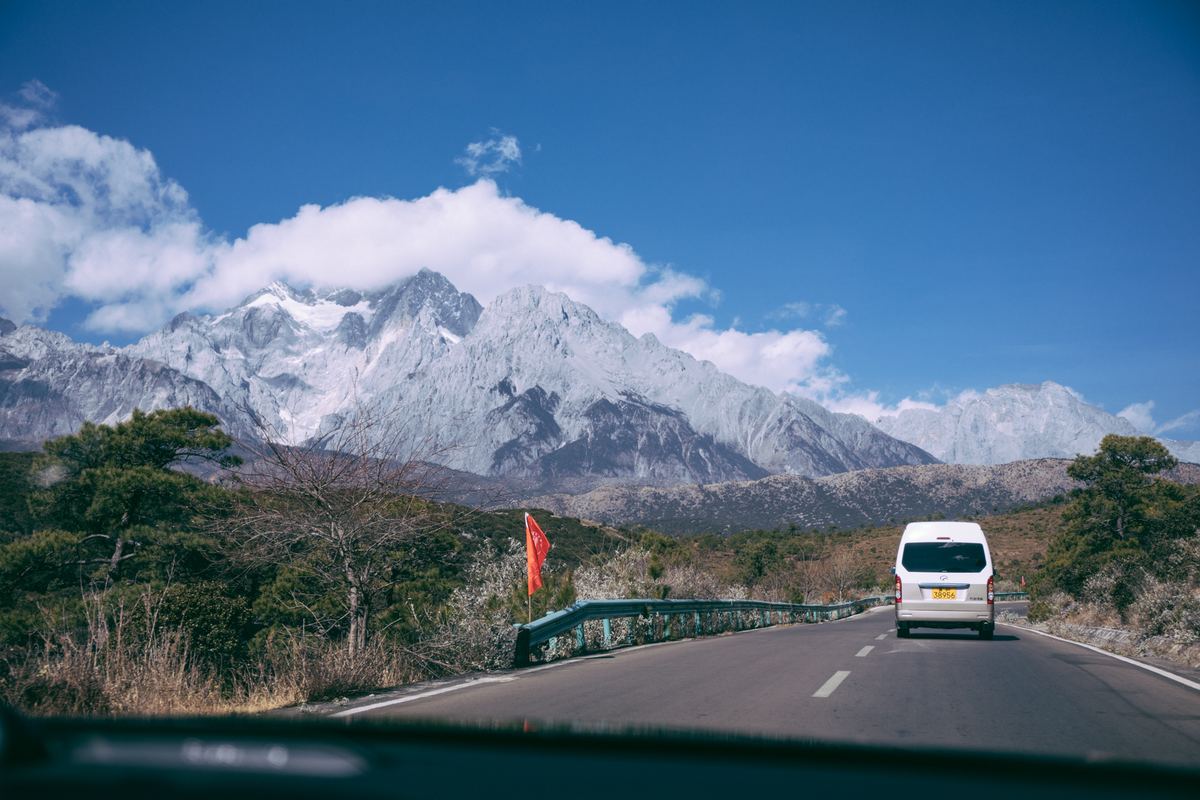
At the end of the day, this stretch of road is one of the most beautiful drives in the whole of Yunnan. You’ll pass yaks wandering loose on the verges, prayer flags strung between pine trees, and views of snow-capped peaks that you can’t get from any bus or organised tour. Yunnan self-drive rental for foreigners takes a little bit of forward planning in winter, but the payoff is getting to stop wherever you want, for as long as you want, no schedule to follow. Take it slow, keep your supplies close, and you’ll have one of the best trips of your life.