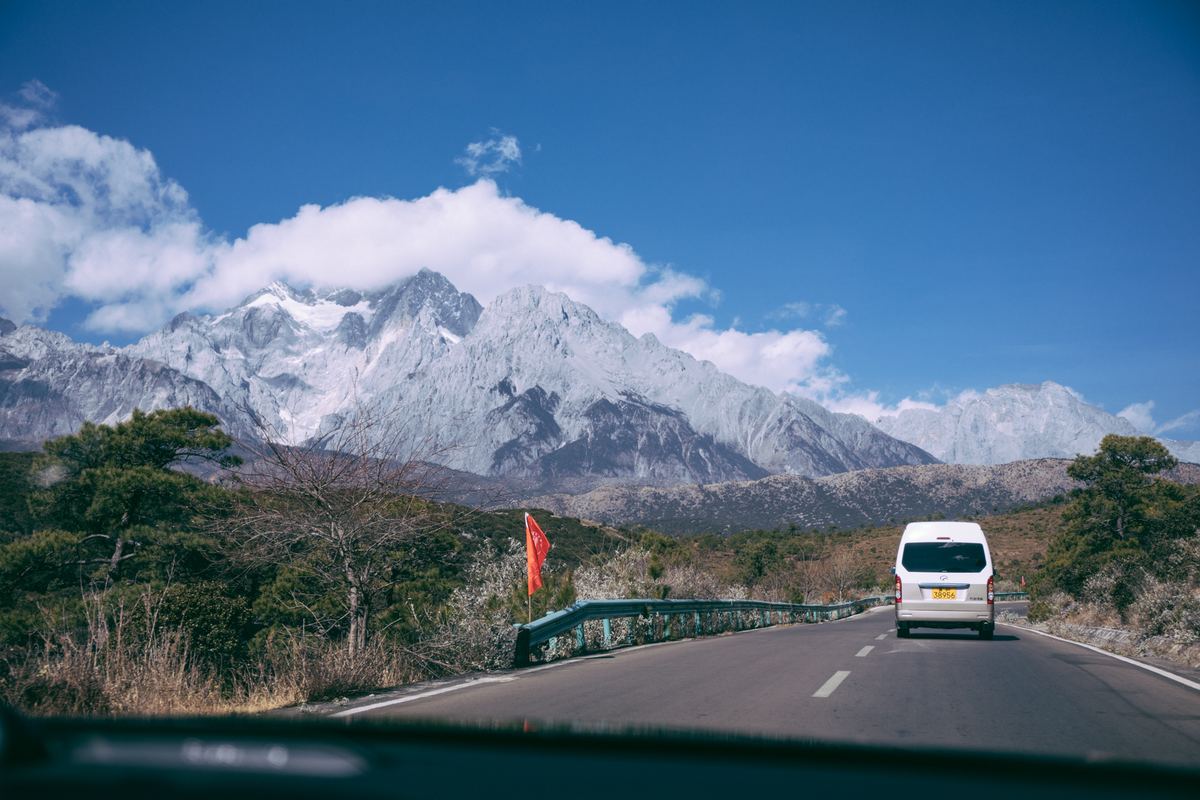
Why This Yunnan Self-Drive Route Stuck With Me
I landed in Kunming on a crisp April morning, bleary from the long-haul, and squinted at the tarmac glinting under the sun. I’d spent weeks weighing up guided tours versus going it alone, and settled on Yunnan self-drive rental for foreigners for the simple reason that I wanted to linger in villages no tour bus stops at. I picked up my car at the airport—more on that later—and pointed it west towards Dali.
What followed was seven days of winding mountain roads, steamed goat’s cheese for breakfast, and the low thrum of a petrol engine through Bai and Naxi villages strung between Erhai Lake and Jade Dragon Snow Mountain. I made a few daft mistakes. I also found a handful of corners of Yunnan I still think about, six months on.
Sorting the Car: Kunming Airport Car Rental for Foreigners
I went for Kunming airport car rental for foreigners because the last thing I wanted after a 14-hour flight was to haul a rucksack across a city to a downtown office. I’d arranged everything in advance, including a China temporary driving licence, sorted without me having to turn up in person for 1,500 RMB. That’s worth every fen, in my book—queuing at a transport bureau with jet lag is not my idea of a holiday start.
Which Car to Pick?
I ummed and ahhed for ages between two options:
- VW Lavida 1.5L / Jetta 1.4T petrol: 260 RMB per day, 3,000 RMB rental deposit, unlimited mileage
- Tank 300 2.0T: 400 RMB per day, 5,000 RMB rental deposit, 300 km per day limit
I nearly booked the Tank 300, because I’d convinced myself I’d be bashing down dirt tracks to remote villages. In the end I went for the Jetta, and I was glad I did. Almost every village on this route has paved roads, and unlimited mileage meant I didn’t have to fret about detours. The Tank would’ve been fun, but for this itinerary it’s overkill unless you’re planning to branch off further north later.
A quick note on deposits: the rental deposit is refunded 5–7 working days after you return the car, once they’ve run a traffic fine check. I’d read horror stories online about withheld deposits, so I asked the staff to walk me through the pickup checklist slowly. We marked every tiny scratch on the form, took photos from six angles, and I kept a copy on my phone. I got my full deposit back on day six, no arguments.
The 7-Day Itinerary: Dali to Lijiang, Village by Village
I picked the car up in Kunming and drove to Dali on day one, but you can also do Dali Lijiang car rental for foreigners if you’d rather skip the Kunming–Dali stretch and fly straight to Dali. I wanted the full road trip, so I put in the four-hour drive first. Don’t rush it—pull over at the roadside stalls selling wild honey on the way.
Days 1–2: Dali’s Surrounding Bai Villages
I stayed in a guesthouse in Xizhou, a Bai village about 20 minutes north of Dali Old Town. The first morning I woke to the sound of wood being chopped and the smell of rushan—fried goat’s cheese—drifting from the stall at the end of the lane.
On day one I pottered around Xizhou’s old courtyard houses, watched a group of Bai elders tie-dyeing fabric in a courtyard strung with indigo cloth, and ate rice noodles at a plastic table by the market. On day two I drove 40 minutes up to Shaxi, a tiny market village tucked in a valley. The road climbs over a pass with views down over terraced fields, and the Jetta handled the hairpins easily enough. I parked in the village car park for 10 RMB and wandered for hours, no crowds, no ticket booths.
I misjudged the timing on the way back and drove the last 20 minutes in the dark. The mountain roads have very few streetlights, so learn from my mistake: leave villages by 6pm this far west.
Days 3–4: Heading North to Naxi Heartland
On day three I packed up and drove north towards Lijiang, taking the old road rather than the motorway. It adds an hour and a half, but you pass through a string of small Bai and Naxi villages you’d never see from the expressway. I stopped in a village called Jiuhe for lunch—pork and potato stew cooked over a wood fire, eaten at a table outside where chickens wandered past my feet.
I stayed two nights in Baisha, a Naxi village half an hour north of Lijiang Old Town. It’s quieter than the big tourist spots, and you can sit in a courtyard and watch Naxi women embroidering traditional patterns while sipping butter tea. I tried butter tea for the first time here. It’s salty. I’m still not sure if I liked it, but I drank two cups out of politeness.
On day four I drove to Yuhu, a tiny Naxi village at the foot of Jade Dragon Snow Mountain. The road is paved all the way, but it’s narrow in places, so take it slow. I parked at the edge of the village and walked in, past stone houses with wooden beams and fields where horses grazed. There’s a small museum about the old Naxi king, but I spent most of the day just sitting by a stream, watching kids chase frogs.
Days 5–6: Lijiang’s Lesser-Known Naxi Villages
Day five I drove to Shuhe, another Naxi village closer to Lijiang. It’s more touristy than Baisha, but if you wander past the main street you’ll find quiet lanes with wooden houses and flower boxes spilling over with geraniums. I took a wrong turn and ended up in a Naxi family’s orchard, where they offered me peaches straight from the tree. We didn’t share a language, but we smiled a lot and I left with a bag of fruit.
On day six I drove up to Tacheng, a village famous for its Naxi Dongba culture. The drive takes about two hours from Lijiang, winding through forested hills. I sat in on a Dongba script lesson for an hour— the pictographs are like nothing I’ve ever seen, and I left with a small hand-painted scroll I still have pinned above my desk at home.
Day 7: Returning the Car in Lijiang
I dropped the car off in Lijiang on day seven, which meant I paid a one-way return fee of 1,500 RMB. Some people baulk at that, but for me it was worth it to avoid driving all the way back to Kunming. I had a flight out of Lijiang that evening, so I dropped the car at the airport office, handed over the keys, and was at my gate 40 minutes later.
A Few Honest Tips From Someone Who’s Done It
Insurance includes compulsory and commercial cover. Minor scratches under 1,500 RMB are paid by the client; anything above that goes through insurance with you paying 30%. Scratches that don’t damage the primer are free, which is a relief on narrow village roads where bushes scrape the sides. There are no downtime or depreciation charges for paintwork or replaced parts, and downtime is waived within five days for major damage. I didn’t have any prangs, but it was reassuring to know the rules upfront.
If the car breaks down for a mechanical reason, the rental company covers it. Towing for something you cause is on your dime. I had a warning light pop up on the third day—turned out it was just a loose fuel cap, but I called the number in the paperwork and they talked me through it in 10 minutes, no fuss.
A 600 RMB booking deposit is non-refundable if you cancel for personal reasons. I almost changed my dates a week before I left, and decided against it because I didn’t want to lose that money. Fair enough, just something to bear in mind.
Navigation works fine on the main roads, but in smaller villages the maps can be a bit hit and miss. I kept a paper map folded in the passenger footwell, and asked villagers for directions when I got lost. Most people were happy to help, even if we had to use hand signals.
Parking is cheap or free in most villages. The only place I paid more than 20 RMB was near Lijiang Old Town, and even then it was only 30 RMB for a full day.
Go in spring or autumn if you can. I went in April, and the weather was perfect—warm days, cool nights, hardly any rain. Summer is rainy season, which makes mountain roads trickier, and winter can be cold up in the hills.
That’s the trip. It’s not the flashiest Yunnan itinerary, and you won’t tick off every tourist landmark. But if you want to sit in Bai courtyards, eat street food in Naxi villages, and set your own pace, this self-drive route delivers. Just leave early enough to avoid driving those mountain roads in the dark.