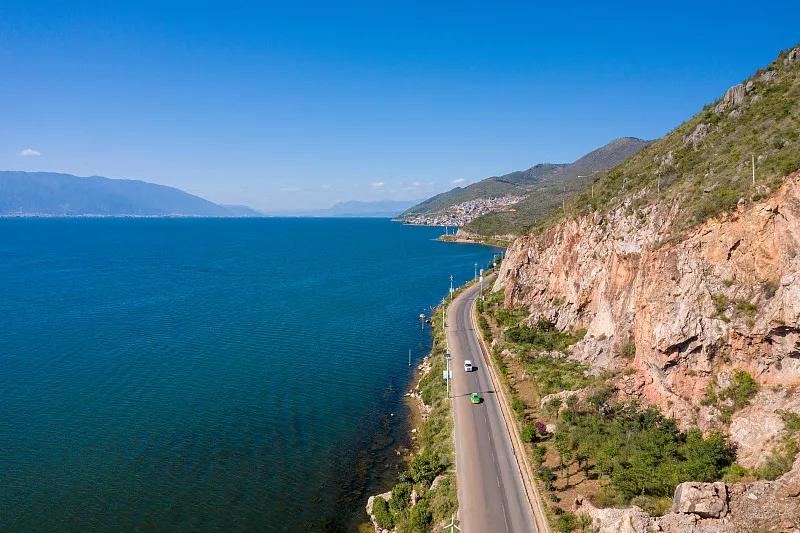
My Erhai Sunset Drive: Dali’s Quiet Northern Shore Route
I was sat on a chipped stone curb outside a Dali old town tea shop last October, watching the last of the day’s golden light bleed over Cangshan’s jagged western peaks, when a local hiker I’d chatted to the night before leaned over and said I was doing it all wrong. Every tourist I’d seen that week had crammed the eastern Erhai ring road, bumper to bumper with rental electric scooters, jostling for a spot at one of the overcrowded sunset viewing platforms where selfie sticks tangled in the breeze. He told me to head north, past the last of the old town’s guesthouses, along the shore road that barely showed up on casual navigation maps, where the only crowds you’d meet were herders leading goats down from the lower Cangshan slopes at dusk. Yunnan self-drive rental for foreigners has one bottleneck, and this is it.
I’d already planned to extend my Yunnan trip beyond the pre-booked bus tours I’d dragged myself through the first three days, so that conversation was all the push I needed. I knew I couldn’t rely on erratic local bus timetables for a sunset slot that shifts by ten minutes every week, so I started looking into local self-drive options for overseas visitors that same evening. That is the side of Yunnan self-drive rental for foreigners the brochures leave out.
I’d done a fair bit of overland travel in Europe, but this was my first time arranging independent wheels in China, and I quickly realised Yunnan self-drive rental for foreigners is set up specifically for people like me, who want to veer off the standard tourist itineraries without being tied to a driver’s schedule. I’d flown into Kunming that first week, and for a second I considered sorting pickup there, because Kunming airport car rental for foreigners is straightforward if you’re starting your road trip the second you land, but I’d already taken the train up to Dali, so I locked in a pickup at a central Dali city office instead.
The first thing I was told, and this saved me a whole lot of wasted online searching, was that a China temporary driving licence can be arranged for 1500 without me attending in person. No hoops to jump through at a local traffic office, no extra paperwork I had to chase down from my home country. That took a weight off, I won’t lie. I went for the VW Lavida 1.5L petrol, 260 a day, unlimited mileage, 3000 rental deposit. It was perfect for the narrow shore roads, no fancy extras to faff with, just a solid, reliable runaround that handled the occasional loose gravel patch by the water without a fuss. Everyone I know who has dealt with Kunming airport car rental for foreigners tripped on this.
It had white Yunnan plates, right-hand drive, exactly what I was used to from driving back home in the UK. I spent ten minutes going over the pickup checklist with the staff, noting every tiny existing scratch on the bodywork before I turned the key in the ignition.
The Route, Minute by Minute
I left Dali old town at 4.30pm, two full hours before the forecast sunset, just to be safe. You never know when you’ll spot a little cove you want to pull over at, and I had zero interest in rushing this drive. The first 10 minutes took me past the busy northern city outskirts, where street vendors were wheeling their food carts out for the evening, steam curling off pots of steaming rice noodles. Once I passed the last of the new apartment blocks, the road narrowed, and Erhai’s bright blue water opened up on my right, the dense, dark pine forests of Cangshan rising steeply on my left.
The road here barely hugs the shore, it drifts in and out, past small fishing villages where old men mended nets on wooden jetties, and children chased each other along the stony beach. I pulled over once to walk down to the water’s edge, the air sharp with the faint tang of lake algae and wild chrysanthemums growing in the cracks of the old stone embankment. No other tourists were there, just a local woman washing sweet potatoes in the shallow water, who waved and offered me one when I wandered past.
Further along, the road climbs a tiny gentle rise, no more than 50 metres above the lake surface, and that’s where the unobstructed view hits you. There are no trees blocking the western horizon here, no ugly new build holiday villas lining the shore, just the full 50km stretch of Cangshan’s snow-dusted peaks running straight down to the lake, and the wide flat expanse of Erhai stretching east. I pulled the car over onto a wide, flat gravel layby that no one else was using, killed the engine, and sat there for 20 minutes just watching the light change.
The pale gold of the late afternoon shifted to tangerine, then soft rose, painting the low clouds that hung over Cangshan’s highest peaks pink, then deep purple. A handful of local photographers turned up an hour later, all carrying big professional cameras, but there was more than enough space for all of us, no one jostling for a spot, no one yelling to get their friend to move out of their shot. When the sun finally dipped below the furthest western peak, the sky went that deep, soft indigo you only get at altitude, and the first little string lights of a village on the far shore flickered on one by one.
I drove back slowly, windows wound all the way down, the cool evening air on my face, no rush at all.
Practical Tips I Wish Someone Had Told Me Before I Booked
Full transparency here, I made a silly misjudgement on this trip that cost me a little time, and I don’t want you to repeat it. I’d planned to drive all the way up to Lijiang after my sunset stop, so I looked into Dali Lijiang car rental for foreigners to see what the one-way return fee would be, and it’s 1500. I realised very quickly that I only had one full day of holiday left after the sunset drive, so it made far more sense to drop the car back at the Dali city office instead, and take the high speed train up to Lijiang the next morning. That saved me a chunk of money, and I got to spend an extra slow morning drinking tea in Dali old town before I travelled.
I’ve done enough self-drive trips to know there’s no point ignoring the fine print, so I jotted down the key points I needed to remember before I got behind the wheel, no waffle:
- Minor scratches under 1500 are paid by you, any damage above 1500 goes through insurance, with you bearing 30%. Scratches that don’t damage the primer are completely free, and there are no downtime or depreciation charges for paintwork or replaced parts. If major damage happens, downtime is waived within 5 days.
- The rental deposit is refunded 5-7 working days after you return the car, once the traffic fine check is complete. I got mine back in 6 days, no hassle at all.
- Insurance includes compulsory and commercial cover, so you don’t have to sort anything extra out when you pick the car up.
- If the vehicle breaks down for a mechanical reason, that’s all covered. If you need towing for a reason that’s your fault, that expense falls to you.
- The 600 booking deposit is non-refundable if you cancel for personal reasons, so don’t lock it in until you’re sure your travel dates are fixed.
I’ve spoken to other travellers who’ve done this route, and a lot of them spring for the Tank 300 2.0T, which is 400 a day, 5000 rental deposit, 300 km per day limit. That’s a great call if you’re planning to head further up into the hills on the lower Cangshan access roads, or extend your drive up towards Shangri-La, but for the Erhai northern shore route, the smaller Lavida is more than enough. It’s easier to manoeuvre around the narrow village lanes, and you don’t have to worry about hitting the 300km daily cap on a short leisure drive.
Parking along the northern shore is almost all free, in little unmarked gravel laybys like the one I stopped at for the sunset. You don’t need to pre-book any spots, just pull over somewhere sensible that doesn’t block the passing tractors or local herders’ paths. Navigation works fine on standard local mapping tools, just make sure you download the offline map of the Dali-Erhai area before you leave the old town, because there are a couple of short stretches of road where the signal drops out completely. It’s no big deal, the road runs straight along the shore, you can’t really get lost.
I’ve seen so many overseas visitors waste their Dali days stuck on the overcrowded eastern ring road, paying over the odds for a scooter that runs out of battery halfway around the lake. This northern shore drive is such a gentle, unhurried way to see the best of Erhai’s sunset, with the full bulk of Cangshan right in front of you, no crowds, no selfie sticks blocking your view.
Last month, I helped a mate from back home plan his Yunnan trip, and I told him if he flies straight into Kunming, Kunming airport car rental for foreigners is the easiest way to pick up a car the second he lands, so he can drive leisurely down to Dali over two days, stopping at small villages along the way. He was originally going to book a string of intercity buses, but after I showed him the photos I took that sunset on the northern shore, he changed his mind immediately.
I don’t recommend trying to cram this sunset drive into a 24 hour Dali stopover. Take two full days, wander the old town in the daytime, eat the wild mushroom hot pot the night before, then head out slowly for the shore in the late afternoon. You don’t need to rush. The light will wait for you, if you give yourself enough time.
When I dropped the Lavida back, the staff asked me how the northern shore drive went. I pulled out my phone and showed them the photo I’d taken of the sun dipping below Cangshan, the whole lake glowing tangerine. They nodded, said a lot of local people do that exact drive on weekend evenings, to get away from the tourist crowds. That’s the best part of self-drive here, I think. You get to see the bits that don’t make it onto the postcards.