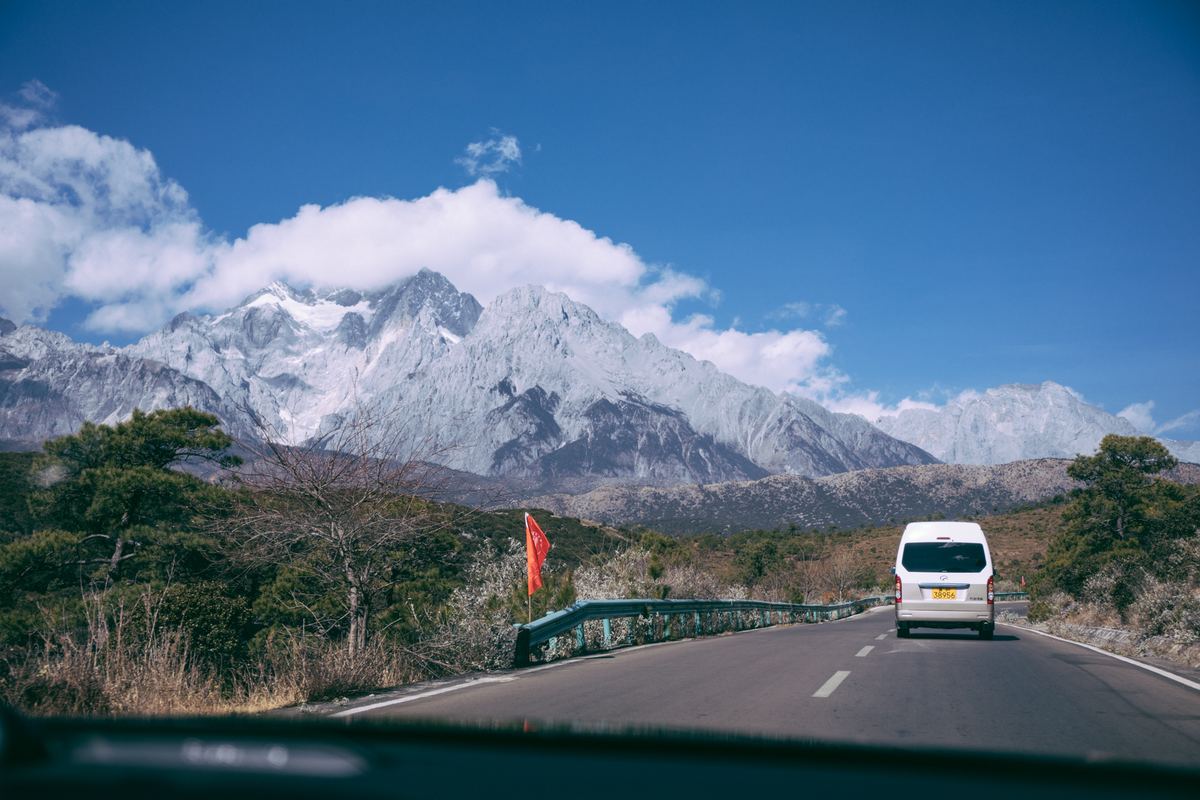
The Lijiang to Ninglang backroad: the one I nearly turned back on last March
It was 6.30am, the kind of pale blue plateau dawn that stings your cheeks even through a thick fleece, when I pulled out of the Lijiang city car park behind the wheel of a 1.5L VW Lavida, licence plate starting with the cloud Y that marks Yunnan registrations, right-hand drive of course. I’d skipped the busy main highway that most tour groups take up to Lugu Lake, because the secondary route cuts 70km off the drive, winds through villages where the wooden houses still have solar panels slung on their tiled roofs, and you don’t get stuck behind three consecutive tour buses crawling past photo stops. I’d done this stretch twice before in mid-summer, no issues, so I didn’t even check the local road condition posts before setting off. Kunming airport car rental for foreigners has one bottleneck, and this is it.
120km in, the tarmac vanished. That is the side of Dali Lijiang car rental for foreigners the brochures leave out.
Not potholes, not loose gravel. A stretch of compacted slush half a metre deep, piled up from a recent overnight snowfall that no weather app I’d checked had flagged. There was a local road worker leaning on a shovel at the edge of the cleared section, and he waved me over, grinning, and said the pass 8km further up hadn’t been ploughed for 12 hours. I sat there for 10 minutes, engine idling, weighing up my options. I could turn back, add two and a half hours to my trip, or I could wait it out. I waited three hours. A single plough truck trundled past at 10am, and the slush had melted enough by midday that I could creep over the pass without the Lavida’s front wheels spinning out. That’s when I decided no one heading out on these Yunnan backroads should ever set off without a clear picture of seasonal closures, and a rental set-up that doesn’t penalise you for last-minute route tweaks. Everyone I know who has dealt with Yunnan self-drive rental for foreigners tripped on this.
Getting your rental sorted before you leave the tarmac
Yunnan self-drive rental for foreigners is far more straightforward than most first-time visitors assume, as long as you skip the international permit misinformation you might see on old travel forums. A China temporary driving licence can be arranged for 1500 without the client attending in person, so you don’t have to carve half a day out of your itinerary queuing at a traffic office. I’ve done this three times now, and the paperwork is all processed before you turn up to pick the keys up. The tricky part of Kunming airport car rental for foreigners is always the bit nobody explains.
If you’re flying straight into the province, Kunming airport car rental for foreigners is the most hassle-free starting point for longer multi-stop trips, because you can pick the car up right outside the arrivals hall, no 40 minute taxi ride to a city office first. I did this last autumn, landing after a 12 hour flight from London, grabbed the keys, and was on the road to Dali before midday. If you’re already midway through your Yunnan trip, and based around the old town cobblestones of Dali and Lijiang, Dali Lijiang car rental for foreigners lets you pick up a vehicle at a city office right in the town centre, so you don’t have to haul your backpack out to the airport 40 minutes away.
For this Lijiang to Ninglang secondary route, you’ve got two solid vehicle options. The VW Lavida 1.5L or Jetta 1.4T petrol comes in at 260 per day, rental deposit 3000, unlimited mileage. That’s more than enough for the route in dry conditions, and even through the light slush I hit last March I never once felt like the engine was underpowered. If you’re travelling between November and March, when unexpected snow can dump on the high passes overnight, I’d pay the extra for a Tank 300 2.0T. It’s 400 per day, rental deposit 5000, 300 km per day limit, and the four-wheel drive will pull you out of soft snow or muddy unpaved diversions without breaking a sweat. I borrowed one last January when I did this trip in the middle of a cold snap, and it handled a 10km stretch of ungritted ice that I would never have dared take the Lavida down.
A quick note on deposits: the rental deposit is refunded 5-7 working days after return, once a traffic-fine check is complete, so don’t panic if you don’t see the money hit your account the second you hand the keys back. Insurance includes compulsory and commercial cover, but the small print is worth knowing before you set off: minor scratches under 1500 are paid by the client; damage above 1500 goes through insurance with the client bearing 30%. Scratches that do not damage the primer are free; no downtime or depreciation charges for paintwork or replaced parts; downtime is waived within 5 days for major damage. If the vehicle breaks down for a mechanical reason, we cover it; towing for a client-caused reason is at the client's expense. The booking deposit of 600 is non-refundable if you cancel for personal reasons, so try not to lock in dates until you’re 90% sure of your travel plans.
Navigating the seasonal closures on the Lijiang to Ninglang secondary route
I’ve run this route four times now, across four different seasons, and the road conditions change so dramatically you’d swear you’re driving a completely different stretch of tarmac each time.
From June to September, the monsoon hits the high passes hard. The rain falls so thick some afternoons you can’t see 20 metres ahead, and the loose red soil on the steep valley sides washes down onto the road in small landslips. The local transport department doesn’t close the road proactively most of the time – they’ll only put up a barrier after a slip has blocked the full width of the tarmac. I got caught in one of these last July, parked up behind three other cars under a tarpaulin strung between two pine trees, drinking hot butter tea a local grandmother brought out to all of us, waiting for the digger to clear the debris. It took two and a half hours.
From December to February, the high pass at just over 3000m gets regular overnight snowfall. The road crews plough it first thing most mornings, but if it snows after 10pm, the pass will be closed until midday the next day. There’s no official online update feed that’s reliable for this stretch of road – the national traffic app will still show the road as open, even when there’s a 1 metre drift blocking the top. The trick I use now is to stop at the little roadside petrol station 50km outside Lijiang, right where the tarmac starts climbing into the hills, and ask the attendant behind the counter if the pass is open. They see every vehicle that comes through, they talk to the road workers, and their information is always more up to date than anything you’ll find online. Last January, I pulled in there at 7am, and the attendant told me the pass had closed at 2am, wouldn’t open until 1pm. I went back 10km, found a tiny noodle shop, ate two bowls of crossing-the-bridge noodles, and killed three hours before heading back up. Saved me the wasted drive all the way to the barrier.
Spring (March to May) and autumn (October to November) are the easiest seasons to drive this route, but you still get random closures. In late March, the melting snow trickles down onto the tarmac and freezes overnight, creating black ice you can’t see until you’re driving on it. In late October, sudden flurries can drop 5cm of snow on the pass in an hour, closing the road for a couple of hours while it gets gritted.
One thing to plan for: if the secondary route is fully closed for the day, you can divert back onto the main highway, but if you’ve dropped your rental car off in Lijiang and planned to pick it up again in Ninglang, that one-way return fee is 1500. It’s not a huge cost if you’re splitting it across a group of three or four people, but it’s worth factoring into your budget before you set off, so you don’t get caught out by an unexpected bill.
My unwritten rules for this stretch
I don’t recommend trying to drive this route after 4pm, no matter what time of year it is. The sun drops behind the mountains fast, the temperature plummets, and even in July the tarmac can get slippery with dew. You don’t want to be navigating unmarked potholes or a patch of unexpected black ice in the dark, with no street lights for 50km.
Fill up your tank in Lijiang before you leave. There’s only one tiny petrol station on the whole 180km secondary route, and it runs out of unleaded petrol two or three times a month during peak travel season. I’ve seen three separate groups of travellers stranded there waiting for the fuel truck to arrive, and there’s no mobile phone signal for most of the surrounding hills to call for help.
Don’t rely on your phone’s offline map for the last 60km. There are three new small bridges that were built across the river last year, and none of the older mapping software marks them. The local road workers will wave you down if you take a wrong turn onto an old washed out track, but you’ll waste 20 minutes backtracking if you don’t watch the road signs carefully.
Last time I did this trip, back in mid-October, I pulled over at the top of the pass at 9am, the sun glinting off the golden larch trees that line the hairpin bends, and didn’t see another car for 40 minutes. No tour buses, no souvenir stalls, just the road winding down towards the blue glint of Lugu Lake far in the distance. That’s the joy of this route. It’s a little more work than sticking to the main highway, you have to plan around the odd unexpected closure, but the parts of Yunnan you get to see, the quiet villages that don’t see many foreign visitors, are worth every minute of the extra hassle.