My Unexpected Stretch of Yunnan Tarmac That No Sat Nav Bothered To Mention
I was halfway between Heqing and Xizhou last October, wind whipping the VW Lavida’s half-open window, when I realised I’d left the main Dali to Lijiang highway 20 kilometres back and not regretted it for a single second. The tarmac was pale grey, almost free of tour buses, and on either side the rice paddies stretched out gold, dotted with small mud-brick villages where old women hung chilli strings across courtyard walls and water buffalo ambled slowly down the verge. I’d picked this route on a whim, after chatting to a tea farmer in Xizhou a week earlier, and it turned out to be the quietest, most vivid stretch of road I’ve driven in all my years pottering around Yunnan. For overseas visitors who’ve only ever stuck to the well-trodden tourist stops, this is the sort of drive that makes self-drive here feel worth every bit of minor admin, rather than just a convenient way to hop from one guesthouse to the next. Kunming airport car rental for foreigners has one bottleneck, and this is it.
I’ve lost count of the times people ask me if it’s even possible to rent a car and drive around Yunnan as a foreign visitor, and the answer is yes, far simpler than most online old travel forums would have you believe. Yunnan self-drive rental for foreigners is a properly established service now, no hoops you can’t jump through with a little advance planning, and this specific Heqing to Xizhou backroad is the perfect first route to cut your teeth on, no steep mountain passes or chaotic city ring roads to stress you out before you’ve got used to how local traffic moves. That is the side of Dali Lijiang car rental for foreigners the brochures leave out.
Getting Your Vehicle Sorted Before You Leave The Airport
Last trip I flew into Kunming at 10pm, bags heavy with hiking boots and a half-empty pack of English breakfast tea I’d forgotten I stashed in the side pocket. I’d pre-booked, so the handover was done in 20 minutes flat, no faff. Kunming airport car rental for foreigners is set up for that sort of smooth arrival pickup, you don’t have to traipse across the city to a random downtown office when you’re jet lagged and bleary eyed. The VW Lavida 1.5L I picked up that time was 260 RMB a day, unlimited mileage, which was more than enough for four of us and a boot full of overnight bags, even on the slightly uneven unpaved bits that pop up near some of the smaller villages off the main route. The rental deposit for that model is 3000 RMB, and it gets refunded 5-7 working days after you drop the car back, once the traffic fine check is complete, no hidden hoops to jump through there. Everyone I know who has dealt with Yunnan self-drive rental for foreigners tripped on this.
If you’re heading further north up towards Lijiang or want to nip up some of the slightly rougher tracks that lead to hidden viewpoints over Erhai Lake, the Tank 300 2.0T is 400 RMB a day, with a 5000 RMB rental deposit and a 300 km per day limit, which I’ve found is more than generous unless you’re planning to drive from one end of the province to the other in a single day. I tried the Tank 300 on a previous trip, and it handled the rutted farm tracks outside Heqing without breaking a sweat, though I’d say the Lavida is perfectly fine for the Heqing to Xizhou paddy village route, no need for extra clearance unless you’re deliberately going off-piste. The tricky part of Kunming airport car rental for foreigners is always the bit nobody explains.
There’s no need to mess around trying to arrange driving documentation yourself, either. A China temporary driving licence can be arranged for 1500 RMB without you needing to attend in person, which takes all the stress out of sorting paperwork before you start your trip. I’ve done it both ways, and the pre-arranged option is 100% the one I’d pick now, no wasted morning sitting in an office somewhere when you could be out driving past rice fields.
The Drive Itself: Heqing To Xizhou, No Tour Buses In Sight
I left Heqing just after 9am, after a bowl of hot rice noodles from a street stall 50 metres from the edge of the old town. The first 10 kilometres run past Heqing’s western wetland, where flocks of egrets lift off from the water as you pass, their white wings glowing against the pale blue autumn sky. I’d expected the road to turn to gravel at some point, but it stayed smooth, winding gently uphill through small villages where the road narrows just enough that you have to slow down to let a group of primary school kids cycle past, laughing and yelling to each other. There are no big billboards, no chain restaurants, just small wooden stalls selling fresh pomegranates and homemade pickled vegetables, and people stopping what they’re doing to wave as you drive past.
I made a mistake on that first run, actually. I’d pulled over to take a photo of the paddy fields at golden hour, and scraped the side of the Lavida on a half-buried stone at the edge of the verge. I panicked a little at first, until I remembered the damage rules: minor scratches under 1500 RMB are paid by the client, damage above 1500 goes through insurance with the client bearing 30%, and scratches that don’t damage the primer are completely free. That scrape didn’t go deep at all, so I didn’t pay a penny for it, no downtime charges, no depreciation fees for paintwork, nothing. That was a huge relief, I’d been half expecting a massive unexpected bill when I dropped the car off, but it was all covered under the standard terms.
You’ll pass three or four tiny villages on the stretch before you drop down towards Xizhou, none of them on the standard tourist maps. One of them had a small courtyard teahouse run by an elderly Bai family, who invited me in for a cup of raw pu’er when I stopped to stretch my legs. They didn’t speak any English, I don’t speak much Bai, but we sat there for 20 minutes pointing at photos of their grandkids and passing around a plate of freshly fried broad beans, no awkward haggling for tea, no pressure to buy anything. That’s the sort of moment you never get on a bus tour, when you’re stuck to a strict schedule and can’t just pull over because something catches your eye.
Practical Bits No One Tells You Before You Set Off
If you’re planning to pick the car up in Dali and drop it off in Lijiang, or vice versa, Dali Lijiang car rental for foreigners covers that one-way route, though there is a 1500 RMB one-way return fee to account for dropping the vehicle off at a different location. I did that last year, drove from Dali up to Lijiang via a different backroad, and it worked out far cheaper than paying for a private transfer to get back to Dali to pick up my bags. All insurance includes compulsory and commercial cover, so you don’t have to worry about sorting extra coverage at the last minute.
A quick note on breakdowns: if the vehicle breaks down for a mechanical reason, that’s all covered, no cost to you. If you need a tow for a reason that’s your fault, though, that expense falls to you, so take it slow on the muddy verges after rain, I learnt that the hard way once on a track outside Shangri-La, when I slid off the tarmac and had to call a tow truck out. It wasn’t expensive, but it wasted two hours of my day I could have spent drinking tea in a village courtyard.
The booking deposit of 600 RMB is non-refundable if you cancel for personal reasons, so I’d make sure your travel plans are locked in before you pay that over, nothing worse than losing money because a flight got rescheduled last minute. Pickup and return can be done at the airport or the city office, whichever is more convenient for you, and the team will walk you through a full checklist before you drive off, so you can note any existing scratches or marks on the car before you set off, no arguments later.
Navigation works fine on most local mapping apps, just download the offline maps before you leave your hotel or the airport, because there are a couple of short stretches of this backroad where the signal drops out completely. I got lost once for 10 minutes, ended up in a village where a farmer pointed me back towards the main road with a big grin, no harm done, just an extra detour that led me to a small pear orchard where I bought a bag of ripe pears for 10 RMB. They were the juiciest pears I’ve ever eaten.
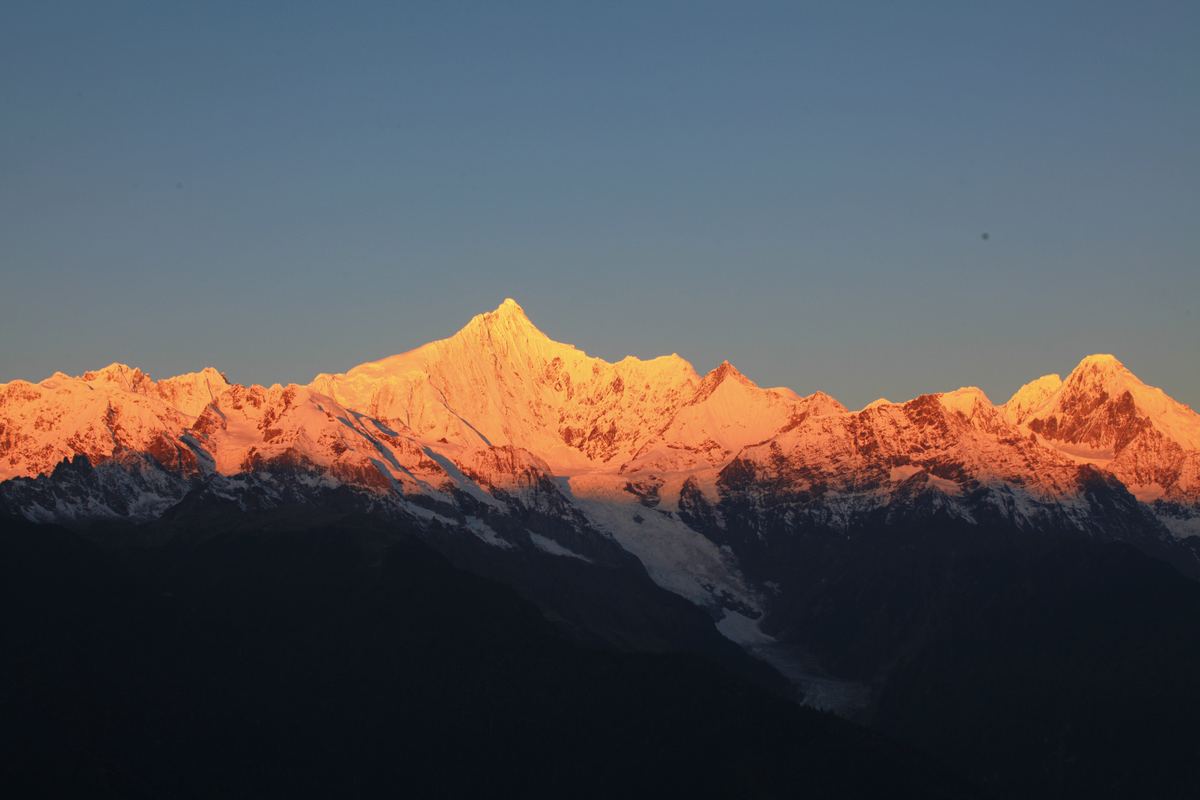
I pulled into Xizhou as the sun was dipping low over the Cangshan mountains, the stone gate of the old town glowing pink in the sunset. The whole drive had taken me just over three hours, including all the random stops for photos, tea and pears, and I’d passed less than 20 other cars the whole way. No beeping horns, no traffic jams, no tour buses full of people holding up their phones out of the window. That’s the magic of this route, it’s Yunnan the way it used to be, before all the big tourist groups turned up, and you can only really experience it properly if you’re driving yourself.
I don’t recommend rushing it. Take your time, stop for the noodles, stop for the tea, don’t watch the clock. That’s what self-drive in Yunnan is for, after all.