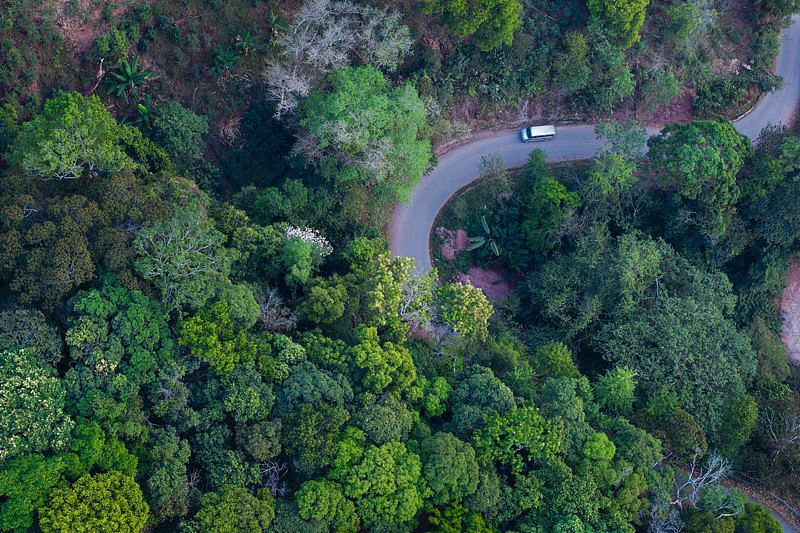
I’ve driven the Dali to Lijiang stretch four times now, in late spring when the rapeseed blooms along the Erhai lakeshore glow yellow enough to hurt your eyes, and in early autumn when the sky over Yulong Snow Mountain stays that sharp, unbroken pale blue that makes every photo feel like it was filtered. The last trip I did was a one-way pick-up in Dali, dropping the car straight in Lijiang, no backtracking, no wasting half a day driving south just to return a vehicle. For overseas visitors planning this route, sorting out Dali Lijiang car rental for foreigners doesn’t have to be a headache, as long as you know the fees, paperwork and small quirks that trip most people up the first time.
Why I pick one-way Dali to Lijiang over round trips
The first time I drove this route, I made the mistake of booking a round-trip rental out of Dali, thinking I’d save a bit of cash. By the time I’d looped the Erhai ring road, stopped at a tea house in Xizhou for three hours, and crawled past the old town gate traffic in Lijiang, I was already thinking: why am I turning around to drive all the way back? That extra 2.5 hours of winding mountain road, after a week of getting in and out of the car at every viewpoint, just felt like wasted time I could have spent hiking up to the Blue Moon Valley instead.
One-way rental makes so much sense here. You start where your flight lands, end where your next train or hotel is, no loops, no detours. It’s the same reason so many people who start their Yunnan trip at the airport end up looking for Kunming airport car rental for foreigners before working their way west to Dali and Lijiang — you don’t have to force a route that fits the rental car’s return rule, you build the trip around what you actually want to see.
I will say this: don’t book this as a 2-day dash. The road between Dali and Lijiang climbs up and down through small villages, and you’ll want to stop far more than you expect. I once pulled over for 40 minutes just to watch a group of goats herd themselves across a mountain pass, because the light on the terraced fields behind them was worth every minute of delay.
What cars are on offer, and what I’d actually pick
Last trip, I went for the VW Lavida 1.5L petrol. It’s RMB 260 per day, with a 3,000 rental deposit, and unlimited mileage — which is perfect, because I lost count of how many side roads I turned down chasing a good view of Cangshan mountain. It’s not flashy, it handles the winding mountain bends well, and I never once worried about running out of road before my next stop. The Jetta 1.4T is the other same-price option, if you prefer a bit more punch on the uphill stretches.
If you want something with a bit more clearance, the Tank 300 2.0T is RMB 400 per day, with a 5,000 deposit. Just remember it has a 300km per day mileage limit, so if you’re planning to cram a lot of detours into a single day, that might add up faster than you think. I’ve seen people book the big off-roader for this route and then stress about every extra kilometre, which defeats the whole point of a slow Yunnan road trip. None of the cars here are electric, by the way — I’ve heard too many stories of people hunting for charging points on remote mountain roads, and that’s a hassle I don’t need on holiday.
The one-way return fee for dropping the car in Lijiang instead of Dali is RMB 1,500. I did the math on my last trip: even with that fee added, I saved a full day of driving time, which would have cost me an extra night’s accommodation, a day of rental, and a whole lot of tired legs. For me, it’s worth it. For anyone starting their trip further east, sorting out Kunming airport car rental for foreigners first, then driving west to Dali for the official start of the lakeside leg, the same one-way structure works — you just adjust the pickup point to fit your arrival.
The paperwork part, explained without the jargon
I know a lot of overseas visitors get stuck on the licence part, so let’s get this clear. You don’t need to show up in person to sort out a China temporary driving licence — it can be arranged for RMB 1,500, no in-person visit required. I went through this process on my first trip, and I was convinced there would be a long queue, a pile of forms, a whole afternoon wasted at a local office. Instead, all the paperwork was sorted before I landed, and I just picked up the documents when I collected the car.
The rental deposit, whether it’s the 3,000 for the Lavida or 5,000 for the Tank, gets refunded 5-7 working days after you drop the car off. That’s not because anyone is dragging their feet — it’s just the time they need to run a check for any outstanding traffic fines you might have picked up along the way. I’ve had it come back on day 4 once, and day 6 another time, so don’t panic if it doesn’t hit your account the second you hand over the keys.
One thing to note: the 600 booking deposit is non-refundable if you cancel for personal reasons. I learned this the hard way, when I had to reschedule a trip last minute due to a family thing, and that 600 was gone. It’s a fair rule, just something to keep in mind when you lock in your dates.
Insurance and damage rules — no fine print surprises
When you pick up the car, the cover already includes compulsory and commercial insurance, so you don’t have to sort that out separately. The damage rules are straightforward, too. If you get a minor scratch under RMB 1,500, that’s on you. If the damage is over 1,500, it goes through the insurance, and you only cover 30% of the cost. Scratches that don’t go through the primer? Totally free, no charge at all.
I scraped the side of my Lavida on a low stone wall pulling into a Xizhou village parking spot last year. The scratch was faint, didn’t even mark the primer, and when I dropped the car off in Lijiang, the agent ran a cloth over it and waved me through. No downtime charges, no depreciation fees for the paintwork. If there’s major damage, downtime charges are waived for the first 5 days, which takes a lot of the stress out of a small fender bender.
If the car breaks down for a mechanical reason, that’s covered by the rental service. If you cause a breakdown, like overheating the engine by pushing too hard up a steep pass, the towing cost is on you. I’ve seen this happen to a couple who tried to drive up a rough side road in a small sedan, and they had to pay to get towed back to the main road. Just stick to the paved routes, and you’ll be fine.
Pickup and drop-off: what to actually check
You can pick up or drop off the car either at the airport or the city office, whichever fits your travel plans. I always pick up at the Dali city office, because it’s a 10-minute drive to the Erhai ring road, and I don’t have to haul my luggage across the airport car park. Last time I picked up the car, it was 22 degrees, a light wind coming off the lake, and I spent 10 minutes walking around the car taking photos of every existing scratch before I signed the paperwork. Do that. It takes 10 minutes, and it means no one can point to an old mark and say you caused it when you drop the car off.
Don’t forget to check the tyre pressure, test the wipers, and make sure you have the navigation set up for your first stop. Parking in the old towns is tight, so give yourself extra time to find a spot — I once circled the Dali old town car park three times before a space opened up. If you’re travelling in peak season, around the Lijiang Snow Mountain window in autumn, book your car weeks in advance; the good small sedans get snapped up fast.
For anyone mapping out a longer route, this same structure works for the stretches up to Shangri-La, too. At the end of the day, Yunnan self-drive rental for foreigners works best when you stop overcomplicating it. Pick your car, sort your paperwork, budget for the one-way fee, and spend less time worrying about rules and more time watching the light hit the mountains as you drive north. That’s the whole point of the trip, isn’t it?