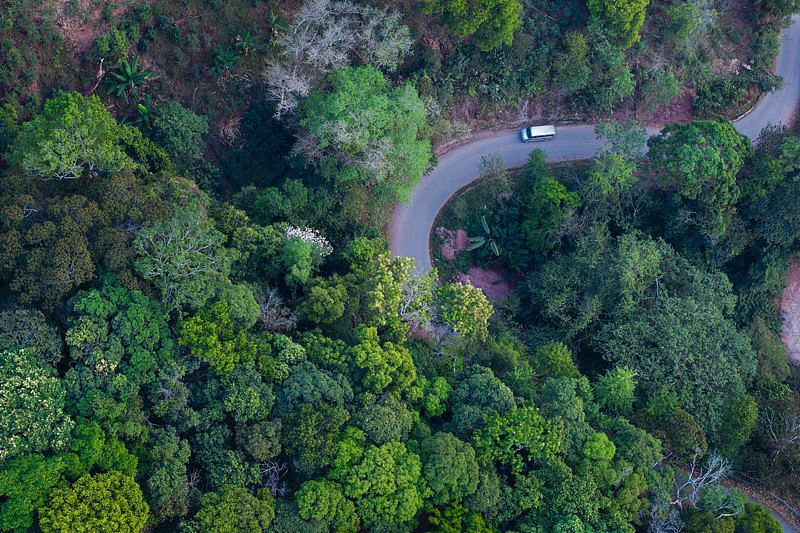
Last July, I pulled a petrol VW Lavida over at a viewpoint 20 minutes outside Dali, rain lashing the windscreen so hard I could barely make out the outline of Erhai Lake through the streaks on the glass. I’d miscalculated that morning, leaving the city later than planned, and hit a sudden mountain shower halfway up the slope. That trip taught me the hard way that summer Yunnan driving isn’t about cramming in extra viewpoints — it’s about building flexibility into every part of your route, especially when you’re relying on local rental to get between Dali, Lijiang and the surrounding highland roads.
Why shorter daily drives beat long summer stretches
Most first-time visitors map out 4-5 hour drives between Kunming, Dali and Lijiang on paper, assuming clear skies the whole way. I used to do that too, until that 2023 trip where a 2-hour drive from Dali old town to a small village near Shangri-La stretched to 5 hours, because the road kept climbing into cloud that turned to rain every time we rounded a bend.
For summer trips, I now cap daily driving at 2-2.5 hours maximum. It means you don’t feel pressured to push through a downpour just to hit a pre-booked hotel, and you can pull over the second the sky darkens. When I did Yunnan self-drive rental for foreigners last summer, I mapped three loose base stops instead of a rigid daily itinerary: two nights in Dali, two in Lijiang, and one flexible night wherever the rain caught us.
That flexibility saved us on the second day. We’d planned to drive from Dali to a mountain viewpoint at midday, but the sky turned bruised grey as we left Erhai’s west shore. We turned off at a small tea house halfway up the slope, drank locally brewed pu-erh for an hour, and watched the rain pass. By the time we got back on the road, the tarmac was drying, and the mountain views were crisper than they would have been in full sun.
Picking the right rental for wet mountain roads
When you arrange Kunming airport car rental for foreigners, you’ll be offered two straightforward petrol options, no electric vehicles to worry about (which is a relief, given how sparse charging points are on smaller Yunnan mountain roads). The VW Lavida 1.5L or Jetta 1.4T runs at RMB 260 per day, with a RMB 3,000 deposit and unlimited mileage. That’s the pick for most people sticking to paved routes between Dali and Lijiang — it’s light on fuel, easy to manoeuvre on narrow village lanes, and the unlimited mileage means you don’t stress about detouring to avoid a flooded road section.
The Tank 300 2.0T is RMB 400 per day, with a RMB 5,000 deposit and a 300km per day limit. I’d only pick this if you’re planning to head off the main paved routes towards more remote highland tracks. For a standard Dali Lijiang car rental for foreigners focused on rainy-season flexibility, the smaller petrol car makes more sense — you won’t hit the daily mileage cap even if you loop around Erhai twice in a day to wait out a shower.
One thing to sort before you fly: a China temporary driving licence can be arranged for RMB 1,500 without you needing to attend in person. Don’t waste time trying to sort paperwork at the airport when you land jet-lagged. If you’re picking up in Kunming and dropping the car back in Lijiang, there’s a RMB 1,500 one-way return fee to factor into your budget.
Insurance is included as part of the rental, covering compulsory and commercial cover. The excess rules are straightforward: minor scratches under RMB 1,500 come out of your pocket, damage above that goes through insurance, with you covering 30% of the cost. Scratches that don’t reach the primer are repaired for free, and there are no downtime or depreciation charges for paintwork or replaced parts — downtime is even waived for 5 days if there’s major damage. If the car breaks down from a mechanical fault, the rental covers it; if you cause the breakdown, towing costs are on you. The rental deposit comes back 5-7 working days after you return the car, once they’ve run a check for any unpaid traffic fines. Just remember: the RMB 600 booking deposit is non-refundable if you cancel for personal reasons, so build that into your trip budget.
Building flexible stops to outrun sudden showers
I used to over-rely on navigation apps to tell me when rain was coming. Last summer, I learned the local trick: stop at any tea house, village shop or roadside viewpoint the second the sky turns that flat, heavy grey that means rain is 10 minutes away. You don’t need a fancy weather alert.
On our drive from Lijiang old town to a small village near the Jade Dragon Snow Mountain, we saw a group of local farmers pull over their three-wheeler under a stone archway. We pulled over too, and chatted (via translation app) with an older farmer who told us that on this stretch, summer showers rarely last more than 40 minutes. He was right. We sat under the arch, shared a bag of roasted walnuts he pulled from his pocket, and watched the rain hammer the fields below. When it passed, the air smelled of wet pine, and the road was clear.
For your flexible stop list, you don’t need to pre-book every single night. I booked my Dali and Lijiang accommodation in advance, but left the middle night open. If the rain held, we’d drive an extra hour to a small guesthouse near the Shangri-La border; if it poured, we’d stay at a roadside inn halfway. That choice saved us from white-knuckle driving on a slick mountain pass when a storm rolled in late one afternoon.
One small tip I picked up: when you pick up the car, check the wipers. The Lavida I drove last year had wipers that left a thin smear across the windscreen, which made driving in rain far harder than it needed to be. I flagged it at pickup, and they swapped the wipers in 10 minutes. It’s a tiny thing, but it makes a huge difference when visibility drops on a wet mountain road.
At the end of the trip, I dropped the Lavida back at the Lijiang office, and the deposit was processed smoothly a week later. I’d driven just over 600km total across 4 days, well under the Tank’s daily limit but perfectly covered by the Lavida’s unlimited mileage. The best part? We didn’t rush a single drive, even with three sudden showers hitting the route. Summer Yunnan isn’t about seeing every viewpoint — it’s about moving slow enough to enjoy the rain when it comes, without worrying you’re off schedule.