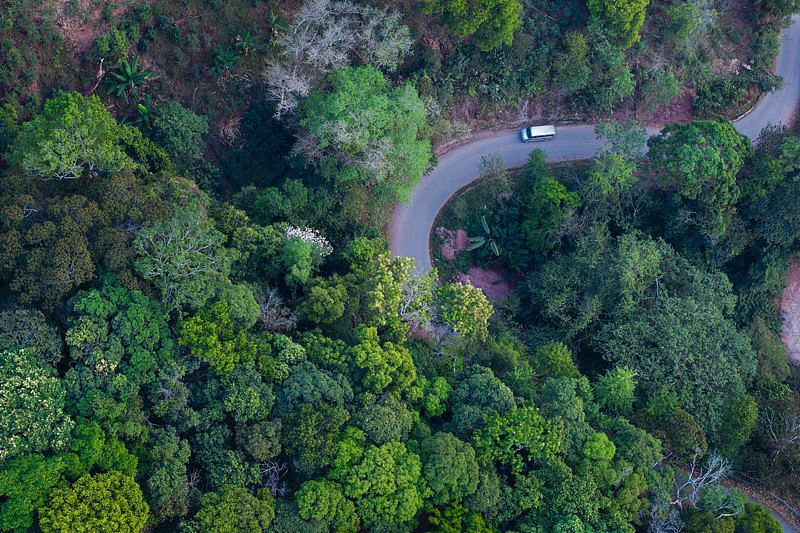
Last October, I pulled out of Dali’s old town car park in a silver VW Lavida, the faint scent of osmanthus from the roadside hedges still clinging to my jacket. I’d spent three days wandering the Erhai loop, and now I was heading north along the G215 towards Shaxi, the old caravan town tucked in the Jianchuan valley. This is one of the most satisfying stretches of road you can take when you arrange Yunnan self-drive rental for foreigners — no tight alpine hairpins, just gentle climbs past pine forest and farmland, with viewpoints that don’t require a long hike to reach.
Why this drive works for independent travellers
I’d picked up the car from the Dali city office two days prior, after sorting my temporary driving licence ahead of arrival. The process was straightforward: the agency arranged the China temporary driving licence for 1,500 RMB, no in-person visit required, so I didn’t waste half a day queuing at a transport office once I landed. The Lavida cost 260 RMB a day, with a 3,000 RMB rental deposit, unlimited mileage — no stress about counting kilometres as I meandered between stops.
That flexibility is why so many people opt for Dali Lijiang car rental for foreigners when they want to explore beyond the popular tourist hubs. You don’t have to stick to pre-booked tour schedules; you can pull over when the light hits the rice fields just right, or stop for a bowl of local buckwheat noodles at a roadside stall without worrying about a driver waiting to leave.
Viewpoints to stop at between Dali and Shaxi
The drive from Dali to Shaxi takes roughly 3.5 to 4 hours if you don’t linger, but I’d recommend setting aside a full day for it. I made three unplanned stops that ended up being the highlights of that leg of the trip.
The first overlook above Xinhua Village
About 45 minutes north of Dali, the road climbs gently up a wooded slope, and there’s a wide, paved pull-off on the left with unobstructed views over the valley below. I pulled over here just as a flock of goats was being herded down the side road, their bells clinking softly. The terraced fields below were still golden from the late autumn harvest, and in the distance you could see the silver curve of a tributary winding through the villages. There’s no ticket booth, no souvenir stalls — just a concrete bench and the quiet. I sat here for 20 minutes, drinking the thermos of tea I’d packed in Dali, before getting back on the road.
The tea house terrace near the Jianchuan border
A little over halfway to Shaxi, you’ll pass a cluster of traditional Bai-style houses with grey tiled roofs on the right side of the road. One of them has a small, open terrace serving local roasted tea. I almost drove past it, but the owner waved me over as I slowed to check my navigation. The tea was 10 RMB a cup, and from the terrace you look straight out at the forested hills rolling towards Shaxi. The owner told me, through a mix of hand gestures and my broken Mandarin, that this is where local families come to sit on weekends when the weather is cool. I didn’t see another tourist car stop here the whole time I was there.
The Shaxi valley overlook before the descent
About 10 minutes before you turn off the main road down to Shaxi Old Town, there’s a sharp bend with a small parking area. I’d nearly missed it, because the pull-off is tucked just after a concrete guardrail. When I stepped out, the whole of the Shaxi valley opened up below me — the patchwork of green fields, the dark tree line along the Heihui River, and the faint outline of the old town’s temple roofs in the middle distance. The wind was cool up here, sharp with the scent of pine. This is the spot to get your bearings before you drop down into the town, and to take that photo that actually shows how tucked-away Shaxi is, rather than just close-ups of the old gate.
Practical rental tips for this route
I’d already sorted my car when I landed in Kunming a week prior, picking up my vehicle from the airport to start my trip. Kunming airport car rental for foreigners is a convenient starting point for this kind of road trip, since you don’t have to navigate city public transport with all your bags before you even start driving. I’d opted for the Lavida over the Tank 300 for this route, since most of the road between Dali and Shaxi is well-paved tarmac — the 260 RMB a day rate for the Lavida worked out better for the smooth valley roads, and the unlimited mileage meant I didn’t have to watch the odometer every time I took a small detour.
A quick note on the rental terms, from what I experienced: the rental deposit is refunded 5-7 working days after you return the car, once a check for any unpaid traffic fines is complete. The insurance covers compulsory and commercial cover, but minor scratches under 1,500 RMB are paid by the driver — anything above that goes through insurance, with the driver covering 30%. I was lucky, and didn’t have any scrapes on this trip, but I did take photos of every panel of the car when I picked it up in Dali, just to be safe. Scratches that don’t go through the primer don’t cost anything, and there are no downtime or depreciation charges for paintwork or replaced parts, which takes a bit of the edge off if you do nick the bumper on a narrow roadside pull-off.
If you break down because of a mechanical fault, the rental provider covers the costs. If you cause the breakdown — say, by running over a sharp rock on an unsurfaced side road — you’ll cover the towing costs. I stuck to the main paved roads for this leg, so I didn’t have to test that, but it’s worth keeping in mind if you decide to detour onto smaller village lanes.
One thing I wish I’d known earlier: if you pick up the car in Dali and drop it off in Lijiang later in your trip, there’s a 1,500 RMB one-way return fee. I ended up looping back to Dali to return my car, which saved me that cost, but if you’re short on time, the one-way drop-off is a valid option. The 600 RMB booking deposit is non-refundable if you cancel for personal reasons, so lock in your dates once you’re sure of your travel plans.
A quick note on timing
I did this drive in mid-October, when the air was crisp, the sky was that sharp, clear Yunnan blue, and the rice fields were just turning gold. If you go in summer, be prepared for short afternoon rain showers — the road can be slick in spots where the tree cover blocks the sun. I’d recommend starting early from Dali, around 9am, so you hit the viewpoints when the light is soft, before the midday glare makes the valley views washed out.
Don’t rush this drive. The whole point of arranging Yunnan self-drive rental for foreigners is to set your own pace, not to tick off stops as fast as you can. The best parts of this route are the unplanned ones — the goat herd crossing the road, the roadside tea house, the quiet overlook with no crowds. Pull over when something catches your eye. That’s where the good memories are.