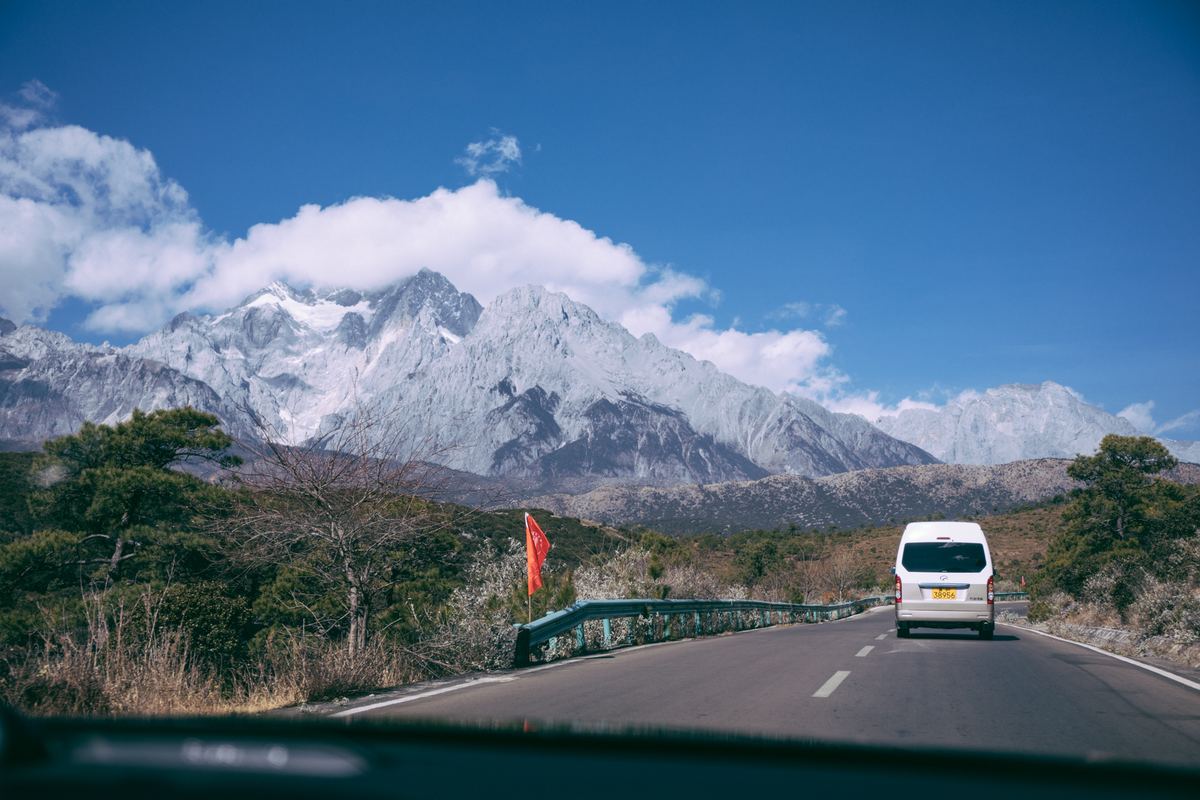
I pulled up at Kunming Changshui Airport’s pickup bay last October, the air sharp with the scent of pine drifting over the tarmac, and loaded my hiking gear into a white VW Lavida I’d booked for a loop through the western Yunnan mountains. My phone, which I’d relied on for navigation through most of my Asian overland trips, died 40 kilometres outside Dali on a stretch of road where cell service vanished entirely, and I spent 20 minutes squinting at hand-painted road signs before I found a small village shop to charge my power bank. That trip taught me a hard lesson: if you’re planning Yunnan self-drive rental for foreigners, you cannot rely on constant mobile signal to get you through the high mountain passes.
Why offline navigation is non-negotiable for Yunnan mountain drives
Most visitors land in Kunming, sort their paperwork, and set off assuming Google Maps or the local mapping apps will work the same way they do in cities. I made that mistake on my first trip to the region in 2019, when I tried to follow a route from Lijiang to Shangri-La without downloading any offline maps. Halfway up the Tiger Leaping Gorge access road, my signal cut out completely, and I missed a turn that led me three kilometres up a dead-end logging track before I could turn the car around.
Yunnan’s mountain roads twist across elevation changes of more than 2,000 metres in a single stretch. Cell towers sit only in the larger towns; between them, through forested valleys and over bare, wind-scoured passes, your phone will often flip to ‘no service’ mid-turn. I now keep a printed paper copy of my route folded in the glove box, alongside a fully charged power bank, even when I’m driving familiar roads.
What you need to sort before you collect your car at Kunming airport
I’ve done this pickup routine enough times now to have it down to a fine art. When you book Kunming airport car rental for foreigners, the team will arrange a China temporary driving licence for you for RMB 1,500 — you don’t need to attend an office in person to get it sorted, which saves a huge amount of hassle when you’re jet-lagged off a long flight from Europe.
The standard petrol cars on offer, the VW Lavida 1.5L and Jetta 1.4T, cost RMB 260 per day with unlimited mileage, and carry a RMB 3,000 rental deposit. If you’re planning to take the rougher side roads towards Shangri-La, the Tank 300 2.0T runs RMB 400 per day, with a RMB 5,000 deposit and a 300-kilometre daily mileage limit. I’ve driven both on Yunnan’s roads; the Lavida is perfectly fine for the main sealed highways between Kunming, Dali and Lijiang, but the extra ground clearance of the Tank makes sense if you’re pulling off onto unsealed village tracks.
Before you leave the pickup point, take five minutes to download all the offline map tiles you’ll need for your entire route. Don’t just download the Kunming tiles — grab the full coverage for Dali, Lijiang, Shangri-La, and every smaller town you plan to pass through. I once made the mistake of only downloading tiles for the cities, and got stuck on a remote stretch between Lijiang and a small Naxi village with no map coverage at all.
How to use offline maps on the twisty, signal-free mountain roads
Last spring, I was driving the route from Dali up to the Jade Dragon Snow Mountain, and the sun was glinting so sharply off the tarmac that I had to squint to read my phone screen. My signal dropped out 15 kilometres from the mountain turnoff, and if I hadn’t pre-downloaded the offline tiles, I would have missed the narrow, unmarked turn that leads up to the viewpoint. The road there is barely wide enough for two cars to pass, with steep drops off one side, and there are no road signs for the last five kilometres.
I keep my phone mounted on the dashboard, screen set to maximum brightness, and cross-reference the offline route with the hand-painted wooden signs the local villagers nail to tree trunks at every junction. Those signs don’t show up on any digital map, and they’ve saved me from wrong turns more times than I can count. If you’re planning to end your trip in Lijiang instead of returning to Kunming, remember the one-way return fee is RMB 1,500 — a cost worth factoring in if you’re considering Dali Lijiang car rental for foreigners as a point-to-point trip rather than a loop.
One tip I picked up from a local driver I met at a tea house in Shaxi: zoom your offline map right out to check for unmarked side roads before you set off. Many of the most beautiful villages in Yunnan sit down tracks that don’t appear on default map views, and if you don’t have those tiles downloaded, you’ll never find them even if you’re driving right past the turn.
Rental rules to remember before you set off into the hills
I had a minor scrape on a Lavida I rented a few years back, when I clipped a low stone wall pulling out of a courtyard in a small village near Erhai Lake. The scratch was small, didn’t break the primer, and there was no extra charge for it. That’s one of the small, useful bits of policy worth knowing: scratches that don’t damage the primer are free to repair, and there are no downtime or depreciation charges for paintwork or replaced parts. If you do cause damage under RMB 1,500, you cover the cost yourself; damage above that goes through the included insurance, with you covering 30% of the cost. Mechanical breakdowns are covered by the rental team, but if you cause the breakdown — say, by getting stuck in a river crossing — you’ll cover the towing costs yourself.
Your rental deposit is refunded 5-7 working days after you return the car, once all traffic fines have been checked. If you need to cancel your booking for personal reasons, the RMB 600 booking deposit is non-refundable, so plan your dates carefully before you lock in your trip.
Don’t overcomplicate it. Download your maps, check your route, and take your time on the mountain passes. The views are worth the extra preparation.