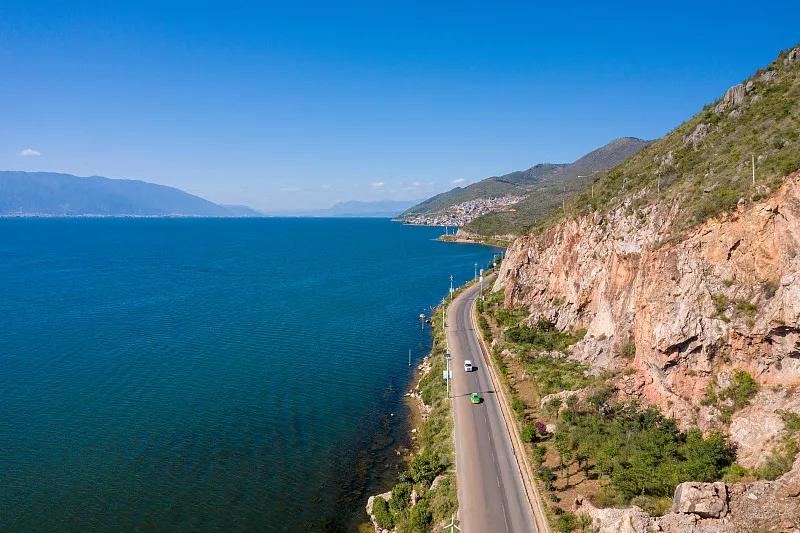
Last autumn, I pulled out of Kunming Changshui Airport’s rental lot in a petrol VW Lavida, the morning sun glinting off the red laterite hills that line the G56 expressway. I’d spent three weeks planning the loop, and I’ll be honest—my first 20 minutes behind the wheel were wobbly. Left-hand drive, road signs mixing Chinese characters and pinyin, the occasional truck carrying fresh peaches trundling slow in the overtaking lane. But by the time I’d covered the first 100km, I relaxed. This stretch of Yunnan was made for slow, unplanned driving, the kind where you pull over when you spot a field of rapeseed in bloom, or stop for a bowl of rice noodles when a roadside stall smells too good to pass.
This guide is for anyone who wants to skip the tour buses, and explore the Bai and Naxi cultural heart of western Yunnan at their own pace. I’ve packed in the practical bits I wish someone had told me before I booked, plus the exact 5-day route I took, no fancy detours, just the stops that stuck with me.
Sorting Your Rental Before You Touch Down in Kunming
I’d flown in from Guangzhou, and the last thing I wanted after 30 hours of travel was to fumble through paperwork at the airport counter. The whole point of Yunnan self-drive rental for foreigners is that you don’t have to jump through endless hoops to get on the road. A China temporary driving licence can be arranged for RMB 1,500 without you needing to attend in person, which meant I sorted all my documents before I even boarded my flight south.
When I landed, Kunming airport car rental for foreigners pickup took 12 minutes flat. The team met me at the arrivals exit, walked me through the walkaround check, pointed out the minor pre-existing scratch on the rear bumper (we noted it together on the checklist, no arguments), and handed over the keys. No electric vehicles on offer here—all petrol, which is a relief when you’re driving up mountain passes where charging points are few and far between.
My Lavida cost RMB 260 a day, with a RMB 3,000 rental deposit and unlimited mileage. That unlimited mileage bit matters, trust me. The Tank 300 option is RMB 400 a day, with a RMB 5,000 deposit and a 300km per day limit, but I didn’t need the extra off-road capability for this route. All the roads between Dali, Xizhou and Shaxi are smooth tarmac, no 4WD required.
A quick note on the fine print, learned the hard way on a previous trip to Sichuan: minor scratches under RMB 1,500 are paid by you, anything above that goes through the included compulsory and commercial cover, with you bearing 30% of the cost. Scratches that don’t cut through the primer? No charge at all. The deposit gets refunded 5-7 working days after you return the car, once the traffic fine check is done. Oh, and if you need to drop the car off in Lijiang instead of back where you picked it up, there’s a one-way return fee of RMB 1,500. If you cancel for personal reasons, the RMB 600 booking deposit is non-refundable, so lock in your travel dates before you pay.
The 5-Day Itinerary: Slow Roads, Old Towns, No Rush
I set a hard rule for this trip: no driving more than 3 hours on any single day. Yunnan’s mountain roads are beautiful, but staring at winding bends for 6 hours straight will turn even the most enthusiastic traveller into a cranky mess.
Day 1: Kunming to Dali, via the Erhai Shore
The drive from Kunming to Dali is roughly 320km, mostly on the G56 expressway. I left at 8am, stopped halfway at a service station for a bowl of hot cross-bridge noodles, and pulled into my guesthouse in Dali’s old town by 1pm. The air was already warmer than Kunming’s crisp autumn chill, and I could see the snow-dusted peaks of Cangshan Mountain peeking over the tiled rooftops.
I skipped the crowded main old town street that first afternoon. Instead, I drove 20 minutes north to the west shore of Erhai Lake, where the water glows that deep turquoise you only see at high altitude. I parked by a small village, watched Bai fishermen casting nets from their wooden cormorant boats, and stayed long enough to watch the sun dip below the mountains, painting the lake pink.
Day 2: Dali Old Town and the Cangshan Foothills
Today was for wandering, no long drives. I parked my car at the guesthouse—Dali’s old town lanes are too narrow to navigate comfortably anyway—and walked the stone lanes. I stopped at a local tea house, where the owner poured me a cup of strong pu-erh and told me stories about his grandfather, who used to carry tea mule trains over the mountains to Tibet. That’s the kind of conversation you’ll never get on a packaged tour.
In the late afternoon, I drove up the Cangshan foothills to visit a small Bai village, where women were tying indigo-dyed tie-dye cloth to wooden frames to dry. The deep blue cloth fluttered in the wind, bright against the green hillside. I bought a small tablecloth for RMB 80, no haggling required.
Day 3: Xizhou Village, and the Slow Road to Shaxi
Xizhou is 30 minutes north of Dali, and it’s my favourite spot in the whole region. It’s smaller than Dali’s old town, less touristy, full of the traditional Bai courtyard houses with their white walls and painted eaves. I arrived just as the morning market was wrapping up, and bought a bag of fresh walnuts from a farmer who’d walked down from the hills. I sat in the square, cracking walnuts, while local elders played chess on wooden benches under a banyan tree.
After lunch, I hit the road for Shaxi. The drive is about 120km, winding through mountain valleys, past fields of barley and small hamlets with slate-roofed houses. I took the slow provincial road instead of the fast expressway, because the views are worth the extra 40 minutes. I pulled over twice: once to take a photo of a herd of yaks grazing by a stream, once to help a local family push their three-wheeled cart out of a mud rut. That’s the thing about slow driving—you have time for the small, unplanned moments.
Day 4: Shaxi Old Town, the Ancient Tea Horse Road Stop
Shaxi is the best-preserved stop on the old Tea Horse Road, and it feels like time has stood still here. The main square, with its ancient theatre and stone gate, is untouched by the neon signs and souvenir shops that clog so many other Yunnan old towns. I spent the whole day wandering: walking the stone paths over the river bridge, visiting the small temple on the hill overlooking the town, sitting by the old canal watching children chase each other with paper lanterns.
I didn’t drive at all today. The whole town is walkable, and there’s something special about not rushing. That’s the whole point of this kind of trip, after all.
Day 5: Shaxi back to Dali, for your drop-off
The drive back to Dali is the same winding valley road, but this time I took a detour to visit a local paper mill, where they make handmade paper from tree bark, just like they did hundreds of years ago. I watched the craftsmen dip the wooden frames into vats of pulp, hang the wet sheets to dry in the sun, and even tried my hand at making a small sheet myself. It’s not perfect, but I brought it home as a souvenir.
By mid-afternoon, I was back in Dali, ready to drop off the car. If you’re doing a Dali Lijiang car rental for foreigners loop, you can keep driving north to Lijiang from here, pay the RMB 1,500 one-way fee, and end your trip there instead of circling back. I chose to loop back to Kunming, but that’s just personal preference.
Lessons I Learned the Hard Way
First, check your fuel level before you drive up into the hills. Mountain petrol stations are fewer, and running out of gas on a narrow pass is not a fun experience. I nearly did that on the way to Shaxi, and kicked myself for not filling up in Xizhou.
Second, don’t drive after dark. The mountain roads have unmarked bends, and livestock sometimes wanders onto the tarmac. I always planned to be parked by 6pm, no exceptions.
Third, take the walkaround check seriously. Point out every tiny scratch, even the faint ones that don’t show primer. It takes 5 extra minutes, and saves you arguments when you return the car. The insurance rules are clear: no downtime or depreciation charges for paintwork or replaced parts, and downtime is waived within 5 days for major damage. If the car breaks down for a mechanical reason, the rental team covers it. Towing for a problem you cause? That’s on you.
This route isn’t for people who want to tick off every famous spot in Yunnan in 3 days. It’s for people who want to sit in a village square, eat a bowl of hot noodles, and listen to the wind in the trees. That’s the part of Yunnan that stays with you long after you’ve handed back the keys.