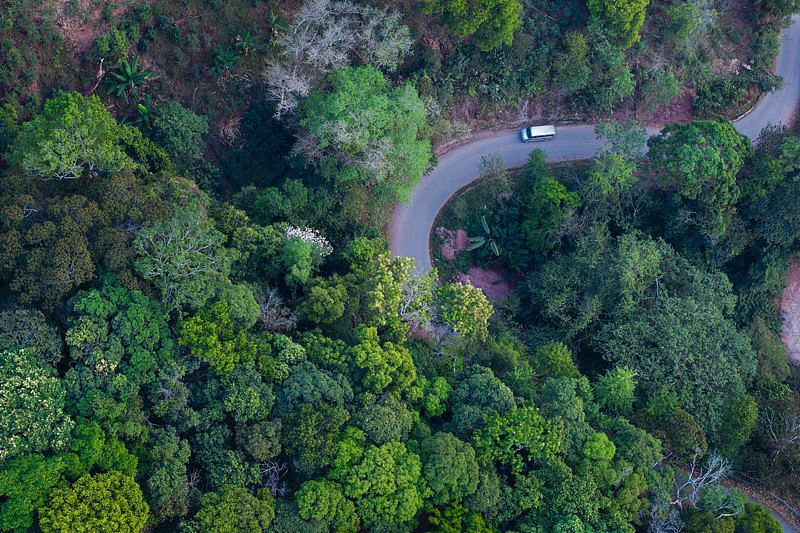
Last spring, I drove the 1,200km Kunming-Dali-Lijiang-Shangri-La loop with a friend, split evenly between us behind the wheel. We’d spent three weeks sorting out paperwork ahead of landing, and by the time we pulled up at the Stone Gate Pass outside Dali, neither of us was white-knuckled from six straight hours of winding mountain tarmac. That’s the magic of splitting driving duties, right? But it doesn’t happen by accident. Most folks who show up without a plan end up with one person exhausted behind the wheel by day two, squinting at hairpin bends as the plateau sun dips low.
Sort the paperwork before you even book your car
I made this mistake on my first trip to Yunnan five years ago. I assumed I could turn up at the airport, flash my home licence, and drive off. Spoiler: that doesn’t work. For anyone sorting out Yunnan self-drive rental for foreigners, the first box to tick is arranging a China temporary driving licence. It costs RMB 1,500, and you don’t even need to show up in person to get it sorted. We sent scans of our home licences and passport photos two weeks before our flight, and the documents were waiting for us at the Kunming airport pickup desk.
Don’t leave this to the last minute. We met a couple at a Dali café who’d tried to book a car the day before, only to realise they had no valid licence to drive. They ended up paying double for private drivers for the whole loop, which ate straight into their restaurant budget.
Pick the right car for two drivers to swap comfortably
We weighed up two options before booking, and our choice made all the difference for long stints behind the wheel. The VW Lavida 1.5L petrol comes in at RMB 260 per day, with a RMB 3,000 rental deposit and unlimited mileage. That’s the budget pick, perfect if you’re sticking to the main paved roads between Kunming, Dali and Lijiang. We went for the Tank 300 2.0T, at RMB 400 per day, with a RMB 5,000 deposit and a 300km per day mileage limit. It sat higher, gave us better visibility on the mountain passes, and the seats had enough lumbar support that swapping seats every two hours didn’t leave us with stiff backs.
Quick note on the fine print: if you pick the Tank 300, keep an eye on that daily mileage limit. We hit 298km on our day driving from Lijiang to Shangri-La, and I did a silent little cheer when we pulled into the guesthouse car park. If you need to do a one-way drop off, say picking up in Kunming and returning in Lijiang, there’s a RMB 1,500 one-way return fee. The RMB 600 booking deposit is non-refundable if you cancel for personal reasons, so lock in your dates before you put that down.
Plan your driving shifts around the road, not the clock
Here’s the bit no guide tells you: driving on Yunnan’s mountain roads isn’t the same as cruising the flat motorways around Shanghai. The stretch from Dali to Lijiang has more than 400 bends in 200km. I learned this on day one, when I volunteered to take the first shift out of Kunming. I’d done two hours on the flat Kunming-Chuxiong motorway, felt confident, and decided to push on through the mountain section outside Chuxiong. By the time I pulled over at a service station, my shoulders were up around my ears, and my friend laughed and said I looked like I was fighting a swarm of hornets.
We settled on a simple system after that: no one drives more than two hours straight. We swapped at every service station, every viewpoint pull-in, even at random tea houses where we’d stop for a bowl of noodles. If we hit a particularly twisty section, like the climb up to Tiger Leaping Gorge, we’d swap halfway through, no arguments.
One thing that saved us: we both loaded offline maps onto our phones before we left Kunming. There are stretches on the Shangri-La road where mobile signal vanishes for 20km at a time, and you don’t want to be fumbling with a dead map when you’re approaching a one-lane bridge over a gorge.
What to expect with pickup, insurance and the deposit
When we did Kunming airport car rental for foreigners, the pickup process took 20 minutes. We walked through the car with the agent, marked every existing scratch on the checklist, noted the fuel level, and got handed the keys. The rental deposit is refunded 5-7 working days after you return the car, once they run a check for any unpaid traffic fines. That timeline makes sense — don’t plan on that money being back in your account the second you fly home.
The insurance that comes with the rental covers both compulsory and commercial cover. The rules are straightforward: if you get a minor scratch under RMB 1,500, you pay for it. Any damage over RMB 1,500 goes through insurance, and you cover 30% of the cost. Scratches that don’t break through the primer are free to fix, and there are no downtime or depreciation charges for paintwork or replaced parts. If the car breaks down for a mechanical reason, the rental provider covers it. If you cause a breakdown, like stalling the engine so hard it won’t restart, you pay for the towing. We got a flat tyre outside Dali, turned out to be a loose valve stem, and the agent sorted it for free — mechanical fault, their cost.
When we did Dali Lijiang car rental for foreigners on a shorter trip the year before, we skipped the pre-trip walkaround, and ended up arguing with the agent over a tiny scratch we’d missed on the back bumper. We paid out for it, and learned our lesson. Take photos, walk the whole car, mark every mark on the checklist. It takes 10 minutes, and saves you a headache later.
Small habits that make the loop smoother for two drivers
We kept a little notebook in the glove box. Every time we swapped drivers, we jotted down the fuel level, the total mileage, any odd noises the car was making, and if there was any upcoming roadworks we’d spotted. On day three, I noted that the car pulled slightly to the right on the Dali-Lijiang highway. We mentioned it when we stopped for lunch, and the agent adjusted the tyre pressure for free before we headed up to Shangri-La. No blowout, no detour, just a quick fix.
Parking is another thing. In Dali Old Town, most guesthouses have a small car park, but it fills up fast by midday. In Lijiang Old Town, you can’t drive right into the core pedestrian area, so you’ll be parking in the public lot on the edge and walking 10 minutes in. We always checked parking options before we booked a guesthouse — no one wants to circle a block for 20 minutes after a long drive, tired and ready for a beer.
Seasonality matters too. We went in April, when the rhododendrons were blooming on the slopes, and the roads were dry. We’ve heard horror stories from people who drive the loop in the rainy season, when landslides close sections of the mountain road for hours. If you’re going between June and August, build in a buffer day in your schedule, so you don’t miss your flight out of Kunming if a road gets blocked.
At the end of the day, splitting driving duties isn’t just about not getting tired. It’s about both of you getting to enjoy the drive. I got to watch the sun set over Erhai Lake on my passenger shift, my friend got to take the wheel through the sharp bends on the way up to Shangri-La, where the air is thin and the mountains stretch for miles. That’s the point of the self-drive loop, isn’t it? You’re not just passing through the scenery — you’re part of it, as long as you don’t let one person burn out behind the wheel.