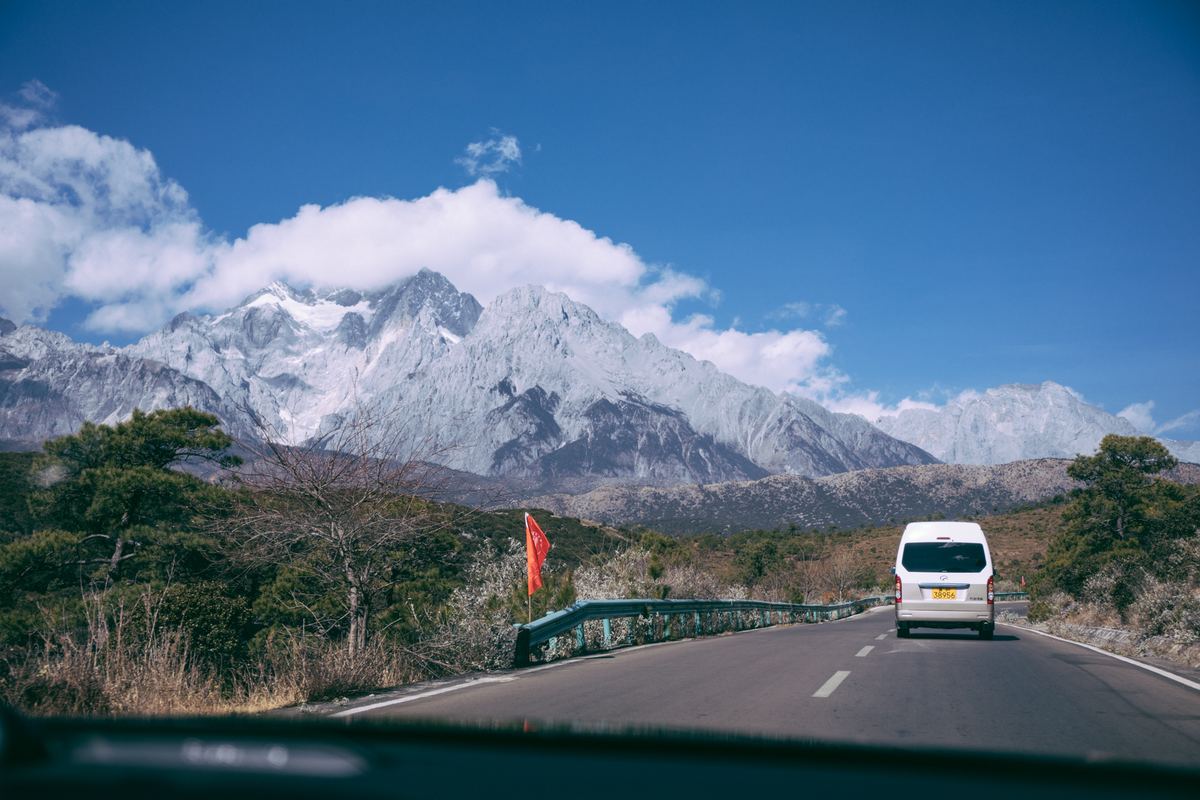
I’ve lost count of how many times I’ve landed at Kunming Changshui Airport, grabbed my bag, and walked straight to the rental pickup desk instead of queuing for a bus into the city. The first leg of every Yunnan trip I plan starts right there, but I learned the hard way that skipping a 10-minute tyre check before heading up into the mountains can turn a perfect road trip into a long, cold wait on the side of a cliffside road.
This guide is for anyone who’s booked Kunming airport car rental for foreigners and is planning to drive the popular loops out to Dali, Lijiang, or further up to Shangri-La. I’ve had two blowouts on these routes, both entirely avoidable, and I’m going to walk you through exactly what to look for before you turn the key.
Why a 10-minute tyre check is non-negotiable for mountain drives
Last October, I picked up a VW Lavida 1.5L from the airport for a Yunnan self-drive rental for foreigners itinerary I’d mapped out across three weeks. I was in a hurry to beat the afternoon rush out of the city, so I did the usual walkaround: checked for obvious scratches, tested the lights, signed the paperwork, and pulled out of the lot. Two hours later, as I was climbing the winding road towards Dali, the steering wheel started pulling hard to the left. I pulled over on a narrow pull-off, looked down at the front passenger tyre, and saw a slow leak seeping out of a gash in the sidewall I’d completely missed.
It took an hour for the roadside assistance team to reach me, because the road was too narrow for their van to pull up alongside safely. I sat on the guardrail, watching clouds roll over the pine trees, and swore I’d never skip a proper tyre check again.
The roads between Kunming, Dali and Lijiang are beautiful, but they’re not suburban motorways. You’ll hit long, steep climbs, sharp switchbacks, and stretches of road where loose gravel and sharp rock debris have fallen from the slopes above. A tyre that would be fine for a 20-minute drive between city cafes can fail on a 300km mountain run, and there’s no quick tyre shop on every corner like there is in downtown Kunming.
What to actually check, before you leave the airport car park
I’ve done this walkaround so many times now I can run through it in 8 minutes flat, even on a cold, rainy morning when the tarmac is still slick with overnight drizzle. You don’t need to be a mechanic to spot the obvious issues, but you do need to slow down and look closely.
Tread depth: don’t trust the visual “it looks fine” test
Last spring, I picked up a Tank 300 for a trip up to Shangri-La, and I knelt down to run my finger along the tread of each tyre. The front two looked okay at a glance, but when I checked closely, the tread was worn almost completely smooth on the outer edge. The rental attendant nodded when I pointed it out, and swapped the vehicle for another one before I left. That worn tyre would have been dangerous on the icy, high-altitude passes north of Lijiang, where even a small skid on a damp road can send you sliding towards a drop.
You don’t need fancy tools. Run your fingers along the centre of the tread, and look for the small raised wear bars built into the grooves. If those bars are level with the rest of the tread rubber, the tyre is worn out, and you should ask for a replacement. Don’t let anyone talk you into “it’ll be fine for the trip” — it won’t, on those mountain grades.
Sidewall damage: the thing I missed on that Dali trip
That slow leak I had on the Lavida? It was a 5cm gash in the sidewall, right where the rubber meets the wheel rim. I’d glanced at the tyre from a standing position, and it was hidden by the angle of the car. Kneel down, right next to each wheel, and run your eyes all the way around the sidewall. Look for cuts, bulges, cracks, or bits of embedded glass or sharp rock. A bulge in the sidewall means the internal cords are damaged, and that tyre can blow out without warning when you’re braking hard on a downhill stretch.
I had one trip where I spotted a small nail stuck in the tread of a rental car before I left Kunming. The team pulled it out, patched the tyre, and sent me on my way. If I’d driven 100km up into the mountains before it went flat, I would have been stuck in a way worse spot.
Tyres pressures, and the spare wheel situation
It sounds trivial, but get out the tyre pressure gauge (they keep one in the glovebox, or you can ask the pickup attendant to check) and confirm each tyre is inflated to the recommended pressure. Under-inflated tyres build up a huge amount of heat on long uphill runs, which is a common cause of blowouts on these routes.
While you’re at it, pop the boot and check the spare wheel. Make sure it’s properly inflated, that the jack and wheel brace are there, and that you know where they keep the locking wheel nut key. I met a traveller on the side of the road outside Lijiang a couple of years back who had a flat, only to find the spare was completely deflated, and no one had checked it at pickup. He waited three hours for a lift to the nearest town.
If you’re planning to do Dali Lijiang car rental for foreigners with a one-way return — say, picking up in Kunming and dropping off in Lijiang, which carries a 1,500 RMB one-way return fee — this check matters even more, because you won’t be looping back to the same rental office if something goes wrong halfway.
A few rental rules to remember, while you’re doing the check
You don’t need to sort out an International Driving Permit for this kind of local rental — a China temporary driving licence can be arranged for 1,500 RMB, no in-person visit required. The daily rates are straightforward: the VW Lavida 1.5L and Jetta 1.4T petrol cars cost 260 RMB per day, with a 3,000 RMB rental deposit and unlimited mileage. The Tank 300 2.0T is 400 RMB per day, with a 5,000 RMB deposit and a 300km per day mileage limit. All the vehicles are petrol, no electric options here, which is a relief when you’re driving high mountain roads where charging points are few and far between.
The rental deposit gets refunded 5-7 working days after you return the car, once a traffic fine check is complete. Insurance is included, covering both compulsory and commercial cover. Just remember: minor scratches under 1,500 RMB are paid by you, and damage over 1,500 RMB goes through insurance, with you covering 30% of the cost. Scratches that don’t go through the primer are free, and there are no downtime or depreciation charges for paintwork or replaced parts — downtime is waived for 5 days if you have major damage. If the car breaks down for a mechanical fault, the rental team covers it; if you cause the breakdown, towing costs are on you. A 600 RMB booking deposit is non-refundable if you cancel for personal reasons.
None of these rules are complicated, but it’s easy to forget them when you’re excited to hit the road. And for goodness sake, don’t skip the tyre check.
Last time I drove up to Shangri-La, I saw two cars pulled over with blowouts on the pass between Lijiang and the plateau. Both drivers told me they’d skipped the pre-trip tyre check at Kunming airport, eager to get on the road. You don’t want to be that person, watching the temperature drop as the sun goes down behind the mountains, waiting for help to arrive.